Last updated November 17, 2026







Free written scope consultation - allowances, timeline, and change-order rules on paper before a single trade is scheduled
Construction Emergency Preparedness Guide for Sunrise Manor Homes
When a Sunrise Manor home loses HVAC at 112°F, the average licensed contractor callback window is 24 to 48 hours. The homeowners who minimize damage and cost are the ones who already know which penetrations to seal, which circuits to isolate, and what their contractor’s emergency clause actually says. This guide gives you a documented response protocol for the three emergencies that hit Sunrise Manor most often: flash-flood intrusion through failed stucco, HVAC failure during a triple-digit heat event, and roof or window damage after a haboob. You’ll learn what to keep on hand, what to photograph before anyone touches the damage, and how to verify a contractor is licensed in Nevada before they climb your roof at 10pm. We’ve written it the way we’d hand it to a neighbor, because that’s the standard we hold ourselves to.
Quick Answer
Construction emergencies in Sunrise Manor follow a predictable seasonal pattern, and the right response is to document everything before any repair begins, stop water and power at the source, and verify your contractor’s Nevada license before work starts. A written emergency clause and a documented photo record protect both your insurance claim and your workmanship warranty. The rest of this guide walks through each scenario step by step.
Styles & brands we work with
- Kitchen remodeling
- Bathroom remodeling
- Home additions & ADU
- Roofing
- Windows & doors
- Driveway & pavers
- Fence
Table of Contents
- The Three Emergencies That Actually Hit Sunrise Manor Homes
- Scenario 1: Flash-Flood Water Intrusion Through Failed Stucco
- Scenario 2: HVAC Failure During a Triple-Digit Heat Event
- Scenario 3: Post-Haboob Roof and Window Damage
- What to Document Before Any Repair Begins
- Temporary Repair Materials to Keep on Hand
- How to Verify an Emergency Contractor in Nevada
- What Your Contract’s Emergency Clause Should Say
The Three Emergencies That Actually Hit Sunrise Manor Homes
Sunrise Manor sits in the desert but floods more reliably than most wet-climate cities expect. The pattern isn’t random. It’s driven by three forces: monsoon storm cells that drop an inch of rain in a single hour, sustained 110°F-plus heat events that strain residential cooling systems past their design limits, and haboobs – the dust-and-wind walls that roll in during monsoon season with gusts strong enough to lift shingles and drive sand into window seals.
Here’s the part most homeowners only learn after the fact: roughly 20 minutes of preparation before an emergency happens saves hours of cleanup and thousands in repairs. A failure isn’t a mystery once it’s happening – it started weeks earlier with a stucco crack, a strained capacitor, or a loose fascia board. The guide below doesn’t teach you to do the repair yourself. It teaches you to respond in the first two hours so the damage stays contained and the repair stays guaranteeable.
Each scenario in this guide has the same three-phase structure:
- Stop the loss: shut off water, power, or airflow so the damage doesn’t compound.
- Document the before: photograph and timestamp everything before a single repair is attempted.
- Call a verified professional: someone you can reach now and who stands behind the work in writing.
If your home is in one of the older stucco subdivisions off Lamb Boulevard or near the Sunrise Manor wash corridors, your risk profile is higher than a newer build in the northern sections. Stucco that’s been through twenty-plus thermal cycles per year (day-to-night swings of 30 to 40 degrees are routine here) develops hairline cracks that only fail visibly during a monsoon runoff. That’s the kind of thing a general contractor in Sunrise Manor should be asked about during any pre-season inspection.
Scenario 1: Flash-Flood Water Intrusion Through Failed Stucco
Monsoon rain in Sunrise Manor doesn’t arrive politely. A single cell can drop enough water in a half hour to overwhelm street drainage and pond against a home’s north or west face – exactly the walls that get baked by afternoon sun and crack first. Water finds those cracks, wicks into the framing behind the stucco, and by the time you see an interior stain, the damage has usually been happening behind the wall for days.
What to check (not repair) when water is coming through the wall:
- Look for efflorescence – the white mineral crust that shows up on stucco when moisture is moving through it.
- Check interior drywall for a soft spot or a growing ring stain, especially high on the wall near the ceiling.
- Look at where the stucco meets the ground and where it meets window and door frames – those are the failure points.
- Smell for dampness at the baseboard. Mildew behind a wall doesn’t always show as a stain.
Here’s the first-response sequence we walk Sunrise Manor homeowners through:
- Move furniture off the wet wall and phone the water damage pros who can be there.
- Shut off the water supply if interior plumbing is involved. If the intrusion is purely rain coming through the wall, you’ll want to move water away from the foundation without stripping anything.
- Photograph everything before you touch it. Wipe nothing. Move nothing you don’t have to.
- Call a licensed contractor, not an unmarked truck that shows up uninvited. Storm-chasers who arrive during the flooded street are the same ones who don’t come back after.
Once the rain clears, the correct next step is a full assessment of the stucco field – not a spot patch. In our experience, the visible crack is rarely the whole failure. The Bradford Remodeling Sunrise Manor home team treats every post-flood stucco job as an inspect-then-quote, with a written price before any work starts, because we’ve seen too many failed spot patches get billed twice.
Scenario 2: HVAC Failure During a Triple-Digit Heat Event
An HVAC failure at 112°F isn’t a comfort problem. It’s a health event for anyone over 65 or under 5, and it exposes your home to real structural stress too – wood framing and cabinetry dry out and joints open at 115°F interior temperatures. The brutal truth is that HVAC technicians in Sunrise Manor get hit with hundreds of calls in the first two hours of a heat advisory. The homeowner who has a plan gets service. The homeowner who Googles in the moment gets a 24-to-48-hour callback.
First-response steps when your AC dies in a heat event:
- Close every window, blind and curtain, and close off the hottest rooms. Condensation isn’t the goal – trapping the cool you already have is.
- Isolate the circuits to any window unit or portable cooler you’re plugging in. A dedicated circuit beats an extension cord every time; don’t daisy-chain small appliances into one outlet.
- Reset nothing that’s already tripped twice. A tripped breaker that won’t reset is signaling a fault – that’s a call, not a switch-flip.
- Call your HVAC contractor the moment the unit stops cooling. Don’t wait for the evening to cool off. In Sunrise Manor, the list is filled before the sun goes down.
What to check before you call, so the tech can diagnose fast:
- The air filter. A clogged filter in a 110°F event is one of the most common causes of a frozen coil that looks like a full-system failure.
- The outdoor condenser unit – is the fan spinning? Is the coil packed with the sand that blows in on a haboob?
- Your thermostat batteries. It’s a cheap fix that fools plenty of people into paying for a service call.
When the system needs replacement, that’s where a written price matters most. Heat-event replacements are when homeowners are quoted one number on the phone and a higher one at the truck. We put the price in writing before any work starts, under the same standard we use on our kitchen remodeling work in Sunrise Manor, and we don’t move it at the door.
Scenario 3: Post-Haboob Roof and Window Damage
A haboob is a wall of wind and dust that can gust past 60 mph in Sunrise Manor. What it leaves behind is deceptive: a few lifted shingles you can see, and many more broken seals, microfractures in roof underlayment, and window-seal damage you can’t. Water intrusion after a haboob usually shows up the next morning – a wet ceiling, a puddle on the windowsill – long after the sky is clear.
How to inspect from the ground, not the roof:
- Walk the perimeter and look for loose or lifted shingle tabs, especially on the windward side.
- Look at the ridge cap and the flashing where the roof meets a wall or chimney – that’s where wind damage concentrates.
- From the ground, check the gutters for granules washed loose from aging shingles. A heavy granule loss in the downspout is a quiet aging signal.
- Check window frames for dust infiltration at the sill and for any seal that has visibly separated.
What not to do: don’t get on the roof after a haboob to “just look.” Desert roofs are hot, the surface is rough, and the loose material that came in with the wind is a fall hazard that catches even experienced technicians. Ground inspection is the homeowner’s job. Roof inspection is a trained professional’s job – and the cost of that one mistake is not worth the photo you’d get.
A roof that lost shingles in a haboob is a candidate for a documented materials match. Installs with GAF, CertainTeed, Owens Corning or IKO product carry manufacturer specifications and warranties that must match the patch or the coverage is voided. If your contractor can’t tell you which brand is on your roof and which specification applies to the repair, that’s a red flag before work begins.
What to Document Before Any Repair Begins
The single most expensive mistake in a construction emergency is letting someone “just clean that up” before you photograph it. Insurance claims live and die on timestamped evidence, and warranty coverage on later repairs depends on a documented starting condition. The rule is simple: nothing gets wiped, hauled, or repaired until the record exists.
Document these in order:
- Wide shots of each affected room or wall – phone camera on, date and time visible in the shot.
- Close-ups of each stain, crack, or lifted shingle with something for scale (a coin, a tape measure, your hand).
- A 30-second video walk-through narrating what you’re showing and the time you saw it. Video timestamps are harder to dispute than photos.
- A photo of any damaged material before removal – drywall, shingle, insulation, cabinet, flooring.
- The name, license number, and arrival time of any contractor who comes on site while the damage is still visible.
Then keep a single written timeline: when you first noticed, when you called, when the contractor arrived, what was done. That timeline is what your insurance adjuster and your warranty use first. It’s also the reason every project we complete carries the 365-Day Done Right Promise – if the work fails inside that year, we come back and correct it at no charge, and the documentation trail is already in your hand.
Store the files in two places: on your phone and in email to yourself. A phone that dies at the wrong moment has cost homeowners a claim before.
Temporary Repair Materials to Keep on Hand
Generic hardware store picks fail in Sunrise Manor heat. A “heavy-duty” plastic tarp rated to 120°F will still go brittle after one desert summer of 30-plus-degree daily temperature swings. The materials you stock should be rated for UV exposure and thermal cycling, or they’ll fail the day you need them.
Stock these, in this order of priority:
- UV-rated tarp (6 mil minimum, silver or white, labeled UV-resistant) – for roof or window covering. Cheap blue poly tarps won’t last a month in this heat.
- Butyl or EPDM peel-and-stick flashing tape – for sealing lifted shingles or a leak at a roof penetration. Rated for high-heat roofing use; standard duct tape is not.
- Polyurethane sealant rated for concrete and stucco – for hairline stucco cracks. Keep a caulk gun on hand too.
- Absorbent socks or a wet-vac – for water intrusion. A wet-vac rated for water, not a shop vac rated for dust.
- Contractor-grade plastic sheeting (4 mil or heavier) – to cover furniture against a water-damaged ceiling or rain intrusion.
- A written contact sheet – your HVAC tech, your roofer, your general contractor, and your insurer, with the number you can actually reach after hours.
The one thing we tell every homeowner to add: know your materials before you need them. If your roof is GAF, a GAF-rated patch is the temporary fix that protects the warranty. If your windows are Therma-Tru, a window-seal failure is a Therma-Tru part, not a generic one. Documented brand materials are easier to patch correctly and easier to warrant after the emergency.
How to Verify an Emergency Contractor in Nevada
Emergency scenarios are the highest-risk moment for a homeowner to be scammed. Storm-chasers roll through neighborhoods after a haboob or a monsoon flood, park an unmarked truck, and offer to “get that leak handled right now.” Some are legitimate. Many aren’t, and the ones who take a deposit and disappear are the hardest to recover from.
Verify before anyone gets on your roof:
- Ask for the Nevada State Contractors Board license number – in writing, or at least photographed on their business card. Don’t accept a verbal license claim.
- Look the number up on the Nevada State Contractors Board’s online license lookup yourself. The verification is a public database; the contractor should be unconcerned by you checking.
- Confirm the license is active, not suspended, and covers the scope of work – a general contractor license is not the same as a specialty roofing or plumbing license.
- Ask for a certificate of insurance – both general liability and workers’ comp – and confirm it’s current. A contractor who “has insurance” but can’t produce the certificate isn’t insured for your job.
- Insist on a written price before any work starts – including emergency work. “We’ll figure the cost out later” is the setup for a surprise invoice.
Background-checked technicians and a live person answering the phone are not luxuries in an emergency – they’re the only way you know who is walking through your door at night after a storm. A contractor whose identity standards are set at the corporate level, not left to the individual job site, gives you something to verify before the work, not after.
What Your Contract’s Emergency Clause Should Say
Verbal promises don’t survive midnight. If your ceiling is water-damaged at 11pm and a contractor tells you “we’ll take care of it,” nothing about that conversation is enforceable the next morning. The difference between a written guarantee and a verbal one is the difference between a repair you can hold someone to for a year and an invoice you pay and hope about.
A remodeling contract’s emergency clause should say, in writing and in plain English:
- What constitutes an emergency and what the after-hours response is expected to be.
- The written price for emergency stabilization – even a range with the piece that could move named. “Squared away” means no numbers that surprise you at the door.
- What the guarantee covers and for how long – the full term, the scope, and the process for a free return visit if the work fails.
- Who the technician is and what background-check standard they’ve passed.
- What documentation you’ll receive at job close – a signed written guarantee in your hand, a clean site, and the documented scope of work.
The standard we hold ourselves to – the 365-Day Done Right Promise – is a full-year written guarantee on every completed project. If the work fails inside that window, we come back and correct it at no charge. That’s not the promise you get at midnight on a phone call. It’s the promise that’s on paper when the crew leaves and stays in your file for a year.
Common Mistakes to Avoid
- Letting anyone clean up before you photograph. No insurance claim survives a wiped wall with no before-shot. Photograph, then repair.
- Hiring a storm-chaser who drives in uninvited. Legitimate contractors are ones you call. Anyone knocking on your door after a haboob has a pitch, not a plan.
- Using duct tape as a roof patch in Sunrise Manor. The adhesive gives out at 105°F, and by the time it fails, the underlayment has been wet for weeks.
- Signing a price that “we’ll confirm at the site.” A written price before work starts is the one thing that protects you from a repricing at the door.
- Ignoring a stucco crack until monsoon season. A hairline crack in January is a water intrusion in July. As a general contractor, this is the failure we see most in Sunrise Manor.
- Calling the first HVAC tech on the list without checking the license. Heat events are the busiest day of the year for unlicensed HVAC work. Verify first.
- Trusting a verbal guarantee. If it isn’t written, with a stated term and a stated scope, it isn’t a guarantee.
See the difference
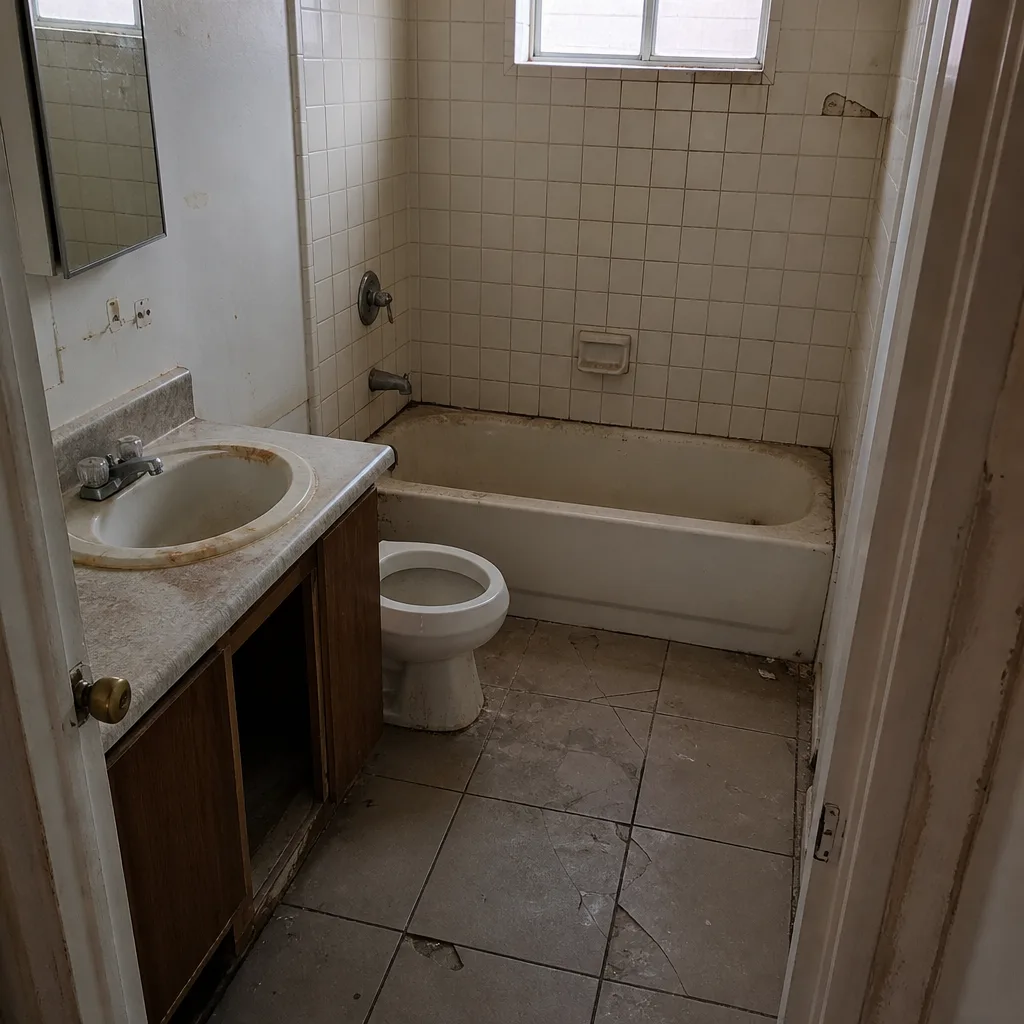 Before
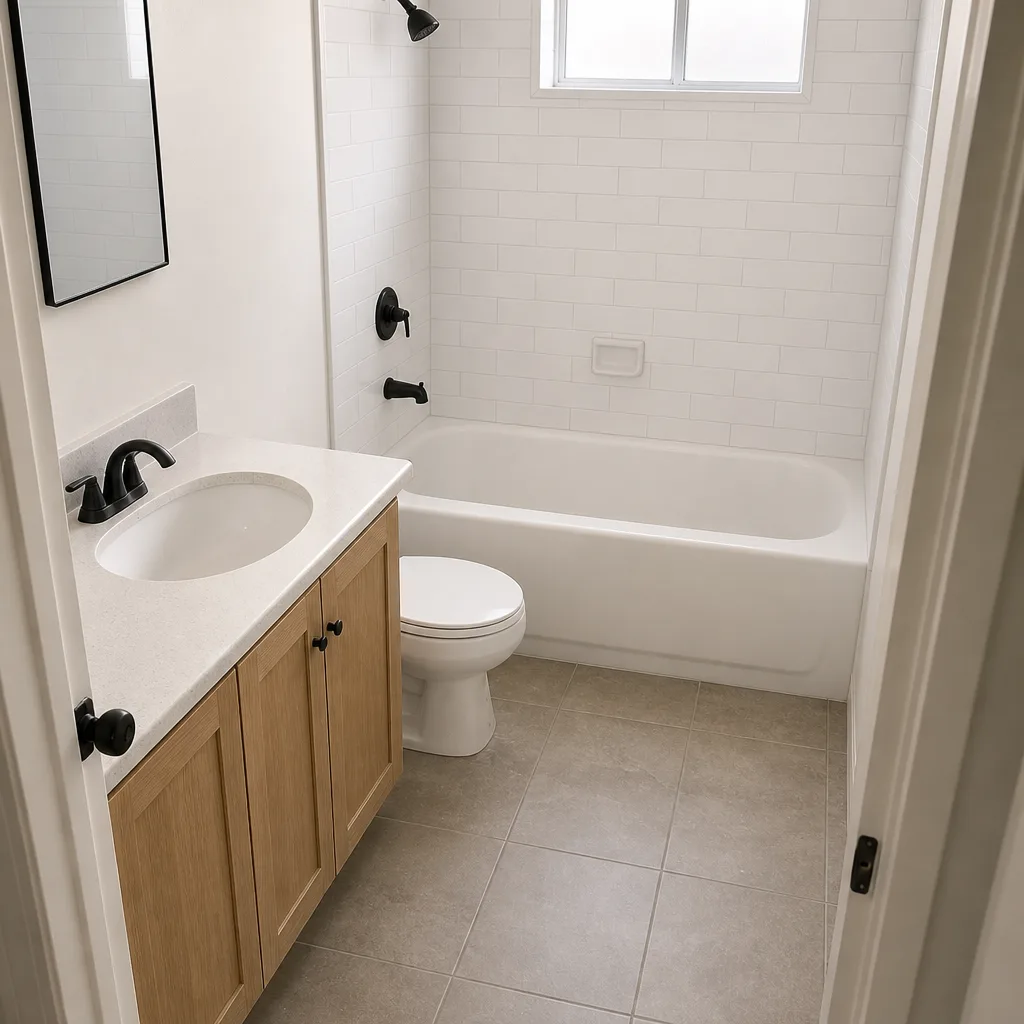 After
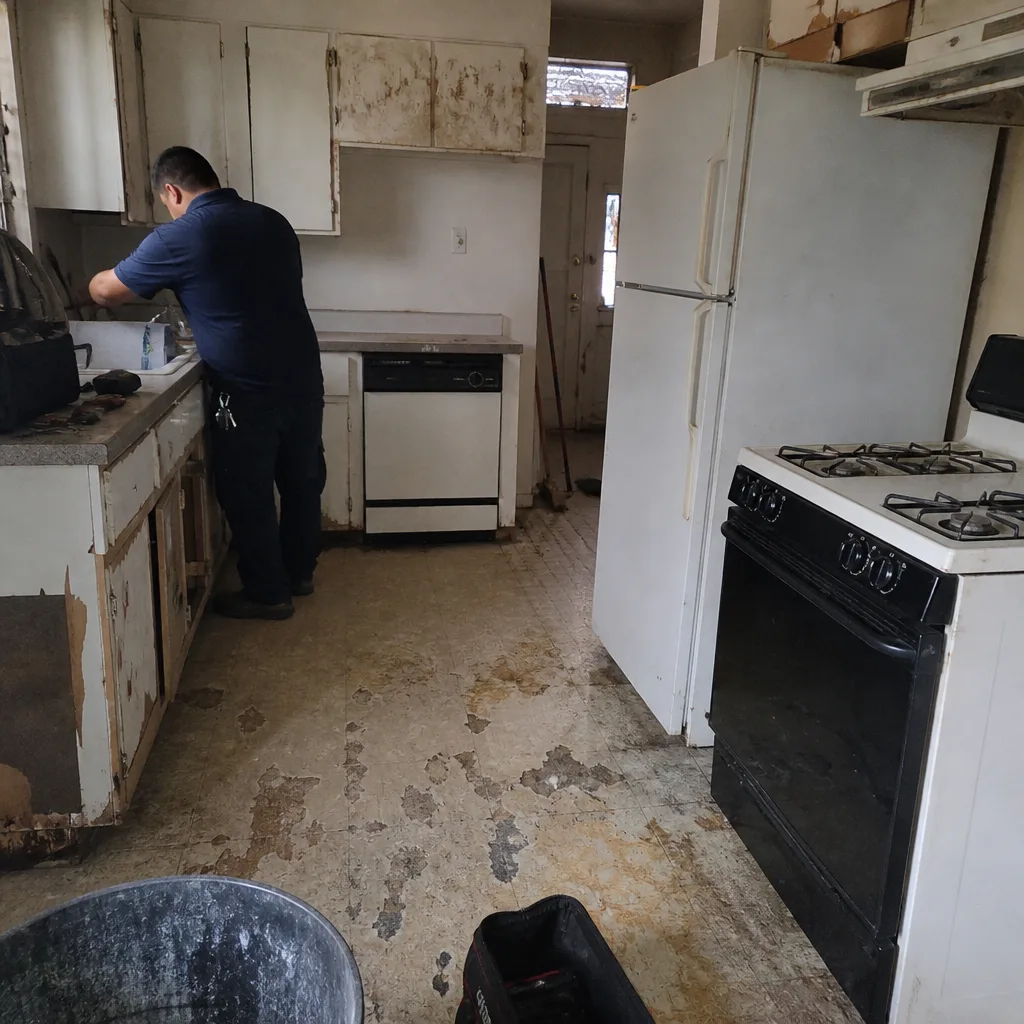 Before
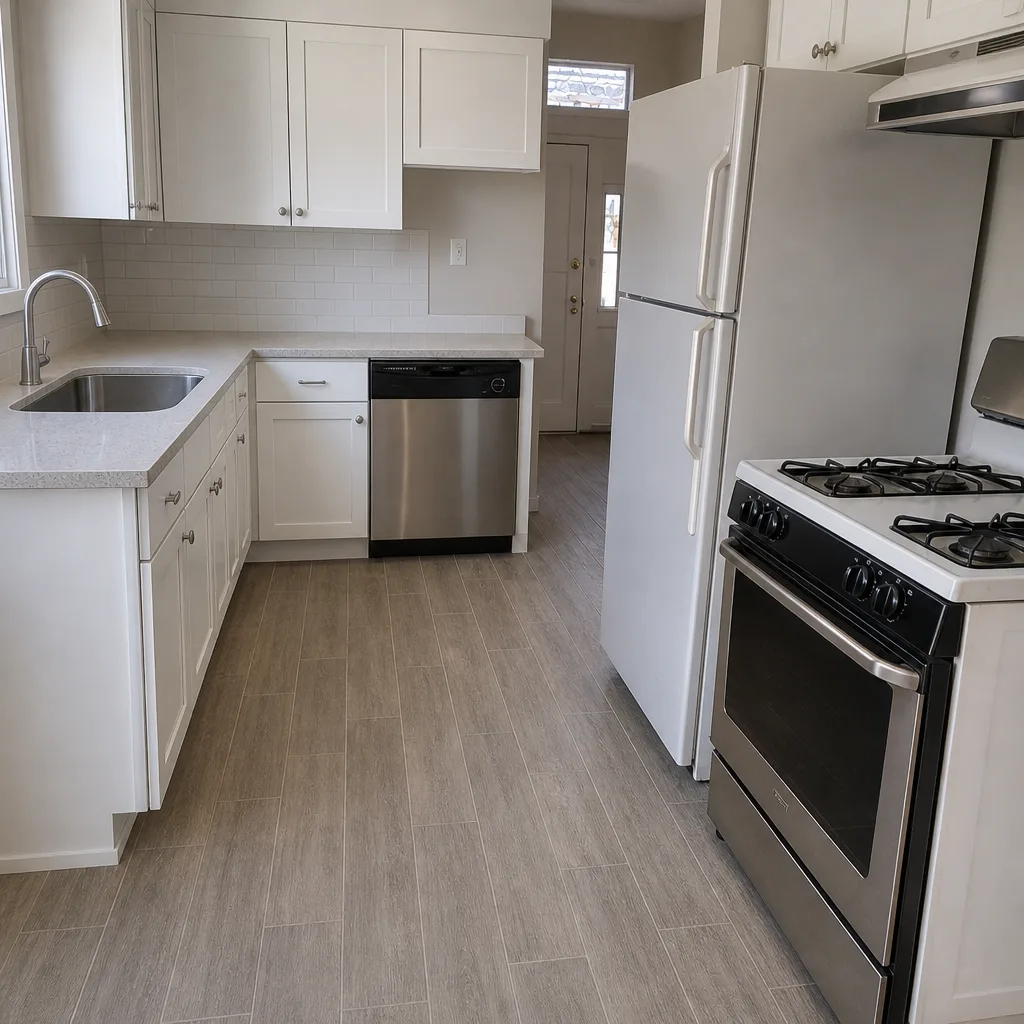 After
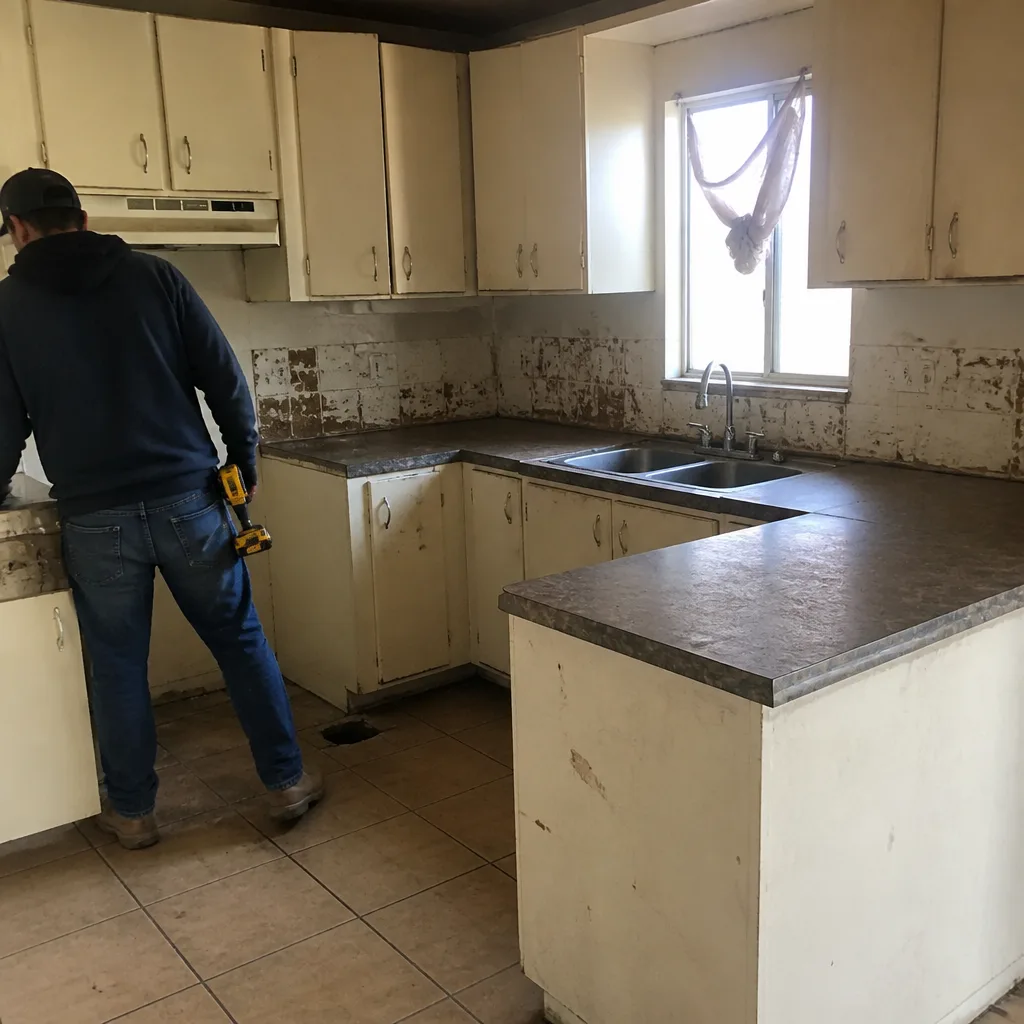 Before
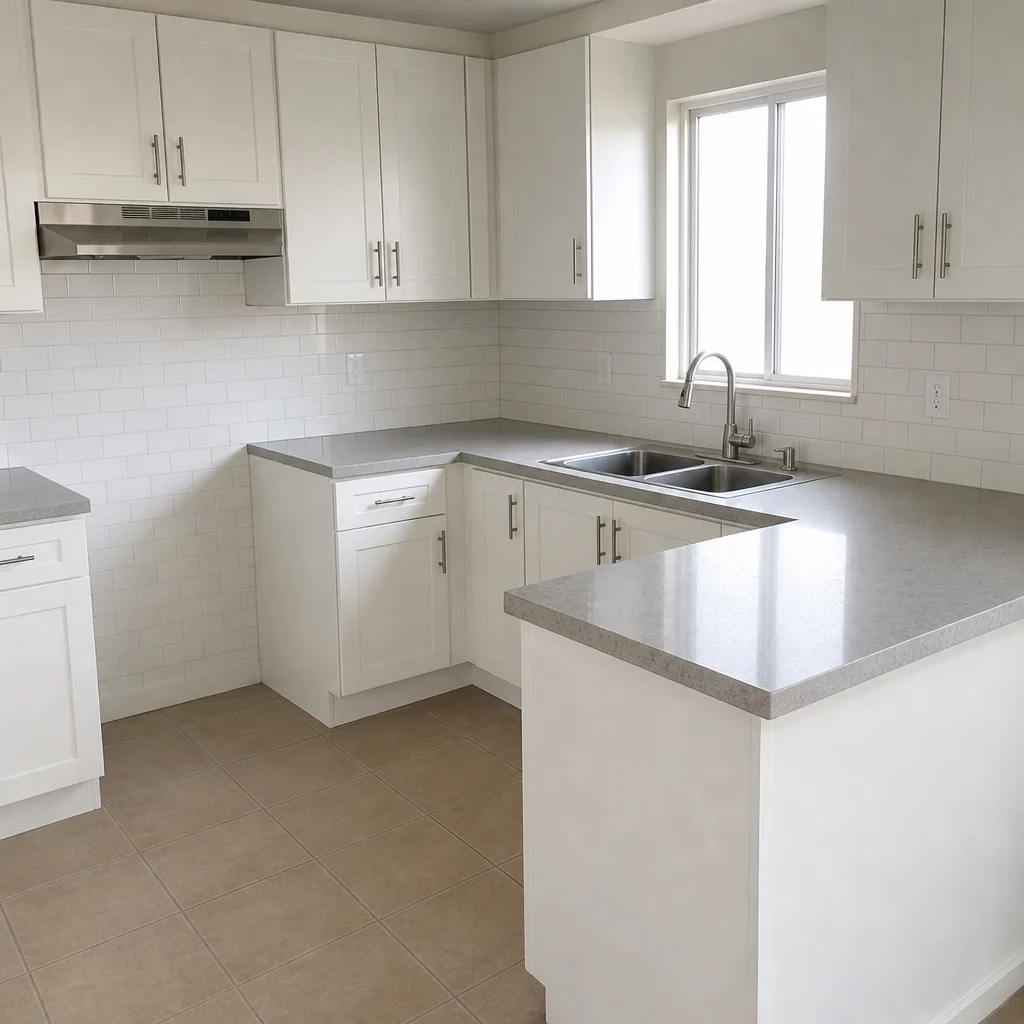 After
When to Call a Professional
Call a licensed professional immediately when water is coming through a wall or ceiling, when your HVAC stops cooling during a heat advisory, or when wind has visibly lifted roofing or broken a window seal. Don’t wait to see if it gets worse – the first two hours decide the repair cost. Also call if you see efflorescence on stucco, a tripped breaker that won’t reset after a rain, or a roof patch that has lasted more than a week with no documented brand match. Those are the cases where a temporary fix quietly becomes a warranty problem, which is what the 365-Day Done Right Promise exists to prevent. Bradford Remodeling Sunrise Manor offers free estimates in Sunrise Manor – call (844) 834-2810. A live person answers any hour, and we’ll put the price in writing before any work starts. If you’re weighing a larger repair or bathroom remodeling in Sunrise Manor, we’ll bring the same discipline to the plan.
Frequently Asked Questions
Move water away from the foundation if you safely can, photograph the wall before touching anything, and call a licensed contractor – don’t seal it yourself mid-storm. The visible crack is rarely the whole failure, and a proper repair needs an inspection of the stucco field. Call (844) 834-2810 for a free estimate once the rain clears.
Plan on a 24-to-48-hour callback with most licensed contractors at the peak of a heat advisory. The homeowners who shorten that window are the ones who already have a number to call. Your best defense is pre-season maintenance and a written service agreement – not a last-minute Google search. Call (844) 834-2810 before the next heat wave to talk scheduling.
Most structural repairs – roof decking, framing, stucco repair over a certain scope – require a permit with your local building authority. Cosmetic patches and paint typically don’t. The rule of thumb: if the repair touches the structure or the weather barrier, it needs a permit. A by-the-book contractor pulls it for you and passes inspection; ask before you sign.
Ask for the Nevada State Contractors Board license number in writing, then look it up yourself on the board’s online lookup – verify it’s active and covers the scope. Also ask for a current certificate of insurance showing both general liability and workers’ comp. A legitimate contractor expects you to check and should have the number ready.
A written clause is enforceable; a verbal promise isn’t. A written clause named in your contract states the emergency response, the written price for stabilization, the scope of the guarantee, and the process for a free return visit if the work fails. Our 365-Day Done Right Promise is a full-year written guarantee – if the work fails inside that year, we return and correct it at no charge.
Most policies cover emergency stabilization (tarping, water extraction, temporary sealing) when it prevents further damage, but the coverage is specific to your policy’s terms. Document everything before any work begins, keep a written timeline, and ask your adjuster before you authorize more than temporary work. The photo record you take in the first hour is what protects the claim.
The Bottom Line
Sunrise Manor construction emergencies follow a documented pattern: monsoon intrusion through cracked stucco, HVAC failure during a heat event, and haboob roof and window damage. The homeowners who come out cheapest are the ones who photograph before touching anything, call a licensed contractor before the list fills, and insist on a written price and a written guarantee. Keep UV-rated tarps and a written contact sheet on hand. Verify every Nevada license before anyone gets on your roof. And when the work is done, hold the paper: a full-year written guarantee, not a verbal promise, is what protects you a year after the storm. Call (844) 834-2810 for a free estimate, any hour, and we’ll give you the price range in writing before any work starts.
Written by the team at Bradford Remodeling Sunrise Manor.