Last updated November 17, 2026







Free written scope consultation - allowances, timeline, and change-order rules on paper before a single trade is scheduled
DIY vs Professional Bathroom Remodeling: What’s Safe to Do Yourself
In Nevada, a homeowner can pull their own permit and do their own work. That sounds like freedom until you learn the next part: if you sell the house within one year of that permit, you must disclose that the work was owner-performed. That single line changes the math on DIY for most people. This guide draws the line by what is legally yours to own if it fails, not by how handy you are. You’ll learn which bathroom tasks in Sunrise Manor carry permit and liability consequences, which finish work is genuinely DIY-safe, and what a contractor’s guarantee actually does when you split the scope.
Quick Answer
Finish work is safe to do yourself: painting, hardware, mirrors, accessories, and swapping a vanity top without touching rough plumbing. Anything inside a wet zone is not: waterproofing, backer board, rough plumbing, and electrical in wet areas. Those tasks require permits in Clark County, and an owner-builder permit commits you to the liability personally, including the disclosure requirement at resale.
Styles & brands we work with
- Kitchen remodeling
- Bathroom remodeling
- Home additions & ADU
- Roofing
- Windows & doors
- Driveway & pavers
- Fence
Table of Contents
- Which Bathroom Tasks Need a Permit in Clark County?
- What an Owner-Builder Permit Actually Commits You To
- Finish Work That’s Genuinely DIY-Safe
- Work That Isn’t DIY Territory (And Why)
- What Happens to the Guarantee When You Split the Scope
- The Real Cost Calculation: Labor Isn’t the Only Number
- Failures You Can’t See Versus Failures You Can
- What a Properly Run Bathroom Remodel Looks Like
Which Bathroom Tasks Need a Permit in Clark County?
Clark County requires a permit for any work that touches the plumbing system beyond a fixture swap, any new or relocated electrical circuit, structural changes, and anything involving the water heater. If you are moving a drain, adding a vent, relocating a shower valve, or running a new GFCI circuit into a wet zone, that is permit work. Replacing a toilet, a faucet, or a vanity top on existing rough-in is generally not.
Here is the practical split we use when a homeowner in Sunrise Manor asks us what they can keep for themselves:
- Permit required: moving or adding plumbing supply or drain lines, installing a new shower pan with a drain relocation, adding a vent, new electrical circuits, relocating outlets or switches, structural wall removal, anything involving gas.
- No permit needed (finish only): painting, replacing cabinet hardware, hanging a mirror, installing towel bars and accessories, swapping a vanity top on existing rough plumbing, replacing a toilet or faucet with a like-for-like unit.
- Gray area, ask before you start: replacing a shower valve in kind, re-tiling a shower without touching the pan, swapping a light fixture in a dry zone.
Our technicians have up to 22 years of experience, and the pattern we see repeat in Sunrise Manor is homeowners pulling a permit for the visible part (new tile, new shower) and skipping the rough-in they can’t see. That is exactly backwards. The rough-in is what the inspection is actually there to catch.
What an Owner-Builder Permit Actually Commits You To
When a homeowner pulls their own permit in Nevada, they become the owner-builder. That means they are the one responsible for code compliance, scheduling inspections, and correcting anything the inspector fails. It is not a lighter permit than a contractor’s. It is the same permit with a different name on the responsibility line, and the name is yours.
Three consequences come with that:
- Inspection failures are yours to fix. If the rough plumbing fails inspection, the re-inspection and the re-do are on your time and your money. Calls answered by a live person won’t help you here, because you’re not hiring anyone.
- Resale disclosure applies. Sell within one year of an owner-builder permit in Nevada and you must disclose the work was owner-performed. That is a negotiating lever for a buyer, not a badge of pride.
- Insurance coverage can shift. Homeowner policies often exclude or limit claims arising from unlicensed self-performed work, particularly water damage from a plumbing failure. Your agent can tell you the specific exclusion for your policy in writing. Get it in writing, the same way you’d want it from a contractor.
None of this means DIY is wrong. It means the decision is a legal one as much as a skill one. If you’re going to own the permit, own the consequences with your eyes open.
Finish Work That’s Genuinely DIY-Safe
There is real money to save in finish work, and it carries almost no legal exposure. Painting a bathroom properly is one of the best DIY returns on the list. So is hardware. If you’re handy and patient, a Sunrise Manor homeowner can credibly take on the following without a permit or a call to a general contractor in Sunrise Manor.
- Paint. Bathrooms need a mold-resistant bath enamel and proper surface prep. Strip failing caulk, prime bare patches, two coats. A solid weekend job in most Sunrise Manor bathrooms.
- Cabinet hardware. Pulls and knobs, with the right jig. Measure twice; a mis-drilled hole in a finished cabinet face is a real problem.
- Mirrors and medicine cabinets. Hanging is straightforward. Wall anchors matter, and so does hitting studs where you can.
- Towel bars, hooks, toilet paper holders, shelves. Straightforward, provided you know what’s behind the wall.
- Lighting in a dry zone. Swapping a bathroom vanity light fixture in a dry area is reasonable for a confident homeowner. Anything inside the wet zone is a different conversation.
- Faucet and showerhead replacement. Like-for-like swaps on existing rough-in. Anything requiring a shutoff relocation or new supply line is permit work.
- Caulking and grout touch-ups. Cosmetic, cheap, and one of the tasks that actually preserves your shower’s life.
What all of these have in common: no permit, no wet-zone waterproofing, and failure is visible right away. A paint job that goes wrong shows up immediately. A faucet that leaks onto the floor shows up the same day. Nothing is hidden.
Work That Isn’t DIY Territory (And Why)
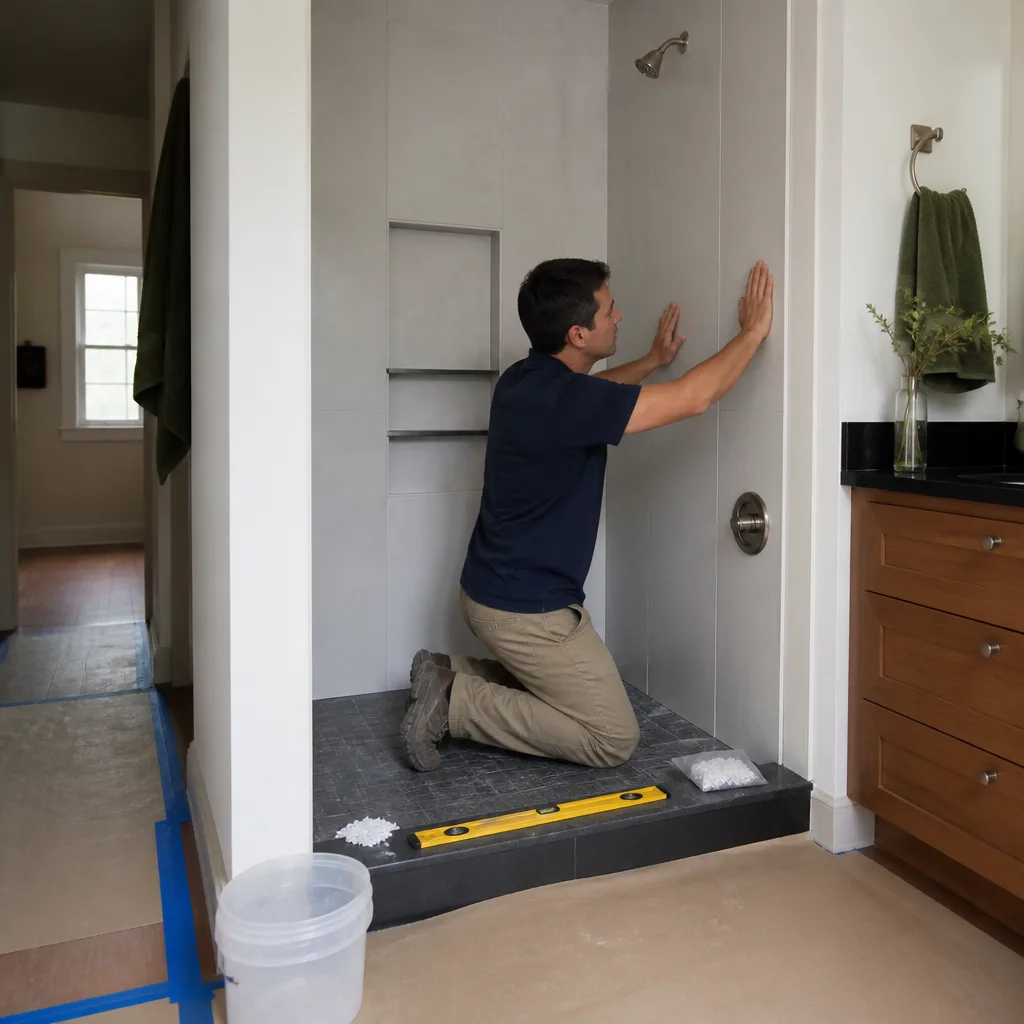
Here is where we are blunt. Wet-area waterproofing is not a homeowner task, not because we think homeowners are incapable, but because the failure mode is silent for years. A properly built shower pan is a layered system: a pre-slope, a liner or a bonded membrane, seams treated, penetrations sealed, a flood test before tile. Get one step wrong and you have a shower that works perfectly for 18 months and then rots your subfloor and the framing behind it.
The same applies to rough plumbing. A shower valve installed an inch off plumb, a drain not vented correctly, a P-trap that siphons because the vent is missing: none of these fail the day you finish. They fail the day you sell, or the day the ceiling below stains. Electrical in a wet zone is a shock risk and a code requirement. GFCI protection is not optional near water, and a bathroom without it is a genuine hazard. Gas lines anywhere are out of DIY territory entirely.
We’ve walked into Sunrise Manor bathrooms where a homeowner did the tile themselves and it looked like a showroom. We’ve also walked into bathrooms where the same homeowner installed a tile shower over drywall with mastic. The first is a save. The second is a tear-out and a moisture remediation bill. The difference wasn’t talent. It was knowing where the line is. In our experience, the line is: if the failure is invisible for a year, hire it out. For that scope, look at what a proper bathroom remodeling in Sunrise Manor engagement includes, because the hidden work is most of it.
What Happens to the Guarantee When You Split the Scope
This is the section most homeowners skim and shouldn’t. If you hire a contractor and then perform part of the scope yourself, the contractor’s workmanship guarantee almost always covers only their own work. That sounds obvious. What trips people up is adjacency.
Say you tile the shower floor yourself and the contractor builds the pan and installs the tile above the floor line. A leak appears in six months. Nobody can prove whether the leak came from your tile setting, the contractor’s pan, or the transition between them. In most contracts, the contractor’s guarantee excludes the disputed zone. You’re paying for the diagnosis either way.
The clause you need, in writing, before you split any work:
- Defined boundary. Exactly which scope items are yours and which are theirs, in writing, with the interface zone called out explicitly.
- Exclusion language. What the contractor’s guarantee does not cover. It should not surprise you later.
- Interface responsibility. Who owns the transition between your work and theirs, and what they’ll do about a failure at that boundary.
- Warranty pass-through. The manufacturer warranties on materials they install are yours, and you should have the paperwork in hand at close.
Bradford Remodeling Sunrise Manor writes the price before work begins, and every completed project carries the 365-Day Done Right Promise: if the work fails inside that window, we come back and correct it at no charge. That covers our scope, and it starts with everyone agreeing what “our scope” means before the first tool comes out. If you’re going to split the work, that conversation happens up front, in writing. It doesn’t happen after the leak.
The Real Cost Calculation: Labor Isn’t the Only Number
Most DIY math stops at labor savings. That’s the wrong column. Here’s the fuller ledger we’d want a homeowner to run before deciding, based on the bathroom projects we see come through Sunrise Manor:
- Labor you avoid: real money. Tile setting, waterproofing, plumbing rough-in, and electrical typically make up the majority of a bathroom’s labor line. Doing finish work yourself can genuinely save you money.
- Permit fees: Clark County permit fees vary by scope, but they apply whether you pull the permit or a contractor does. DIY doesn’t save the fee, it just moves the administrative work to your desk.
- Permit amendment fees: if you discover mid-project that what you planned (and pulled for) wasn’t the actual scope, you amend the permit. That means more time, more money, and an inspection you didn’t schedule for.
- Inspection re-do cost: a failed plumbing rough-in inspection means the wall comes back open, the fix happens, and the re-inspection is scheduled. Nobody discounts that work for being caused by you.
- Insurance coverage gaps: the real number to call your agent about. Water damage from self-performed plumbing that your policy excludes can easily exceed the labor savings on the whole job.
- Resale impact: owner-performed work within one year of the permit must be disclosed at sale. Expect a buyer’s inspector to look harder at that bathroom and expect a concession to be asked for.
The honest bottom line: DIY saves on finish work. DIY generally does not save money on the permit scope, once the failure-mode risk and insurance exposure are priced in. Draw the line at the permit boundary, and you get most of the savings and none of the catastrophic downside.
Failures You Can’t See Versus Failures You Can
The single most useful way to decide DIY versus hire is to ask: if I get this wrong, how long until I know? If the answer is hours or days, do it yourself. If the answer is a year or more, hire it out. The hidden-failure list is where most of the real cost in a Sunrise Manor bathroom remodel lives.
Hidden until years later:
- Waterproofing and shower pan construction. Wrong pre-slope or a compromised liner doesn’t leak visibly until the subfloor and framing are damaged.
- Backer board installation. Screw pattern, joints, and the transition to the pan are all out of sight once tile is on.
- P-trap venting. A missing or improper vent can siphon the trap and let sewer gas in without any obvious leak. It’s a slow, subtle problem.
- Tile setting over the wrong substrate. Looks perfect for a year, then the grout line moves and you hear a hollow tap.
- Electrical in the wet zone. A missing GFCI isn’t a visible failure. It’s a shock risk that exists quietly until it matters.
Visible right away:
- Paint. Goes on, looks good or bad within hours.
- Hardware. Either fits or doesn’t.
- Mirrors and accessories. Level, straight, anchored, done.
- Faucet swap. Leaks show up immediately, or they don’t.
- Caulk lines. You can see them the day you finish.
This is the risk line. Hidden-failure tasks are permit work, and they carry the owner-builder liability if you do them yourself. Visible-failure tasks don’t. If you’re going to be selective about where you save, save on the visible side. Our own materials roster is documented and traceable, from KraftMaid and Wellborn cabinetry to Kohler and Moen fixtures, because when the spec is documented, the manufacturer warranties and our own guarantee both have something to stand on. That traceability matters more than any single brand name. When we coordinate a combined kitchen and bath scope for a Sunrise Manor homeowner, the paperwork is the reason it holds up.
What a Properly Run Bathroom Remodel Looks Like
If you decide the wet-zone work goes to a professional, here’s what a squared-away job looks like so you can hold any contractor to it, including us. This is the process you should see, in roughly this order:
- Written scope and price before any work starts. Line-item, no numbers that move at the door. If the price is verbal, the price is a rumor.
- Permit pulled by the contractor, with your knowledge. You’ll see the permit and the inspection schedule. You’ll know exactly when the rough-in is inspected and when the final inspection happens.
- Rough-in and inspection. Plumbing, electrical, and framing are inspected while the walls are open. Nothing gets closed up until the inspection passes.
- Waterproofing and flood test. On the shower pan, before tile. Ask to see the flood test. A contractor who waterproofs properly will show you.
- Tile, fixtures, finishes. In sequence. Change orders, if any, are in writing before the change happens.
- Final inspection and close. Clean site, documented scope, and a signed written guarantee in your hand. For a Bradford project, that means the 365-Day Done Right Promise, and it means the manufacturer paperwork for anything installed under our name.
If you’re taking on an adjacent room at the same time, the sequence matters just as much. See how we sequence a kitchen remodeling in Sunrise Manor so the two jobs don’t fight each other on the calendar. And for the broader picture of how a whole project fits together, the Bradford Remodeling Sunrise Manor home page is the front door.
Common Mistakes to Avoid
- Pulling an owner-builder permit without reading what it means at resale. The one-year resale disclosure is the part most homeowners learn about after they’ve already framed the wall.
- Treating tile as the visible layer that matters most. It’s the waterproofing underneath that decides whether the tile lasts, and in Sunrise Manor’s dry summers and monsoon-season humidity swings, a compromised shower system dries out badly.
- Splitting the scope without defining the interface zone. If your tile meets their shower pan and it leaks, the argument about who pays is longer than the repair.
- Skipping the flood test. Nobody loves waiting on a full pan of water to sit for the required time. It’s the difference between a shower that lasts and a shower that tears out its own floor in year three.
- Using a drywall product in a wet zone because it’s on sale. Backer board is the correct substrate. Drywall in a shower is a tear-out with a delay.
- Assuming your homeowner policy covers self-performed plumbing failures at the same level as licensed work. Ask your agent before you start, not after the ceiling below stains.
- Calling in a contractor after the rough-in is done and expecting the same guarantee. A contractor’s guarantee covers their work. Pre-existing work they didn’t do isn’t theirs, and a disciplined contractor will say so plainly.
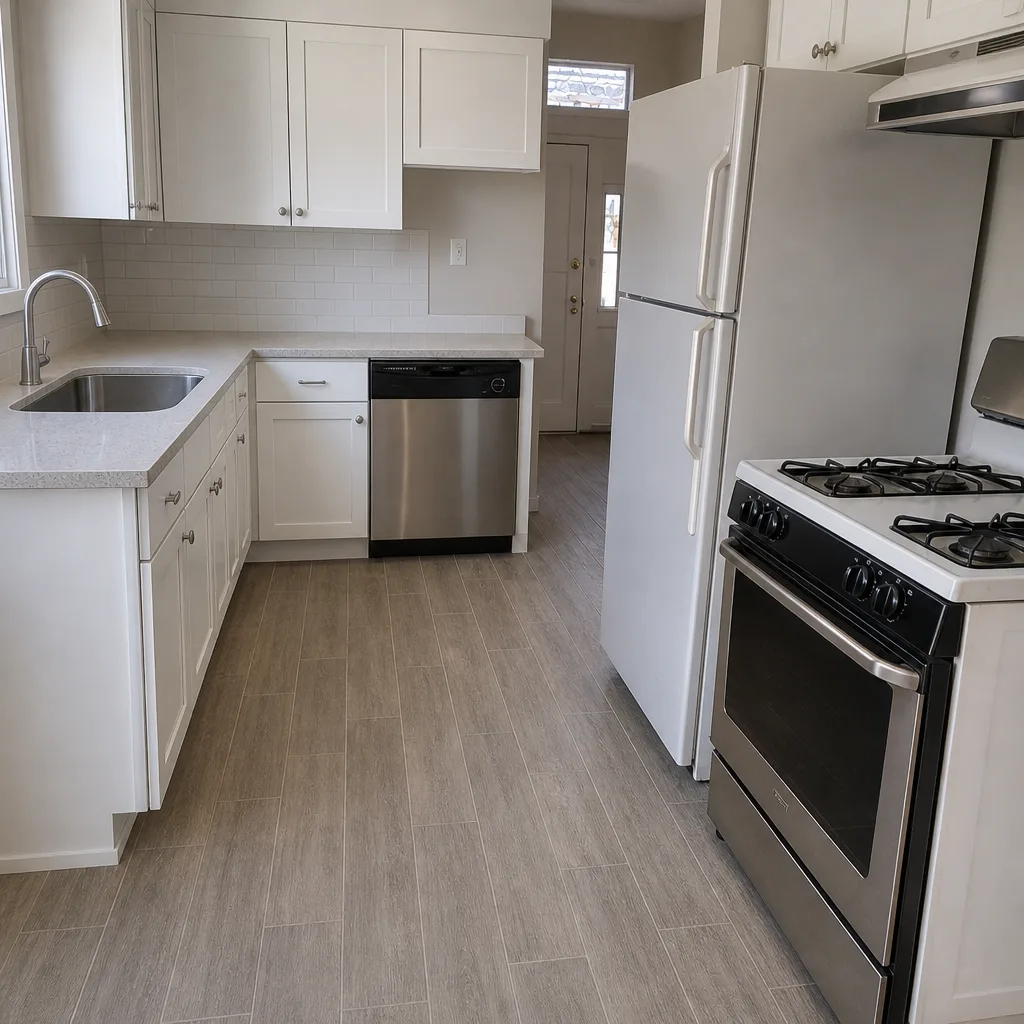
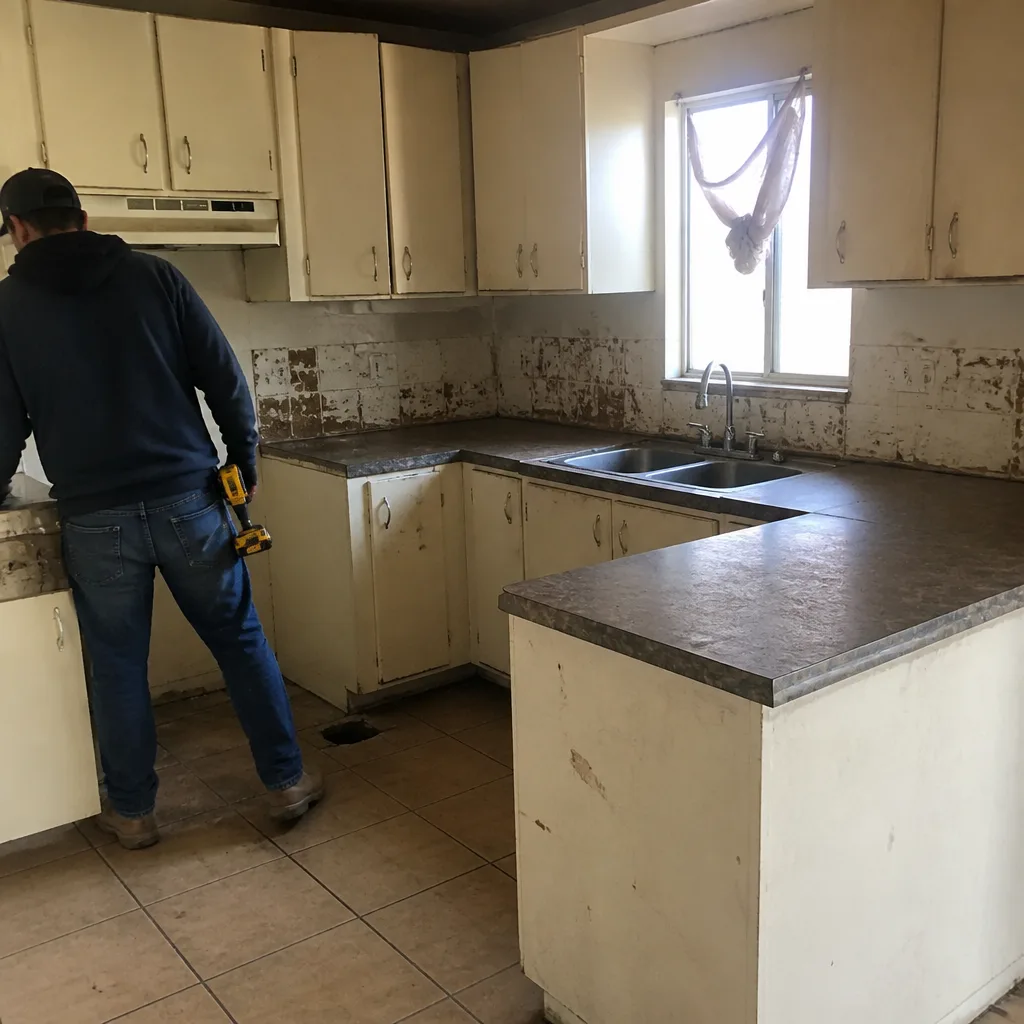
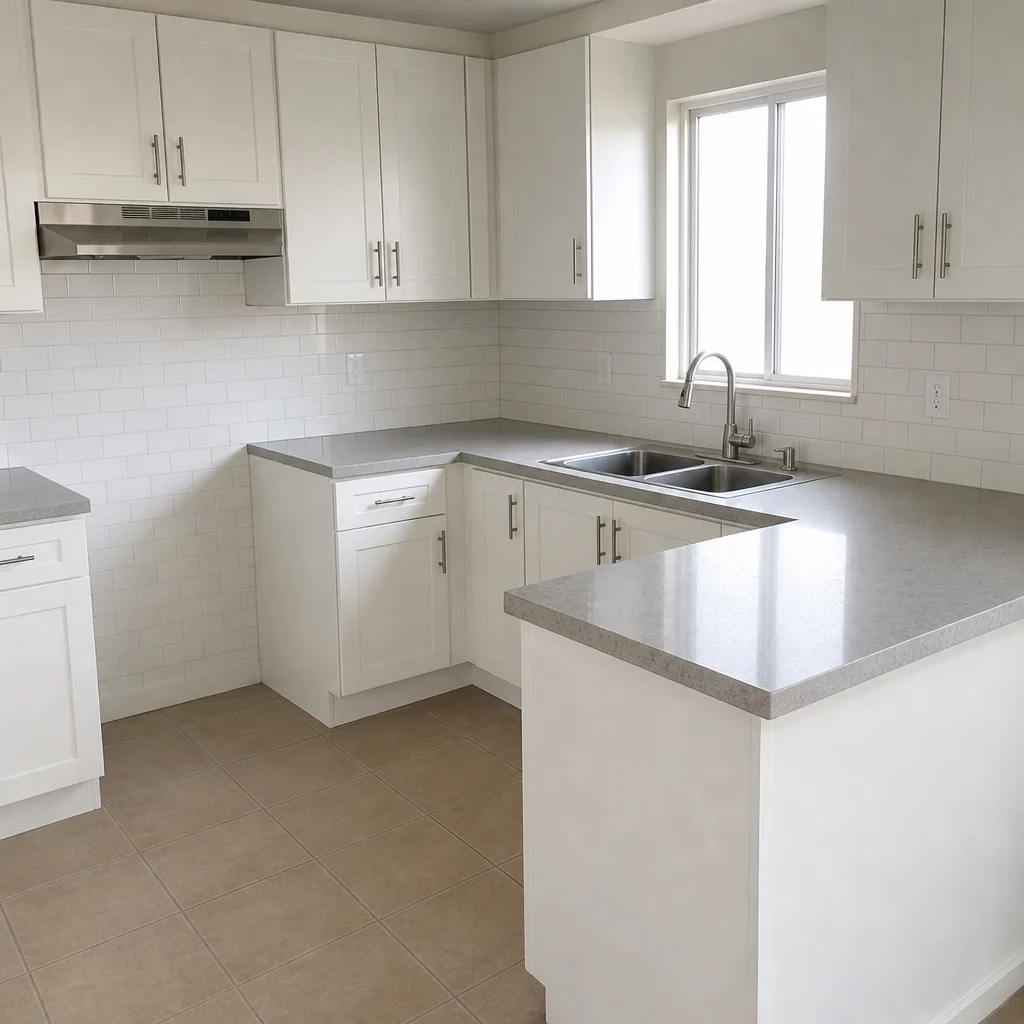
See the difference
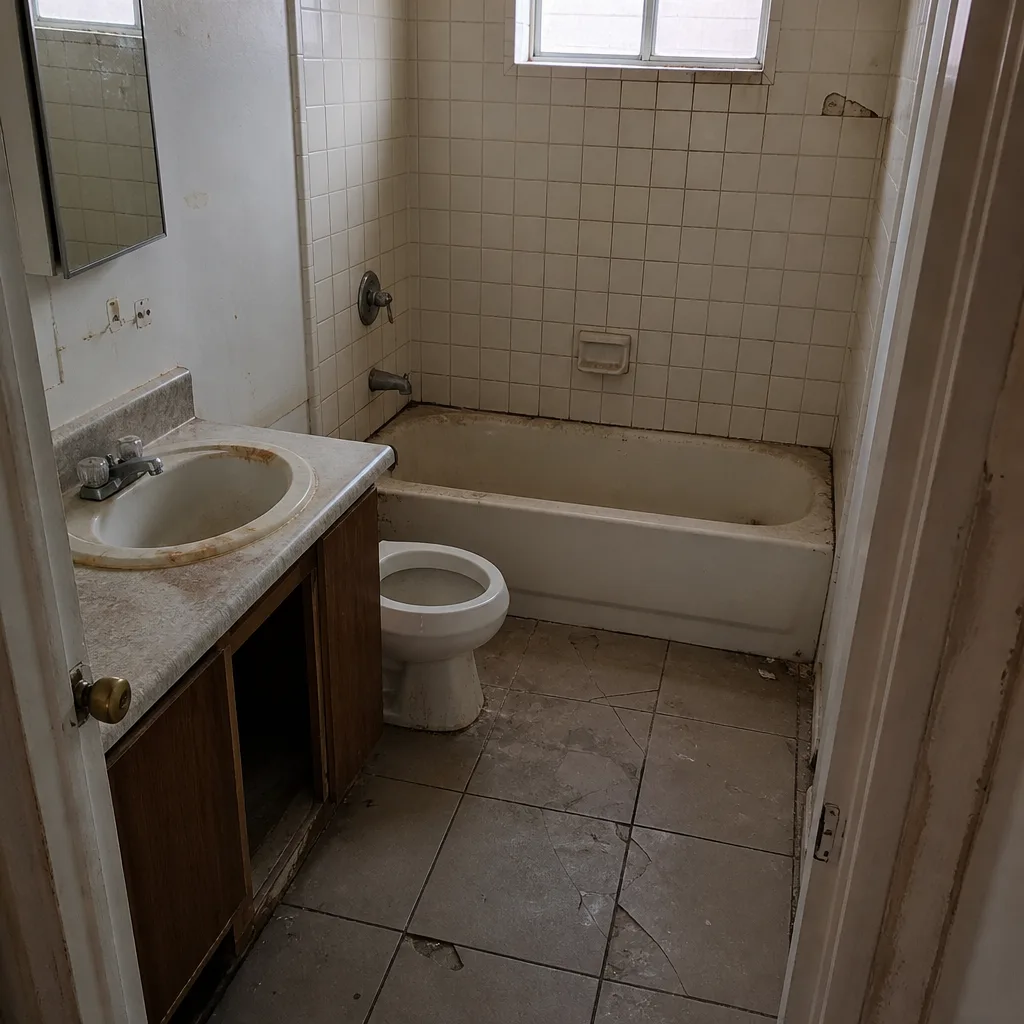 Before
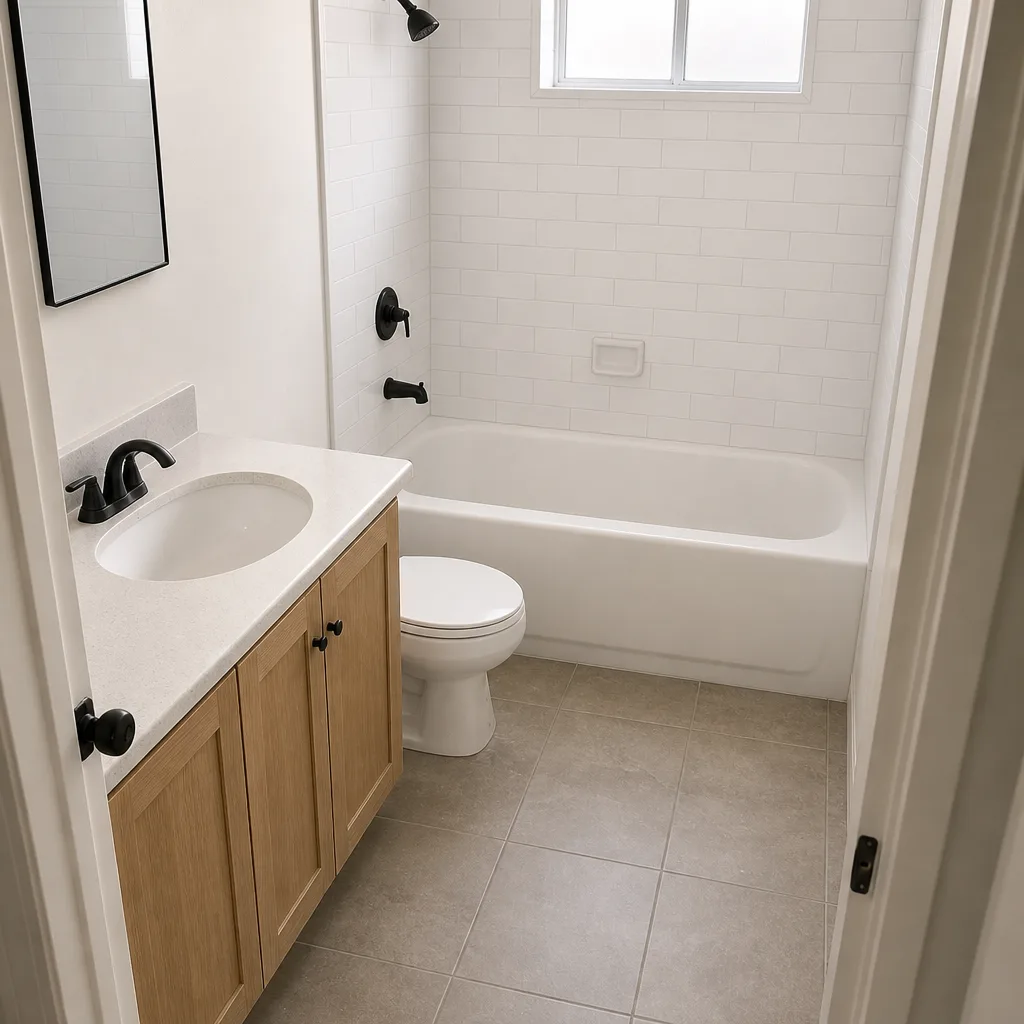 After
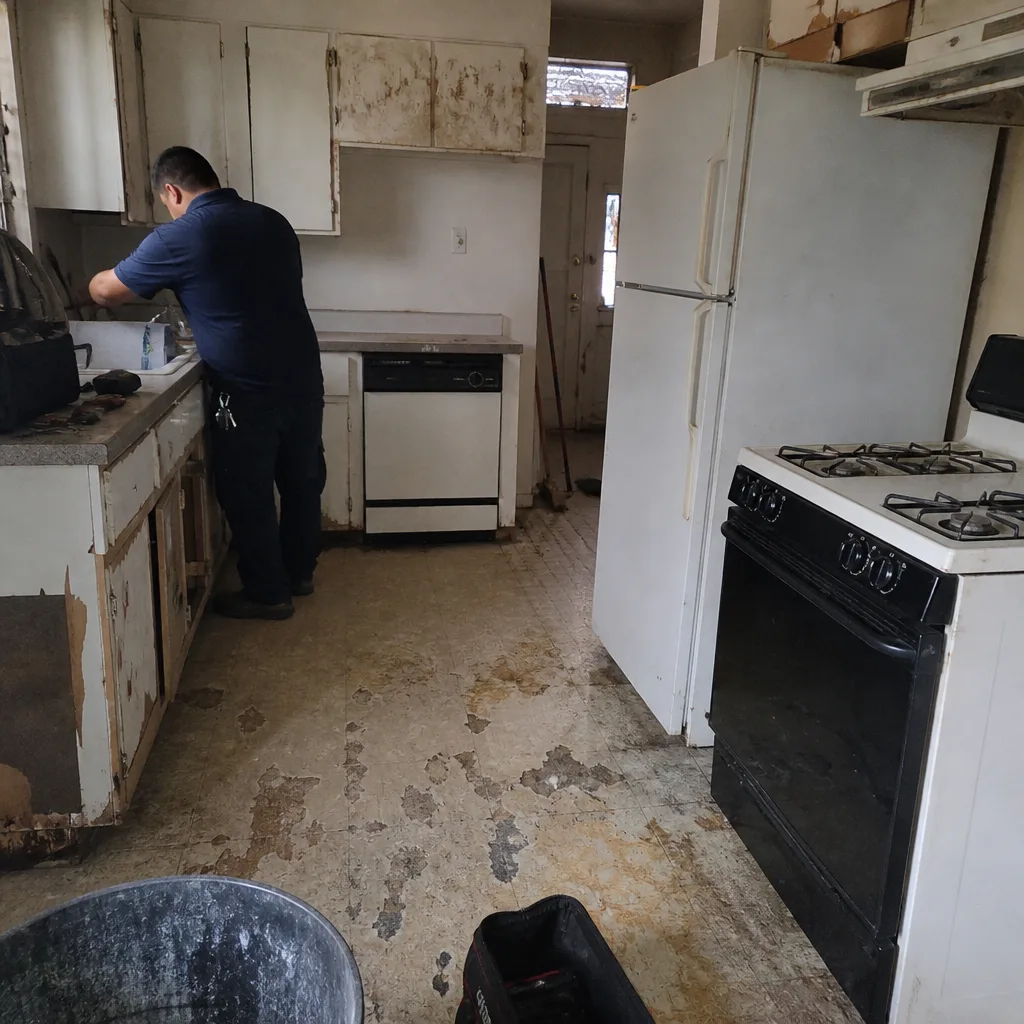 Before
 After
 Before
 After
When to Call a Professional
Call a professional for anything that touches a permit, a wet zone, gas, or a structural wall. That includes moving or adding plumbing lines, building or replacing a shower pan, installing or relocating electrical inside the bathroom, removing a wall, and any gas appliance. It also includes the situation where you’ve already started and the work is now hidden: if the rough-in is open and the inspection was never scheduled, get a professional in before it gets closed up. And call if the failure shows up years after DIY work and you’re not sure how deep the damage runs. Our technicians have up to 22 years of experience diagnosing exactly that. In Sunrise Manor, Bradford Remodeling Sunrise Manor offers free estimates – call (844) 834-2810. Every project gets a written price before work begins and the 365-Day Done Right Promise at close.
Frequently Asked Questions
Yes, with limits. Nevada allows a homeowner to pull an owner-builder permit and do their own work, including plumbing and electrical, provided the work is inspected and code-compliant. The obligations that come with that include the one-year resale disclosure requirement and full personal responsibility for any inspection failures. Finish work like painting and hardware needs no permit at all. Call (844) 834-2810 for a free estimate if you’d rather hand the permit scope to a professional team.
The work is inspected to the same code standard. The difference is who is on record as responsible. With an owner-builder permit, the homeowner is responsible for code compliance, scheduling inspections, and any re-do if an inspection fails. With a contractor’s permit, that responsibility sits with the licensed contractor. The 365-Day Done Right Promise is an example of what that responsibility looks like in practice when it’s a contractor’s name on the permit.
Generally no. A contractor’s guarantee covers the scope they perform, and most contracts exclude anything the homeowner did or touched. The exceptions are matters of the contract: a clearly defined interface zone, and explicit exclusion language. Get the boundary in writing before anyone starts. Otherwise, a moisture failure at the seam between your tile and their pan becomes a shared problem with no owner.
No, and we say that without hedging. The failure mode is hidden for a year or more, and by the time you see it, the repair includes the subfloor, the framing, and sometimes the room below. The labor savings on a shower pan don’t cover the tear-out. This is the single task we’d tell a homeowner to hire out even if they plan to do everything else themselves.
It depends on scope, but the honest comparison isn’t labor vs. labor. It’s labor vs. labor plus permit amendment risk, inspection re-do cost, insurance coverage gaps, and the resale concession from an owner-performed disclosure. Finish work done yourself saves real money. Wet-zone work done yourself usually doesn’t save money once the risk is priced in. Call (844) 834-2810 for a free estimate and a written line-item price to compare against your DIY plan.
You must disclose that the work was owner-performed. That’s the requirement under Nevada law for owner-builder permitted work. A buyer’s inspector will look harder at that bathroom, and expect a concession to be asked for at the negotiating table. If you’re selling within a year, plan for that conversation.
The Bottom Line
The DIY-versus-hire line isn’t about talent. It’s about which tasks you can legally and financially afford to own if they fail. Finish work like paint, hardware, mirrors, and accessories is genuinely DIY-safe, and the failures show up immediately. Wet-zone waterproofing, rough plumbing, electrical in wet areas, and anything that requires a Clark County permit is where the liability follows you, not the contractor, and the failure is hidden until it isn’t. Draw the line at the permit boundary and you keep the savings and skip the catastrophe. For anything on the permit side, call (844) 834-2810 to schedule your free estimate. Bradford Remodeling Sunrise Manor puts the price in writing before work begins, and every project carries the 365-Day Done Right Promise. A live person answers the phone 24/7, and the crew that shows up is background-checked and uniformed. The Garrison Standard is the reason that’s true on every job.
Written by the team at Bradford Remodeling Sunrise Manor.