Last updated November 17, 2026








Free written scope consultation - allowances, timeline, and change-order rules on paper before a single trade is scheduled
Construction Warning Signs: A Sunrise Manor Homeowner’s Reference Guide
The most expensive contractor mistake isn’t hiring the guy who never shows up. It’s the one who shows up, starts demo, pulls no permit, and disappears after framing. By then you have an open structure, a lien exposure, and a Clark County stop-work order taped to your front door. The obvious scams get all the attention online. The costly ones happen after you’ve signed, in the quiet stretch between demo day and final inspection, when a homeowner is least sure what “normal” looks like on a job site. This guide covers those subtler signals. We’ll walk through what a real Clark County permit card looks like, how progress billing can run ahead of actual work, how to read a Nevada lien notice, and a few physical tells you can spot with no trade experience at all. Every one of these shows up in Sunrise Manor remodels.
Quick Answer
The clearest warning signs of a troubled remodel appear after the contract is signed: the permit gets pushed to “later,” materials get swapped without a written change order, unfamiliar sub crews appear, progress billing outpaces installed work, and lien notices arrive before you know what triggered them. A contractor who produces a posted Clark County permit card, a written price before work starts, and signed change orders for every material swap is running the job by the book. One who stalls on any of those three is the one to watch.
Styles & brands we work with
- Kitchen remodeling
- Bathroom remodeling
- Home additions & ADU
- Roofing
- Windows & doors
- Driveway & pavers
- Fence
Table of Contents
- Post-Contract Warning Signs Most Homeowners Miss
- What a Legitimate Clark County Permit Card Looks Like
- How Progress Billing Can Run Ahead of the Work
- Reading a Nevada Lien Notice Before It Attaches to Your Title
- Workmanship Tells You Can Spot Without Trade Experience
- Material Swaps and the Change Order That Should Have Protected You
- When a New Sub Crew Appears and Nobody Told You
- What a Squared-Away Close Looks Like
Post-Contract Warning Signs Most Homeowners Miss
The dangerous stretch starts the day you sign. Before that, a homeowner is comparing bids and asking good questions. After that, most people settle into “the crew knows what they’re doing” and stop watching the details. That’s exactly where a bad job gets built. The signs are small and easy to rationalize: the permit is coming “next week,” the tile that shows up isn’t the tile on the spec sheet, and the guy running the framing doesn’t match the crew chief you met at the bid.
In Sunrise Manor, we track five signals that a project is drifting off the rails after signature:
- Permit pushed to “later.” A contractor who starts demo before the permit is issued, or says he’ll “pull it once we get going,” is setting you up for a stop-work order from Clark County. Legitimate work waits on the card.
- Materials swapped without a written change order. If the KraftMaid cabinet door arrives as a generic line, you should have signed a change order first. No signature, no swap.
- New sub crews you’ve never met. A framing crew that shows up on day eight with no introduction and no name is worth a question. The contractor owes you a list of who’s on site.
- Progress billing that outpaces installed work. More on this below, but the short version: if the invoice races ahead of what’s physically built, you’re paying for risk you don’t control.
- Site silence. No one calls for three days during active work, and no one answers when you check in. A disciplined crew stays in contact even when nothing dramatic is happening.
Any one of these on its own is a question, not a red flag. Two or three together is a pattern. That pattern is what this guide exists to catch early.
What a Legitimate Clark County Permit Card Looks Like
Clark County posts a permit card on the job site, and the card is the single most reliable document in the entire project. It proves the county knows work is happening, that plans were reviewed, and that inspections are scheduled along the way. If you’re three days into active work in Sunrise Manor and there’s no card visible from the street or taped to the inside of a window, ask why before another board gets nailed up.
Here’s what to check when you find it:
- Address match. The card should list your property address, not the contractor’s office and not a nearby parcel.
- Scope match. A kitchen remodel permit should say kitchen remodel. A permit for a water heater when you’re building an addition is a mismatch worth flagging.
- Current status. The card shows the inspections that have passed and the ones still pending. You want to see sign-offs, not blanks, as work proceeds.
- Contractor identified. The licensed contractor’s business name should appear on the card. If it shows a name you don’t recognize, that’s your first hint a sub is running the permit under someone else’s license.
The reason this matters in Sunrise Manor specifically: the unincorporated parts of the valley run on a mix of older housing stock and newer infill, and the county’s inspection schedule doesn’t care whether the homeowner was paying attention. A missing card means inspections aren’t happening. Inspections that aren’t happening mean the work may not pass when the county finally shows up. The remedy at that point is often demo, not paperwork.
How Progress Billing Can Run Ahead of the Work
Progress billing is normal on a big remodel. You pay in stages as work completes, so neither side carries the whole cost. The problem comes when the stages drift ahead of physical progress. A contractor who bills 40% after demo, when demo is 15% of the job, is using your money to fund the next phase or the next project. If he walks, you’re out the difference and the structure on your property is half-finished.
Here’s how to keep progress billing honest:
- Match each invoice to a completed milestone in the written scope. “Demo complete” is a milestone. “Framing started” is not.
- Walk the job before you sign the check. If the invoice says tile is complete, look at the tile. Every time.
- Keep retainage. A common practice is holding back 10% until final inspection and punch list close. A contractor who resists retainage is telling you something.
- Require a written request for any change. If the price moves mid-job, there’s a change order behind it. No change order, no price change.
In our experience, the discipline here is what separates a contractor who runs a job from one who runs a cash flow. The written-price commitment matters at the bid, and it matters just as much every month after. If the numbers move, they move on paper you signed.
Reading a Nevada Lien Notice Before It Attaches to Your Title
Nevada has a preliminary notice process, and if you ignore it, a subcontractor or supplier can eventually file a mechanics lien against your property. That lien attaches to your title, which means it affects your ability to sell or refinance until it’s resolved. The whole thing is preventable, and it’s entirely invisible to a homeowner who’s never seen a lien notice before.
What to do the day a notice arrives:
- Read the name. The notice comes from someone the contractor owes, usually a sub or a material supplier. That sub is telling you, in writing, that if he doesn’t get paid, he’ll come after your house.
- Check whether you’ve already paid the general contractor for that work. If you’ve paid and the sub still hasn’t been paid, that’s a contractor problem, not a you problem. But it’s your house on the line, so it’s your problem to track.
- Ask the contractor in writing to confirm the sub has been paid. Get it in writing. Silence is not an answer.
- Talk to a Nevada construction attorney if the notice escalates. Response windows are short, and the paperwork is unforgiving.
Bradford Remodeling Sunrise Manor operates as a member of the Garrison Partners family, held to The Garrison Standard, and we take lien risk seriously enough that it’s part of how we contract. Lien notices are rare when the money flows in the order the scope is written. When they show up, they’re usually a sign the contractor was running someone else’s money through your job.
Workmanship Tells You Can Spot Without Trade Experience
You don’t need a level and a moisture meter to catch a bad job early. A handful of visual checks catch most of what goes wrong, and they work in Sunrise Manor’s dry desert climate, which has its own way of exposing shoddy work.
Level checks on tile
Run your hand across a tile floor. You should feel no lipage, meaning no tile edge standing proud of its neighbors. If you can feel the edges, the substrate wasn’t flat or the setter rushed. Grout lines that wander off parallel are the same story. Bring a two-foot level if you want to be thorough, but your hand is usually enough.
Caulk-over-caulk layering
Caulk is meant to be removed and replaced, not topped. If you can see two distinct beads layered on top of each other around a tub or a window, the last person fixed a leak by covering it. That’s a sign the underlying joint was never dealt with.
Unsealed penetrations in exterior walls
Every pipe, wire, and vent that passes through an exterior wall gets sealed. In Sunrise Manor, we regularly see failed seals on hose bibs and dryer vents, where the gap lets in the desert wind and a little dust every day. It also lets in monsoon-season rain when it comes. You can spot an unsealed penetration by looking for daylight, dust streaks, or a bead of caulk that’s cracked away from the wall. James Hardie siding is only as weather-tight as the sealing around it, and the sealing is where the shortcuts show first.
Fastener and trim tells
Missing fasteners on trim, a baseboard that pulls away from the wall by a credit card’s width, or cabinet doors that don’t sit flush in their frames after a week of use. None of these are catastrophic. All of them are the kind of detail a disciplined crew checks before they leave. A sloppy finish usually means a sloppy rough-in behind it.
Material Swaps and the Change Order That Should Have Protected You
Material swaps are the most common post-contract warning sign in Sunrise Manor remodels, and the most costly to leave unaddressed. The cabinet brand on the spec sheet is KraftMaid, and the doors arrive with a different finish or a generic manufacturer’s stamp. The James Hardie siding on the plan comes as an unmarked fiber cement product. The countertop quoted as Cambria shows up without any documentation. Each swap saves the contractor money and costs you the spec you paid for.
The fix is not to argue on delivery day. The fix is that every material change requires a written change order signed by you before the material is ordered. The change order names the swap, the reason, and the dollar difference, and you both sign it. A contractor who orders material and then “mentions” the swap after it’s on the truck is not running the job by the book. A written price before work starts is the baseline. Written change orders are how that price stays honest through the job. If you’re upgrading a kitchen and want to see how we spec the material side, our kitchen remodeling in Sunrise Manor page covers the brand roster and the written-spec process.
When a New Sub Crew Appears and Nobody Told You
Subs are normal. Most of the trades on any remodels project, from electrical to tile, are subcontracted. What matters is that you know who’s on your property and who’s responsible for their work.
Two things to check when an unfamiliar crew shows up:
- Was the sub named in the contract or agreed in writing? A written scope typically lists the trades being run by the general contractor and the trades being subbed. If a new crew shows up outside the scope, you get a call before they walk through your door.
- Are they background-checked and identifiable? Bradford Remodeling Sunrise Manor runs background-checked, uniformed technicians on every job, and the standard is set at the Garrison Partners level. When you open the door, you know who’s there.
An unfamiliar crew isn’t automatically a bad sign. An unfamiliar crew that wasn’t in the contract, isn’t introduced, and isn’t background-checked is exactly the kind of thing this guide exists to catch. From the outside, the two cases look the same on day one. They don’t look the same on day sixty.
What a Squared-Away Close Looks Like
A finished job tells the truth about how it was run. Here’s what the close should include on any Sunrise Manor remodel:
- Final inspection passed. The county card shows the last inspection signed off. Not “scheduled.” Signed.
- Clean site. Debris hauled, dust knocked down, no leftover material stacked in the garage for you to deal with.
- Documented scope. You have the written scope, every signed change order, and the final invoice in one place.
- Signed written guarantee in your hand. Not a verbal promise, not a PDF you’ll look for later. A document you can put in a file.
The 365-Day Done Right Promise is the guarantee we put behind every completed project. If the work fails within the guarantee window, Bradford returns and corrects it at no charge. That’s not a marketing line; it’s the shape of a close that holds. You can see how it works on a whole-house scale through our general contractor in Sunrise Manor page, or on a smaller scope through bathroom remodeling in Sunrise Manor. Every one of those pages carries the same guarantee language, because the terms don’t move by project size.
Common Mistakes to Avoid
- Assuming a permit is “just paperwork.” In Clark County, the permit is the paper trail behind every inspection. Without it, the work may not pass, and the county can stop the job mid-framing.
- Paying the next progress invoice without walking the job. Two minutes of looking at the tile before you sign the check catches a surprising number of problems.
- Letting a material swap slide because “it looks close enough.” It’s not close enough. The spec is the spec, and the change order is how it stays the spec.
- Ignoring a lien notice because “the contractor said it’s handled.” The lien attaches to your title, not the contractor’s. Get the confirmation in writing.
- Not asking who’s on site today. A named, background-checked crew is a substantially different experience than an unnamed one. Ask the question on day one, not day thirty.
- Accepting a handshake at final walk. The close should end with a signed written guarantee in your hand, not a verbal “call us if anything comes up.”
- Hiring on the low bid alone in Sunrise Manor’s market. The lowest number is often the one that reprices at the door or runs out of money mid-job. Compare written scopes, not just totals.
See the difference
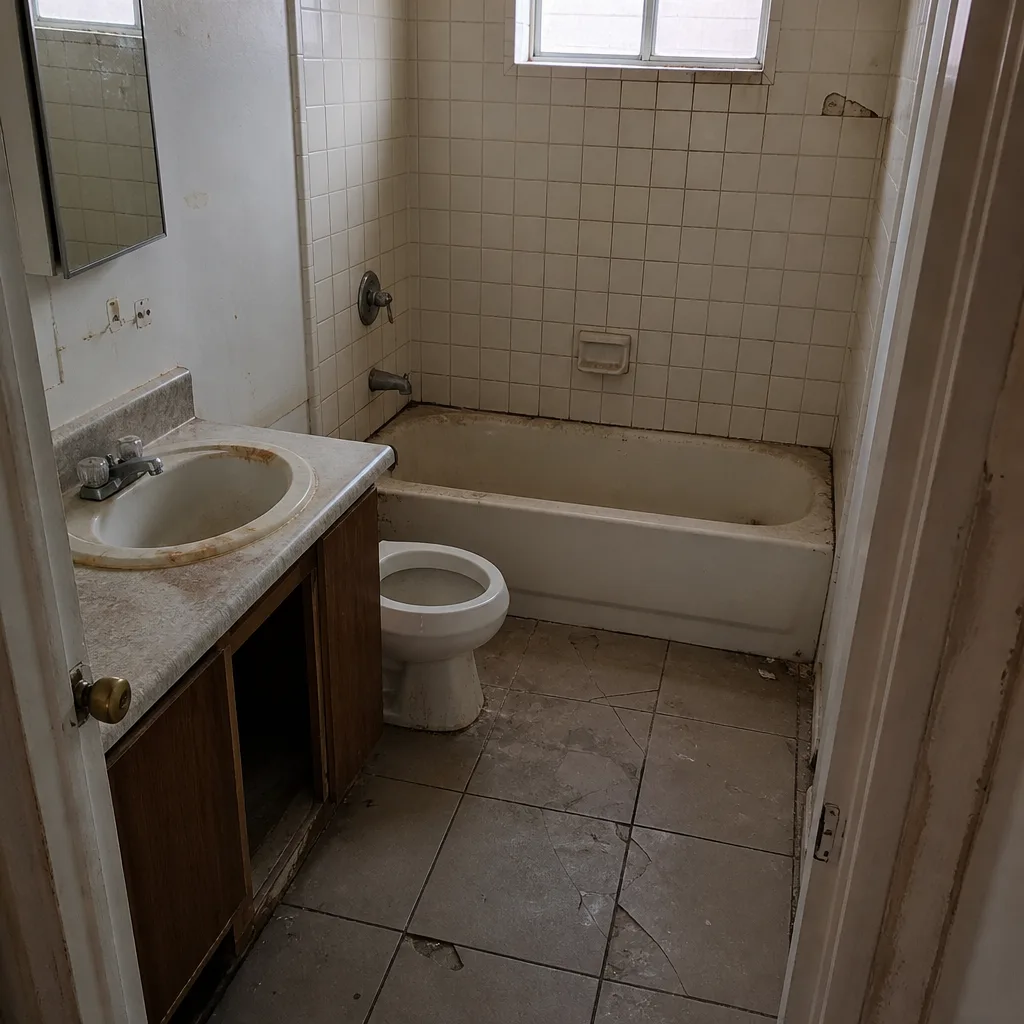 Before
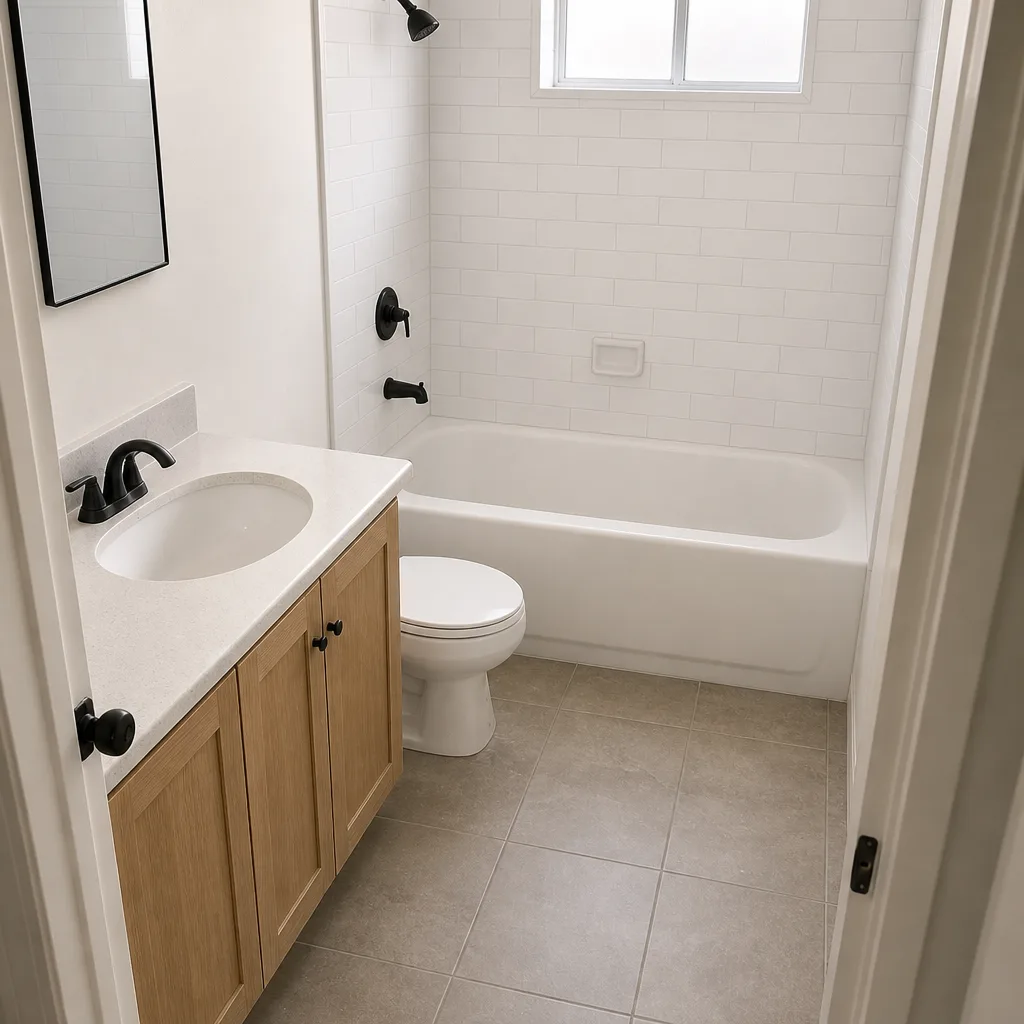 After
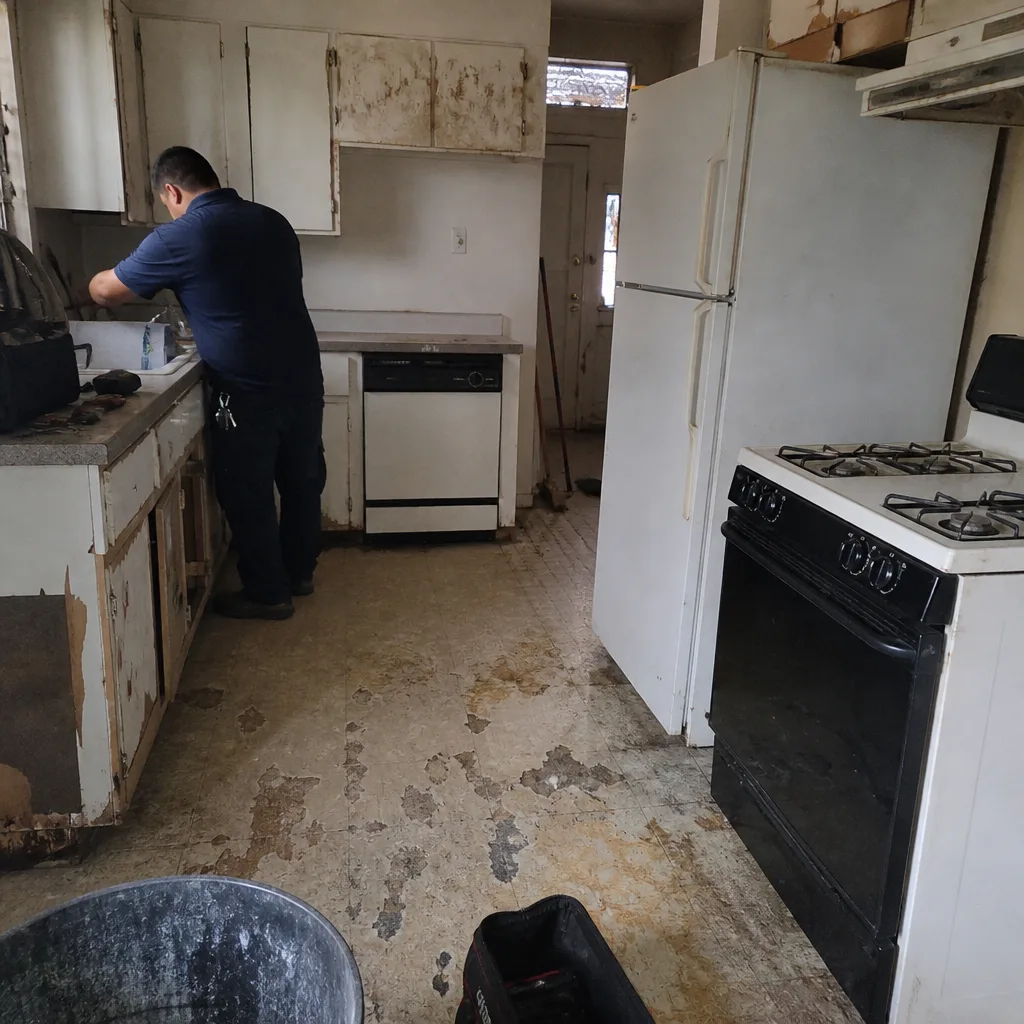 Before
 After
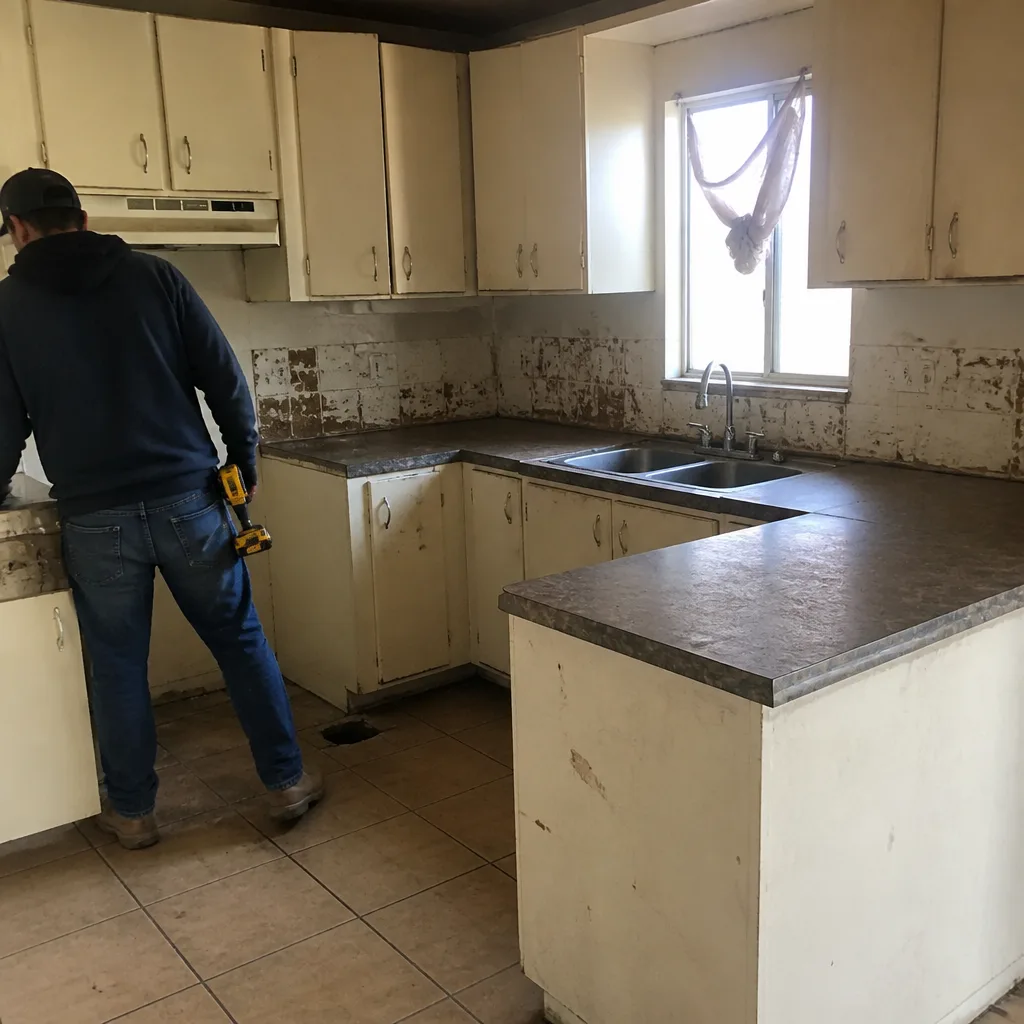 Before
 After
When to Call a Professional
Some of these signs are fixable mid-job with a conversation. Others aren’t. Call us before you sign a change order you don’t understand, before you pay a progress invoice that outpaces the work on the ground, or the day a lien notice lands in your mailbox. If a contractor has started demo without a permit card on site, that’s the point to get a professional set of eyes on the project before the structure opens up further. Bradford Remodeling Sunrise Manor offers free estimates in Sunrise Manor, and every estimate is a written price before any work starts. If you’re already mid-job and worried, we’ll tell you plainly what we see. Call (844) 834-2810 to schedule your free estimate. You can also start at our Bradford Remodeling Sunrise Manor home page to see how we run projects.
Frequently Asked Questions

The biggest sign is a permit that gets pushed to “later” while demo is already underway. A contractor who starts work before the Clark County permit is issued is either cutting corners or doesn’t have the paperwork to pull one. Either way, the homeowner carries the stop-work risk. Call (844) 834-2810 for an exact quote if you want a second look at a project already in progress – estimates are free.
A legitimate Clark County permit card lists your property address, the permitted scope, the licensed contractor’s business name, and the inspection history with sign-offs as work progresses. You can check the permit’s status independently by calling Clark County’s building department with the permit number on the card. A card that doesn’t match the scope, or a number that doesn’t come up in the county’s system, needs a phone call to the contractor before more work proceeds. Call (844) 834-2810 if you want a professional to look at the card and tell you what they see.
Read the notice, identify who filed it (usually a sub or supplier the general contractor owes), and confirm in writing whether that sub has already been paid from money you paid the general contractor. Response windows on Nevada mechanics liens are short, so if the notice escalates, talk to a Nevada construction attorney. A lien that attaches to your title affects your ability to sell or refinance until it’s cleared. Call (844) 834-2810 for a free project review if you’re mid-job and want help reading the paperwork – estimates are free.
Progress billing is normal, but only when each invoice matches a completed milestone in the written scope. The warning sign is billing that runs ahead of installed work, where you’ve paid for demo and framing that’s only partly built. Keep retainage until the final inspection and punch list close, and walk the job before you sign any check. Call (844) 834-2810 for an exact quote on the scope you have – we’ll give you a written price before any work starts.
Material swaps usually happen because a contractor can buy a cheaper product than the spec and pocket the difference, or because a specified item is on backorder and the contractor swaps without asking. Either way, a legitimate contractor brings you a written change order that names the swap, the reason, and the dollar difference before ordering. KraftMaid, Wellborn, Cambria, and James Hardie all publish manufacturer specs and warranties behind their products; a swap without a change order drops that documentation away from your job. Call (844) 834-2810 for a free estimate if you want a spec-driven scope you can compare.
Ask before the job starts whether the crew is named in the written scope, background-checked, and identifiable on arrival. Bradford Remodeling Sunrise Manor runs background-checked, uniformed technicians on every job, with the standard set at the Garrison Partners level. An unfamiliar sub crew that appears unannounced after demo has started, with no name and no introduction, is the pattern to catch. Our technicians have up to 22 years of experience, and every completed project carries the 365-Day Done Right Promise – if the work fails within the guarantee window, we come back and correct it at no charge. Call (844) 834-2810 to schedule your free estimate.
The Bottom Line
The costliest contractor mistakes in Sunrise Manor happen after you’ve signed, not before. Watch the permit card, insist on written change orders for every material swap, keep progress billing matched to completed milestones, treat a lien notice as urgent paperwork, and check the workmanship tells before they become demo. A contractor who runs the job by the book will produce a written price before work starts, a posted permit, and a signed written guarantee at close. That’s what The Garrison Standard means in practice. If your project has drifted and you want a second look, or you’re starting fresh and want a written scope to compare, call (844) 834-2810 for a free estimate. We’ll give you a straight number and put it in writing.
Written by the team at Bradford Remodeling Sunrise Manor.