Last updated November 17, 2026








Free written scope consultation - allowances, timeline, and change-order rules on paper before a single trade is scheduled
DIY vs Professional Construction: The Sunrise Manor Homeowner’s Decision Guide
Here’s the part most DIY guides skip: your homeowner’s insurance policy likely contains a standard exclusion for damage “arising from construction performed without required permits.” In Clark County, that clause has been used to deny claims on work a licensed contractor performed without pulling a permit – so imagine how it reads when the work was your own weekend project. This guide isn’t about whether you’re handy enough to swing a hammer. It’s about permit exposure, desert-specific material failures, and what an unpermitted repair does to your resale disclosure later. We’ll draw a clear line at liability, not competence, so you can decide what to touch in your Sunrise Manor home and what to hand off.
Quick Answer
In Sunrise Manor, you can legally self-perform cosmetic work – painting, flooring removal, cabinet hardware, demo – without a contractor license. Anything structural, electrical, plumbing, or gas-related requires a permit from Clark County, and pulling that permit means hiring a licensed contractor. The real dividing line isn’t skill: it’s whether the work, if done wrong or done without inspection, can void your insurance coverage or cloud your resale disclosure. When in doubt, hire it out and get the price in writing.
Styles & brands we work with
- Kitchen remodeling
- Bathroom remodeling
- Home additions & ADU
- Roofing
- Windows & doors
- Driveway & pavers
- Fence
Table of Contents
- What Nevada Law Actually Lets You Do Yourself
- Insurance Policy Language to Read Before You Start
- Where Desert DIY Fails: Stucco, Roofing, and UV
- The Cost-Honest Math on a DIY Bathroom Tile Job
- The Middle Path: What You Can Manage vs. What Needs a License
- How Unpermitted Work Surfaces at Resale
- Common Mistakes to Avoid
- When to Call a Professional
What Nevada Law Actually Lets You Do Yourself
Nevada’s contractor licensing statute, NRS 624, is the rulebook here. The short version: a homeowner can perform work on their own primary residence without holding a contractor’s license – but that exemption is narrower than most people assume, and it does not exempt you from building permits. Clark County still wants a permit for structural, electrical, plumbing, and mechanical work regardless of who swings the hammer. The county inspects the work, not the license, but a homeowner permit carries real constraints: you must own and occupy the home, and the work can’t be for resale within a set window.
Here’s how we see it break down in practice. Tasks that generally don’t trigger a permit when done as like-for-like replacement on your own home include:
- Interior and exterior painting (with caveats on stucco – see below)
- Replacing cabinet hardware, light fixtures on existing circuits, and faucets
- Laying tile or laminate over sound, prepped substrate
- Demolition of non-load-bearing finishes
- Installing fencing using manufacturer systems like Bufftech vinyl or Ameristar ornamental steel where no height or setback change is involved
Tasks that almost always need a permit and a licensed professional: moving or adding walls, any new electrical circuit or panel work, relocating plumbing supply or drain lines, water heater replacement, gas line work, and roof sheathing or structural roof repair. Sunrise Manor’s housing stock runs heavily toward 1960s through 1990s tract construction, and that matters. Knob-and-tube or early aluminum branch wiring shows up in the older pockets, and a “simple” outlet addition can turn into a full circuit evaluation. That’s a permit conversation, not a Saturday project. For the full scope of what a licensed general contractor in Sunrise Manor handles versus what stays in your lane, that page lays out the boundaries clearly.
Insurance Policy Language to Read Before You Start
Pull out your declarations page and the exclusions section before you buy a single two-by-four. Two clauses show up again and again in Nevada homeowner policies and both matter here. The first is the “faulty workmanship” exclusion, which typically bars coverage for damage caused by your own defective work – if a poorly seated shower pan leaks into the wall, the resulting rot is often your problem, not the insurer’s. The second is the “course of construction” language, which governs whether the home is covered while work is actively underway and whether the policy requires the work to be permitted and inspected.
What that means in plain terms:
- If your unpermitted electrical addition causes a fire, the adjuster will ask for the permit. No permit, no coverage for that loss is a real outcome.
- If a DIY shower valve fails and floods two rooms, the faulty workmanship exclusion can leave you paying for the water damage yourself.
- If you sell and the buyer’s inspector flags unpermitted work, your disclosure obligations kick in – and so does your liability.
The insurer isn’t being unfair. They priced a risk assuming permitted, inspected work. When the work wasn’t inspected, the assumption breaks. Read the exclusions before you lift a tool, not after the claim. Sunrise Manor homeowners we’ve talked to are often surprised by how broad that faulty workmanship clause reads once they actually sit down with it.
Where Desert DIY Fails: Stucco, Roofing, and UV
Southern Nevada’s climate punishes shortcuts in ways a homeowner in a temperate market never sees. Two areas trip up DIYers most often, and both are expensive to correct.
Stucco patching. The classic failure is a patch that cracks within a single summer. Stucco is a mix-ratio job – typically a three-coat system with specific sand-to-cement ratios per coat – and a homeowner working from a bag of pre-mix often gets the ratio or the cure wrong. In Sunrise Manor’s low humidity and 100-plus-degree summers, stucco cures fast and unevenly, and a patch that was slightly off will hairline-crack by fall, then widen. Matching the existing texture and color is a second skill entirely. What looks like a $40 bag of stucco becomes a $600 re-patch when the first attempt has to be chipped out.
Roofing under high UV. Here’s the one most people miss: many asphalt shingle and coating manufacturer warranties require installation by a licensed contractor and void coverage when the product is applied over improper substrate or without proper ventilation. A DIY patch over a soft spot or a nail-pop fix doesn’t just risk a leak – it can void the warranty on the whole roof field. In a market with this much UV degradation, that warranty is the thing protecting your biggest exterior investment. GAF and CertainTeed both write installation standards into their coverage, and those standards are not DIY-friendly. We’ve seen Sunrise Manor homeowners lose warranty coverage on a four-year-old roof because a small repair was handled outside the manufacturer’s specification.
Both of these are tasks where the material science, not the muscle, decides the outcome. That’s the case for professional work even when you’re capable.
The Cost-Honest Math on a DIY Bathroom Tile Job
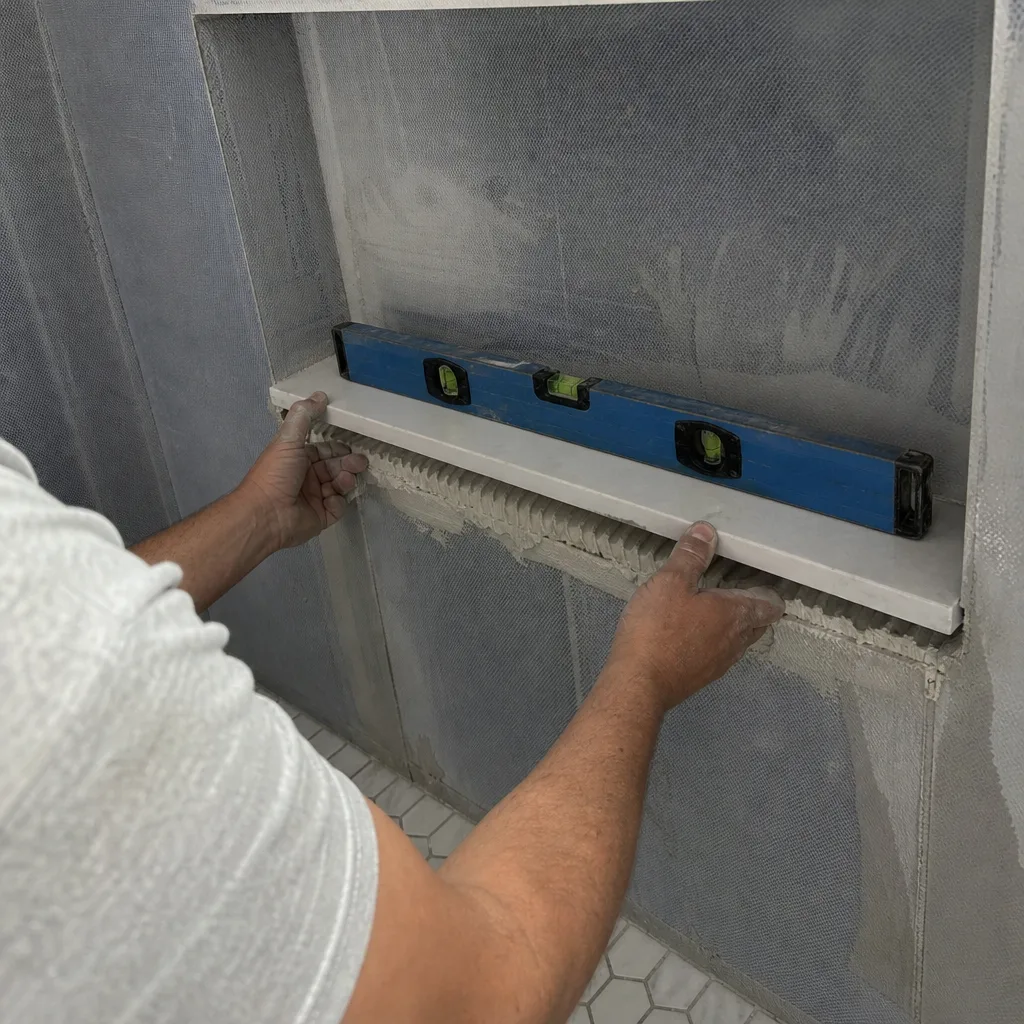
Tile looks like the perfect DIY job, and on a hallway floor it often is. In a shower, the math flips. The reason is substrate – the underlayment and waterproofing layer the tile sits on. A high-humidity shower environment exposes every flaw in that layer, and the failure mode is slow: a small gap in the waterproofing lets moisture into the wall cavity, the cement board wicks it, and two or three years later you’re looking at mold behind the tile and a soft stud.
Here’s the comparison we walk Sunrise Manor homeowners through, using round numbers for a standard tub-to-shower conversion in the 50-square-foot range:
- DIY, materials only: tile, thinset, waterproofing membrane, cement board, and tools run roughly $900 to $1,600 if you’re starting without a wet saw or tile tools.
- DIY, re-work cost when substrate prep is skipped: a failed shower typically means a full tear-out – tile, board, and waterproofing – plus new material and labor. That’s $2,500 to $5,000 in re-work, on top of the original spend.
- Professional install with correct substrate: $4,500 to $9,000 depending on tile choice and fixtures, backed by a written guarantee.
The DIY “savings” on a shower is real only if the waterproofing is right the first time. One failed shower pan wipes out the entire savings and then some, and it does it on your schedule, not a contractor’s. This is exactly the kind of line-item thinking that goes into bathroom remodeling in Sunrise Manor – substrate prep, waterproofing, and the fixture spec all get priced before the first tile is set.
The Middle Path: What You Can Manage vs. What Needs a License
Most households don’t face a binary choice. There’s a legitimate middle path where you take the labor you can safely manage and hand off the licensed scope. It protects your permit record and your resale disclosure, and it can genuinely reduce cost. Here’s how we’d divide it:
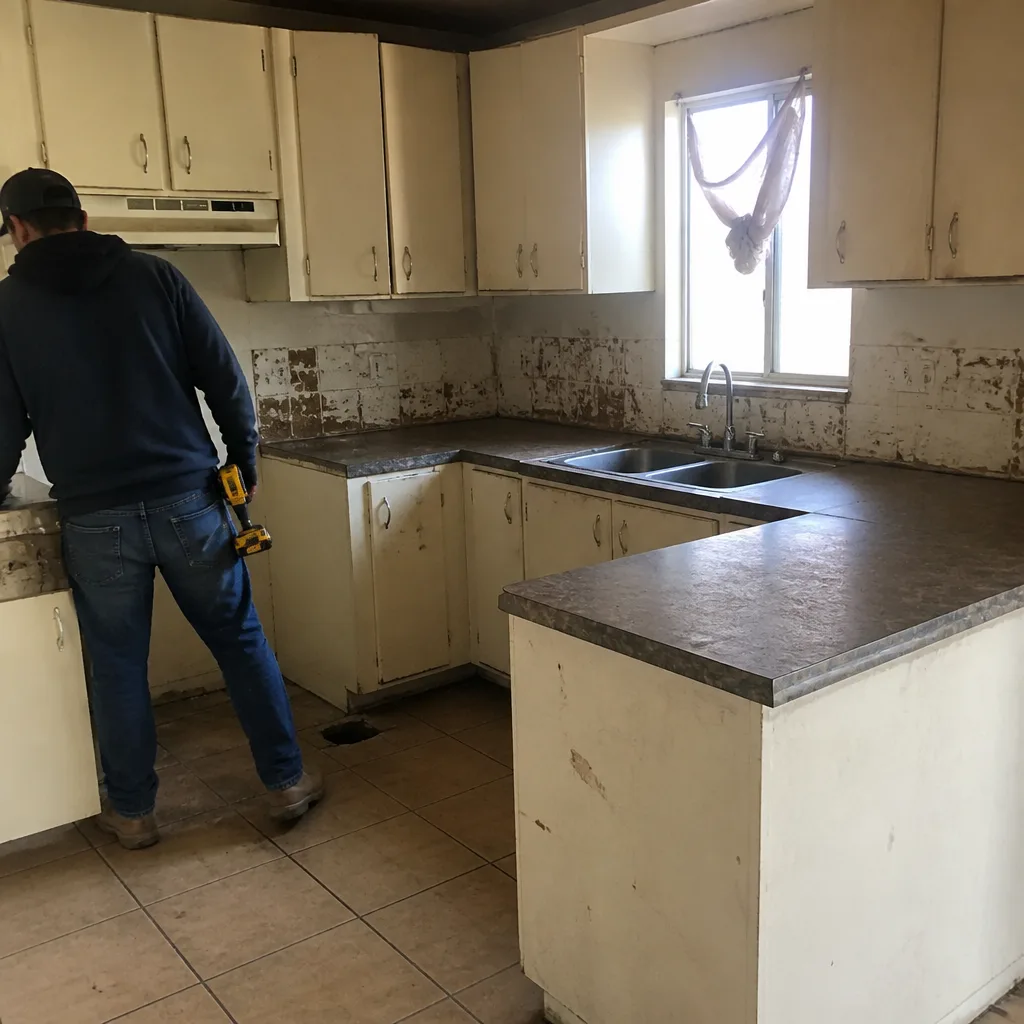
- You manage demo and site prep. Tearing out old cabinets, pulling up carpet, hauling debris to the dumpster. No permit, no liability exposure once the licensed scope is separated out.
- You handle painting and finish work. Interior painting, trim painting, hardware install. Cosmetic, reversible, and easy to inspect yourself.
- You manage the licensed sub for the system work. Electrical rough-in, plumbing relocation, gas. You hire the licensed sub, they pull their own permit, you keep the paperwork.
- You coordinate the schedule and hold the paper. Every scope, every price, every guarantee in writing. That’s the homeowner’s job on the middle path.
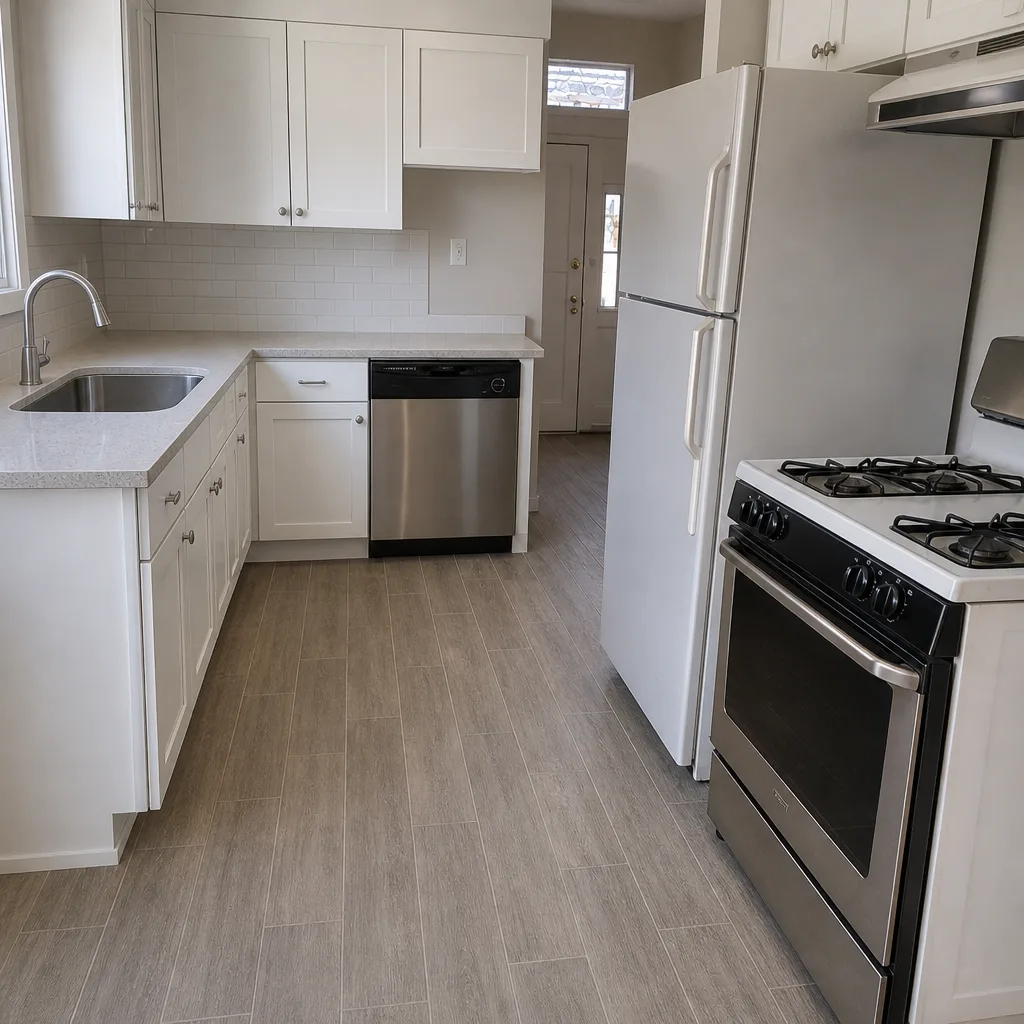
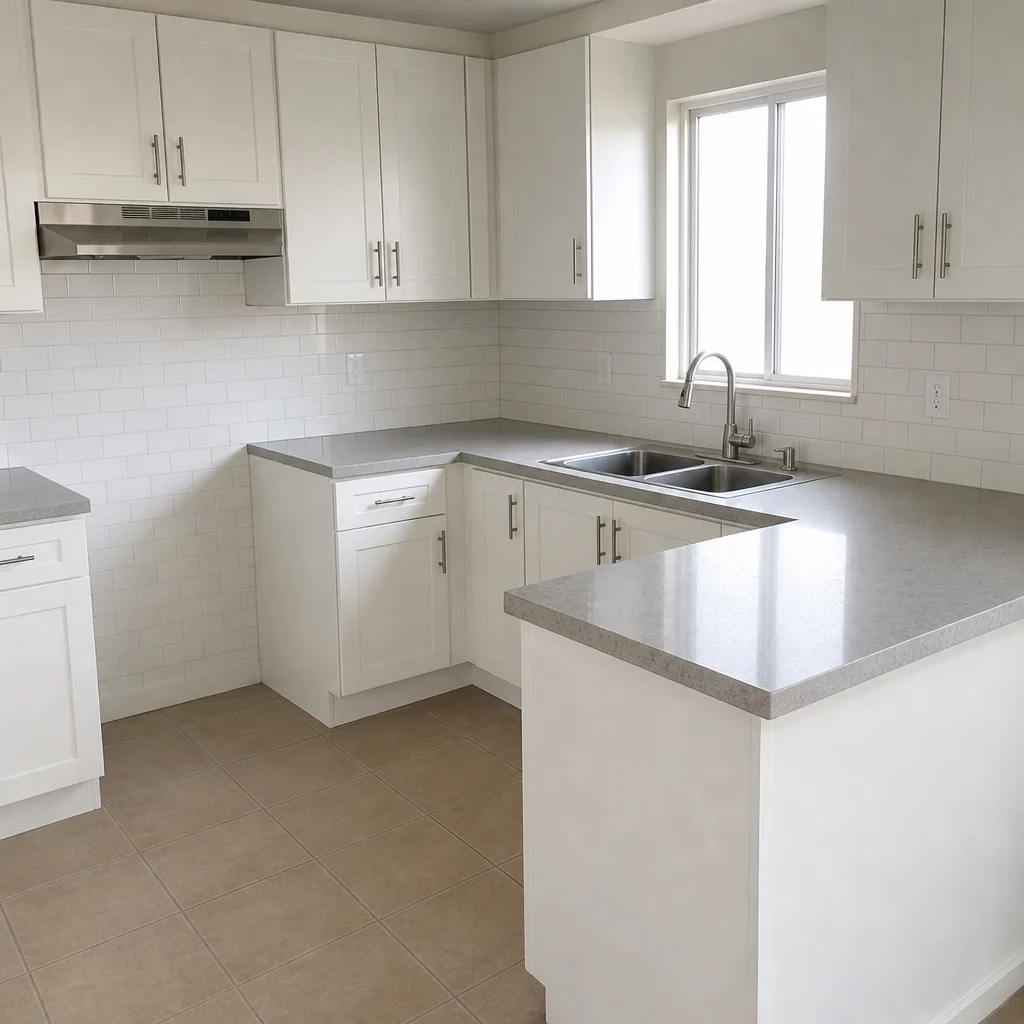
The rule of thumb: if the work generates an inspection, a licensed sub owns it. If it doesn’t, and it’s reversible, it’s fair game for your own labor. Kitchen work is the clearest example – demo, painting, and cabinet hardware are yours; plumbing and electrical rough-in stay with the licensed trade. Our kitchen remodeling in Sunrise Manor page breaks down which line items typically sit on which side of that line.
How Unpermitted Work Surfaces at Resale
Unpermitted work doesn’t always announce itself, but it has a way of finding the daylight at the worst moment. Clark County’s permit records are searchable, and a buyer’s inspector comparing the record against what they see is standard practice. When the record shows a finished basement, an added bathroom, or a converted garage that was never inspected, the buyer’s agent starts asking questions. The seller’s disclosure form in Nevada requires you to disclose known unpermitted work. That’s a legal obligation, not a nicety.
The consequences stack up:
- The buyer may demand the work be brought to code at your expense before closing.
- A lender may refuse to finance a home with unpermitted structural or electrical work.
- Your insurer can deny a future claim tied to the unpermitted work.
- Your negotiating position on price erodes because the buyer now knows the risk.
By contrast, permitted work shows up in the record as a clean, inspected line item. It’s documentation, and documentation is what a buyer is actually paying for. If you’re planning a whole-home scope, our Bradford Remodeling Sunrise Manor home page walks through how we handle permits and inspections on the larger jobs. It’s the difference between a project that raises your resale value and one that creates a disclosure problem.
Common Mistakes to Avoid
- Starting electrical or plumbing work before checking permit requirements. Sunrise Manor’s older homes often have wiring that predates current codes, and what looks like a simple outlet addition can trigger a full circuit evaluation. Get the permit question settled first.
- Patching stucco without matching the mix ratio and texture. A patch that’s slightly off will crack within a season in this climate, and re-patching costs more than the original job done right.
- Assuming the insurance policy will cover a DIY failure. The faulty workmanship exclusion almost never does, and the permit exclusion can deny the whole claim.
- Letting a roofing patch void your shingle manufacturer’s warranty. GAF, CertainTeed, and Owens Corning all write installation standards into coverage; work outside spec voids the field warranty.
- Skipping shower substrate waterproofing to save a few hundred dollars. The re-work runs into the thousands, and the mold problem surfaces after the warranty window has closed.
- Not documenting the work for resale. Every permit, inspection, and receipt is a disclosure asset. Losing it is the same as not having done the work permitted.
- Relying on a verbal price. A contractor who won’t put a written price on paper before work starts is telling you something about how the job will end. Get it in writing, every line item.
When to Call a Professional
Hand it off when the work touches structure, electrical, plumbing, or gas; when it requires a permit and an inspection; when a manufacturer warranty depends on licensed installation; or when the failure mode is expensive and slow (shower waterproofing, roof sheathing, stucco). Hire out when you’re selling within a few years and disclosure matters, or when a single mistake would cost more than the professional quote. That last test settles most debates. A professional quote carries a fixed price, a scope you can read, and a warranty you can hold. Bradford Remodeling Sunrise Manor offers free estimates in Sunrise Manor – call (844) 834-2810. We put the price in writing before any work starts and back the completed job with the 365-Day Done Right Promise: if it’s not done right, we come back and correct it at no charge.
See the difference
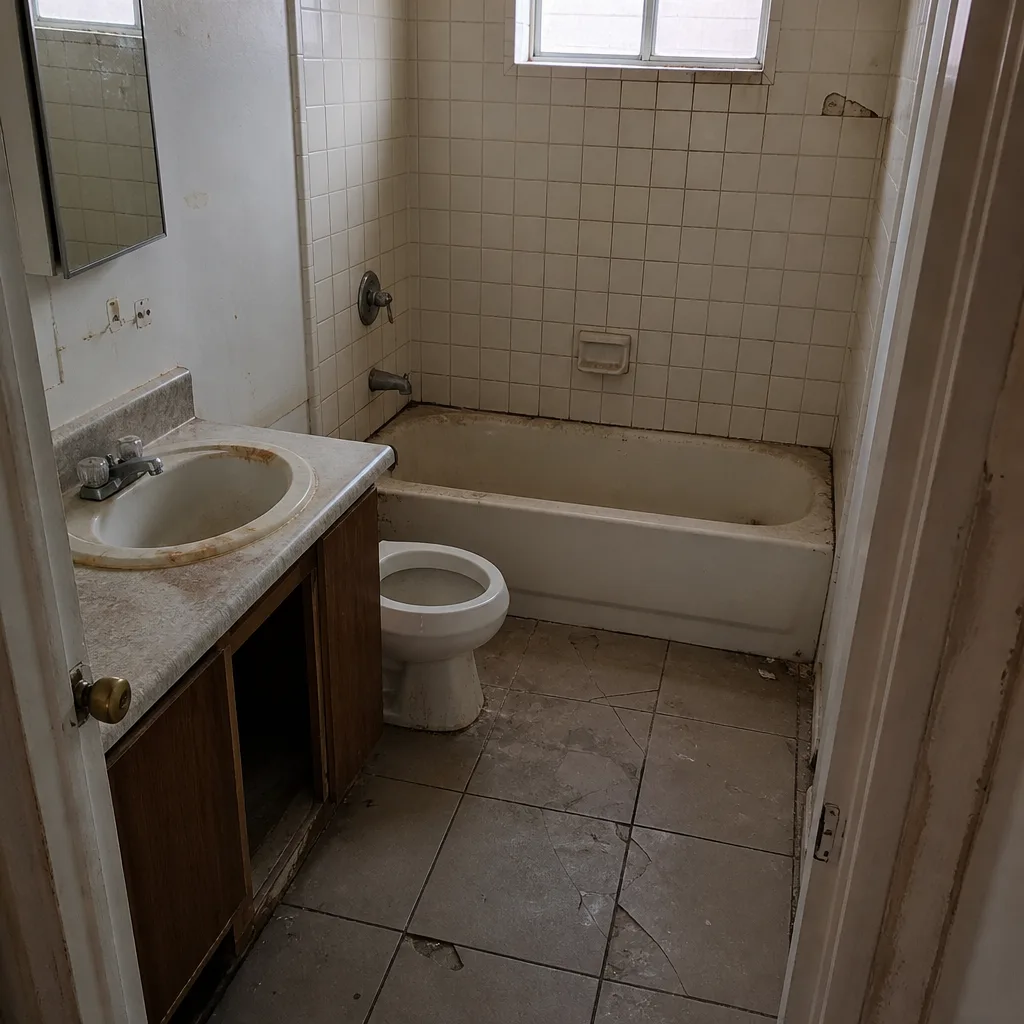 Before
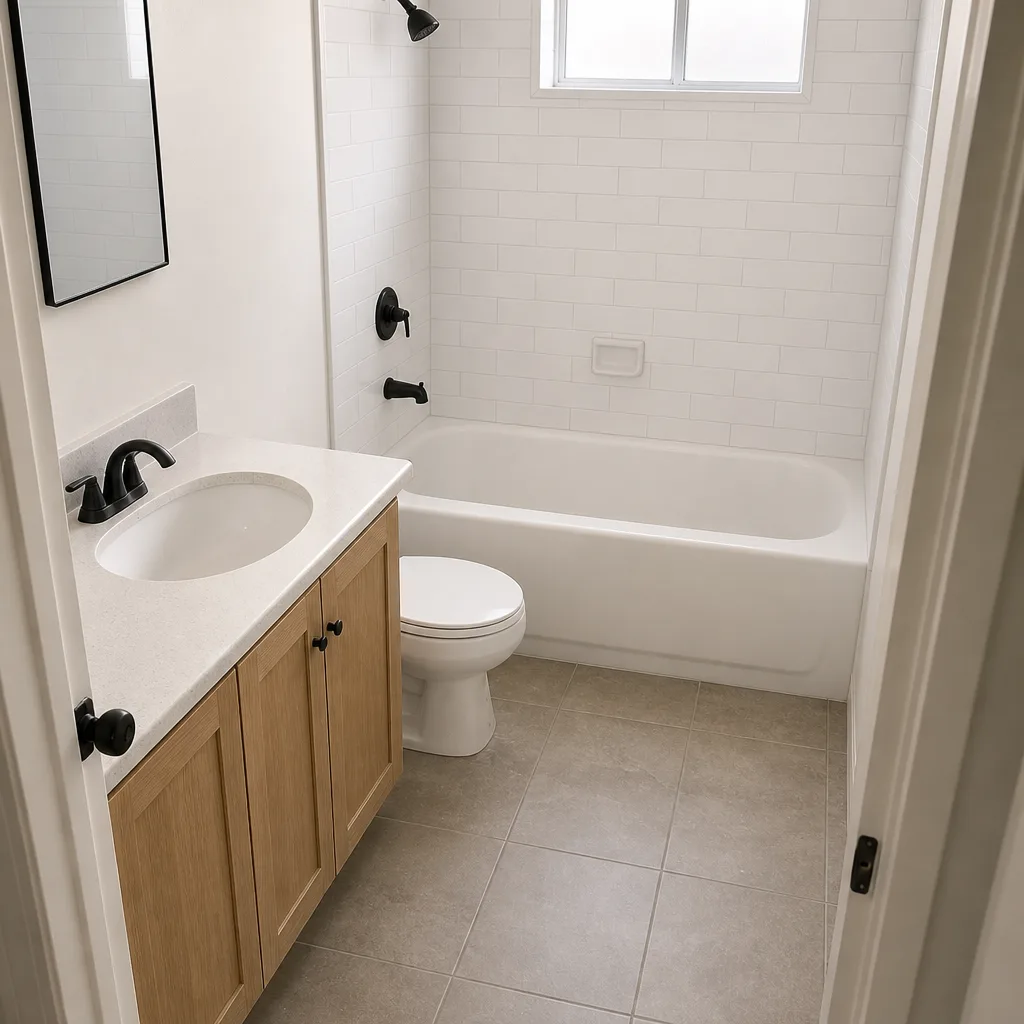 After
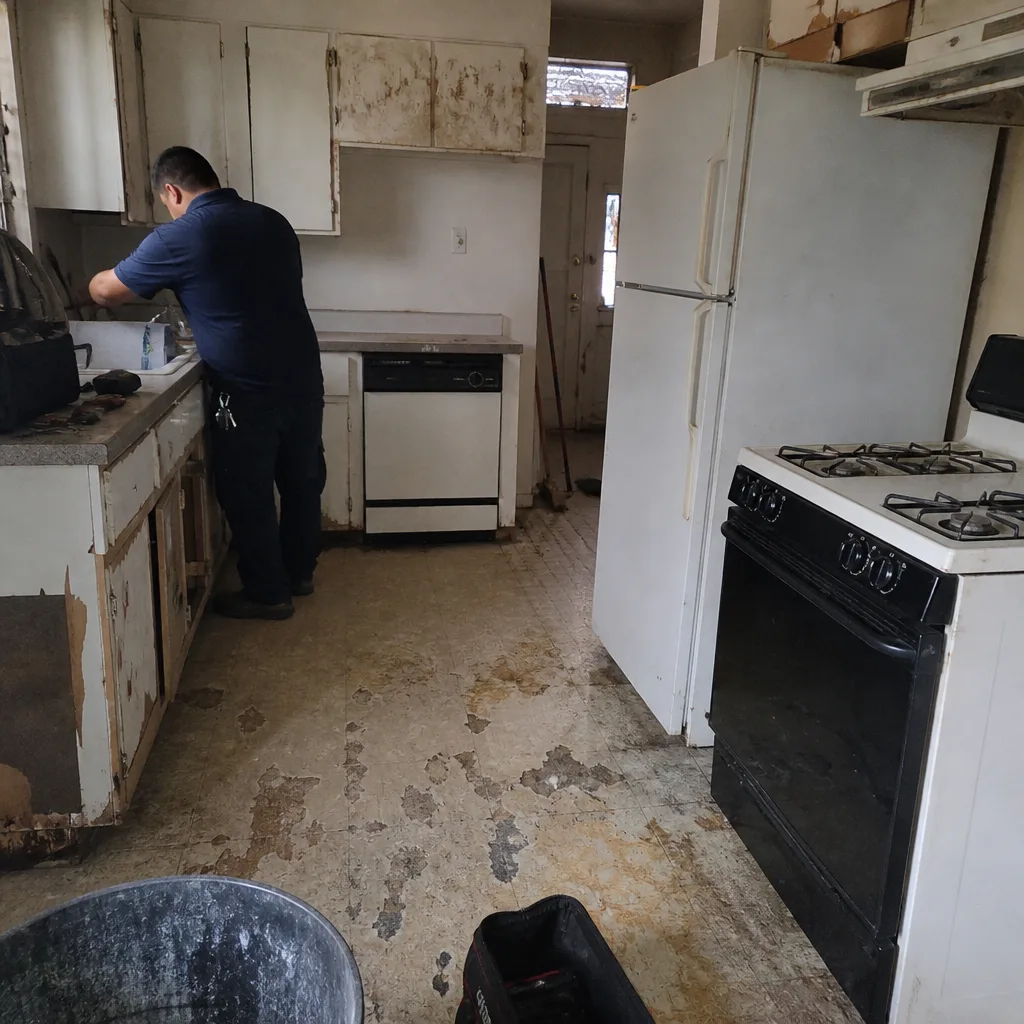 Before
 After
 Before
 After
Frequently Asked Questions

No – not safely or in a way that protects your insurance. Nevada’s homeowner exemption under NRS 624 is narrow, and Clark County requires a permit and inspection for electrical work regardless of who performs it. The permit process requires a licensed professional, and an unpermitted electrical job can void your insurance coverage on a future fire claim. Call (844) 834-2810 for a free estimate on any electrical-adjacent scope.
Yes, and this is the risk most homeowners underestimate. Standard Nevada policies exclude damage “arising from construction performed without required permits” and carry a separate faulty workmanship exclusion. If a claim traces back to unpermitted work, the insurer can deny it. Read the exclusions section before you start any structural, electrical, or plumbing project.
A standard tub-to-shower conversion with proper substrate and waterproofing runs about $4,500 to $9,000 depending on tile and fixtures. That covers the permit, the licensed plumbing and electrical rough-in, and the finish work. A DIY shower that fails substrate prep costs $2,500 to $5,000 to re-work, on top of the original spend. Call (844) 834-2810 for a written line-item quote – estimates are free.
Not with the right contract. We give every homeowner a written price before any tool comes out, with no numbers that move at the door. A contractor who won’t commit to a written line-item price is telling you the quote will drift. Insist on the paper first.
You can, but it’s one of the most common desert DIY failures. Stucco is a mix-ratio job, and in Sunrise Manor’s low humidity and extreme summer heat, a patch that’s slightly off cures unevenly and hairline-cracks within a season. Matching the existing texture and color is a second skill. What looks like a $40 fix turns into a $600 re-patch. Hire it out if you want it to hold.
Often, yes. GAF, CertainTeed, and Owens Corning all require installation by a licensed contractor to manufacturer specification, and work outside that spec can void the warranty on the whole roof field – not just the patched area. In a high-UV market, that warranty is what protects your roof investment. Call (844) 834-2810 before you patch.
The Bottom Line
The DIY decision in Sunrise Manor isn’t a skill test; it’s a liability test. You can own demo, painting, hardware, and finish work without touching a permit. Once the work hits structure, electrical, plumbing, gas, or a manufacturer-specified installation, the risk shifts from your weekend to your insurance policy, your resale disclosure, and your warranty coverage. Read your policy exclusions, respect the permit process, and get every price in writing before work starts. That’s the line, and it’s worth holding. When a job crosses it, the cost of doing it right is almost always less than the cost of the failure.
Bradford Remodeling Sunrise Manor works from The Garrison Standard and the Garrison Code: a written price before any work starts, documented brand specs from KraftMaid, Cambria, Kohler, GAF, James Hardie, Therma-Tru, and others, and a signed 365-Day Done Right Promise in every homeowner’s hand at job close. Call us at (844) 834-2810 for a free estimate, and we’ll put the price and the guarantee in writing before a single tool comes out.
Written by the team at Bradford Remodeling Sunrise Manor.