Last updated November 17, 2026








Free written scope consultation - allowances, timeline, and change-order rules on paper before a single trade is scheduled
Seasonal Construction Care for Sunrise Manor: Year-Round Homeowner’s Guide
In July, Sunrise Manor regularly hits 115°F on roof deck surfaces. At that temperature, standard elastomeric caulk loses its seal in under three years – half the service life the tube advertises – and most homeowners here don’t inspect for it until a water stain shows up on a ceiling. That’s the trouble with the four-season maintenance calendar you’ll find on most contractor sites: it was written for a place with a real winter. Sunrise Manor doesn’t have one. It has a thermal-stress summer and a dust-and-flash-flood monsoon window, and those two threat periods do almost all the damage your house will ever take. This guide organizes your year around those two windows, tells you what to inspect and when, and shows you how to keep a written maintenance log that protects your warranty when something fails.
Quick Answer
In Sunrise Manor, schedule envelope work around two windows, not four seasons: inspect and seal caulk joints, roof penetrations, and HVAC condensate lines in April and May before temperatures pass 105°F, then prep drainage, window wells, and weep screeds in June before monsoon rains hit. Run a post-monsoon assessment in September to map stucco cracks and hardscape settlement while they’re still small. Winter thermal cycling in Clark County – overnight 40s swinging to 80°F afternoons – stresses tile and grout harder than a true cold climate does, so grout gets checked in December too.
Styles & brands we work with
- Kitchen remodeling
- Bathroom remodeling
- Home additions & ADU
- Roofing
- Windows & doors
- Driveway & pavers
- Fence
Table of Contents
- Why Sunrise Manor Has Two Damaging Seasons, Not Four
- Pre-Summer Envelope Checklist (April-May)
- Monsoon Prep: Drainage, Window Wells, Weep Screeds (June)
- Post-Monsoon Assessment (September)
- Winter Thermal Cycling in Clark County
- Building a Contractor-Grade Inspection Log
- What Brands and Materials Hold Up Here
- Common Mistakes to Avoid
- When to Call a Professional
Why Sunrise Manor Has Two Damaging Seasons, Not Four
The standard maintenance calendar assumes freeze-thaw is your biggest enemy. Here, it isn’t. Water intrusion paired with extreme UV exposure is. Sunrise Manor sits in the upper Sonoran Desert on the east side of the Las Vegas Valley, and houses here face a double-threat year: a searing summer that cooks sealants and roofing from the outside in, and a monsoon window from roughly July through September that dumps months of rain in a few violent afternoon bursts.
Those two forces work together in a way that catches people off guard. A hairline stucco crack that opens in a 112°F August afternoon is harmless on its own. But when a monsoon cell drops two inches of rain in under an hour, that same crack becomes a channel straight into your wall cavity. By October, when everything looks dry again, there’s moisture trapped behind the stucco doing quiet damage that won’t show until spring.
So the logic of this guide is simple: catch and seal the openings before summer heats them wider, clear the escape routes before monsoon water arrives, then map what the rain found before it spreads. We’ve seen this pattern across Sunrise Manor over and over – homes that stay tight for years versus homes that need a full stucco repair every three or four seasons. The difference is almost always whether someone was checking on the right schedule.
Our technicians have up to 22 years of experience working desert envelopes and interiors, and if you want the wider picture of how we handle a full scope, our Bradford Remodeling Sunrise Manor home page lays out the services.
Pre-Summer Envelope Checklist (April-May)
Your goal before temperatures cross 105°F is to seal everything that heat will widen. The window between mid-April and the end of May is when Sunrise Manor weather is still workable for caulk and sealant – most products need to cure below about 90°F to bond properly, and once June arrives you’ve lost that margin.
- Walk every caulk joint on the exterior. Check the joints where stucco meets window frames, door frames, hose bibs, and the base of walls. Press a thumb into the bead; if it’s hard, cracked, or pulls away from the substrate, it’s failed. Re-caulk with a high-UV, paintable exterior sealant rated for desert exposure – not a painter’s-grade acrylic.
- Inspect every roof penetration. That means the boots around plumbing vents, the sealant around skylight curbs, and the flashing at chimney and wall transitions. Boots crack fastest because they sit in full sun on the hottest surface of the house. On a roof deck that hits 115°F, a cheap neoprene boot can fail in five to seven years.
- Trace your HVAC condensate line. Your air conditioner makes a lot of water in a desert summer, and that line runs somewhere – often through the attic or out a wall. Confirm the drain pan is clear, the line isn’t cracked, and it discharges well away from the foundation. A clogged condensate line in July is one of the most common sources of interior water damage we get called for.
- Check the weep screed at the base of the stucco. The weep screed is the metal edge that sits at the bottom of your stucco and lets trapped moisture drain out. If it’s buried under dirt or blocked by landscaping, water has nowhere to go. Clear the last few inches of soil away from it.
- Photograph everything. These photos become the start of your maintenance log (more on that below).
If caulk joints and stucco failures have already opened up wall assemblies or trim, that’s a repair scope, not a maintenance task. Our General Contractor in Sunrise Manor team handles that kind of envelope work with a written price before anything starts.
Monsoon Prep: Drainage, Window Wells, Weep Screeds (June)
Sunrise Manor’s monsoon window is real, and the way water behaves here surprises people who moved from wetter climates. The soil is caliche-heavy and slow to absorb. When a hard cell drops a big volume in an hour, the water doesn’t soak in – it runs, finds the low spot, and pools. That’s why grading matters more here than in most places.
Our local micro-drainage pattern is worth understanding: because the ground sheds water in sheets rather than absorbing it, the low point on a lot is often not where a homeowner assumes. It might be a swale along one side yard, a depression near the rear patio, or the seam where two roof planes dump into a single downspout. The whole game is getting that water away from the house before it finds the foundation.
- Confirm your drainage swale sheds away from the foundation. A drainage swale is simply a shallow, sloped channel that carries water off. Walk the perimeter and make sure the grade falls away from the house on all sides.
- Clear window well clearance. If you have any below-grade windows, the well needs to be clear of debris and gravel so a sudden downpour can’t back up against the glass.
- Re-check weep screeds and roof penetrations you sealed in spring. A monsoon storm is the stress test for the work you did in April.
- Clean out gutters and confirm downspouts discharge away from the wall. Splash blocks or extensions that dump water at the base of the foundation defeat the whole purpose of the gutter.
- Trim back vegetation from the walls and roof. Desert plants grow fast in the pre-monsoon heat, and a branch touching roof or stucco holds moisture against both.
Hardscaping – patios, walkways, retaining walls – is where settlement shows up first after a big rain, because the sub-base shifts. If you’re already planning to redo a patio, that work is a good candidate to pair with the drainage fixes so the whole yard drains correctly once.
Post-Monsoon Assessment (September)
By September, monsoon activity is winding down, and this is the moment to find out what the rain did. Everything is still dry enough to inspect and early enough that small problems are still cheap. This assessment is the single most valuable three hours you’ll spend on your house all year.
- Map stucco cracks. Walk every exterior wall with a pencil and a notebook, and mark cracks with a light line next to each one. Note the length, direction, and whether it’s hairline or wider than about a 1/16″. A crack that’s grown since spring is telling you something is moving, and it deserves a professional look rather than another tube of caulk.
- Look for hardscape settlement. Any patio slab, walkway, or retaining wall that’s shifted, dropped, or developed a trip-edge after monsoon moisture. Small settlement can be re-set; big settlement points to a drainage problem underneath that needs to be fixed first.
- Clear debris from soffit vents. The soffit is the underside panel of your roof overhang, and the vents in it pull air into your attic. Monsoon wind-blown dust, seeds, and debris clog those vents, which traps heat in the attic and shortens roof life. A shop vac and a few minutes per vent goes a long way.
- Check interior ceilings and walls for water stains. Dry-stained rings or bubbling paint after monsoon season point to roof or flashing leaks that only show up under heavy rain. Document every one.
- Confirm basement and garage floors are dry. Any dampness or efflorescence (the white powdery stain) on a slab points to a moisture path that should be chased down.
If the map turns up recurring cracks in the same location year after year, that’s a sign the envelope needs more than a patch. Our Kitchen Remodeling in Sunrise Manor and full-scope remodeling work often includes envelope corrections when a water problem has reached the interior.
Winter Thermal Cycling in Clark County
Here’s the part that surprises people: Clark County winters aren’t cold, but they cycle hard. A January overnight in the low 40s can be followed by an 80°F afternoon – a 40-degree swing in a single day. That swing moves building materials more than a steady cold does, and the material that suffers most is tile and grout.
Grout is brittle. Every thermal cycle expands and contracts it a few microns, and over a winter that’s thousands of cycles. A tile floor in a Sunrise Manor home that looks fine in November can show cracked or pulsing grout lines by February, especially in sun-facing rooms where the slab under the tile is being warmed by direct sun through a patio door. A cracked grout line lets water into the thinset (the adhesive layer between tile and slab), and once that’s saturated, the tile starts to tent or loosen.
Winter is also the season to inspect interior caulk at the same time as you inspect exterior. Check the caulk at tubs, showers, and sink backsplashes – if it’s cracked or peeling, re-caulk before spring. And if your house has any exterior tile or stone, look for grout lines that have opened up over the winter and seal them before the summer heat.
If a bathroom’s grout and shower surround are past the point of a re-caulk, our Bathroom Remodeling in Sunrise Manor team can scope a rebuild with a written price before work starts.
Building a Contractor-Grade Inspection Log
This is the piece almost every homeowner skips, and it’s the one that saves you the most money in a dispute. A documented maintenance history proves you did the work you were supposed to do, which protects warranty claims – on roofing, on caulk and sealant, on hardscaping, and on your own remodeling warranty. When something fails and you call for a fix, the first question any honest crew asks is what’s been done and when.
A log doesn’t need to be fancy. A three-ring binder works, or a spreadsheet. Here’s the format we recommend:
- Date and window: which inspection window (spring, monsoon prep, post-monsoon, winter).
- Area inspected: roof, north wall, window wells, kitchen floor, etc.
- Finding: what you saw, in plain language, with the size and location of any crack, seam, or stain.
- Photos: one wide shot and one close-up of every finding – filed with the entry, not on a phone alone.
- Action taken: what you did (caulked, cleared, scheduled a pro) and which product you used.
- Follow-up date: when you’ll re-check that finding, which is usually the next window in the cycle.
Keep the entries honest – if you skipped a window, note that you skipped it. An accurate log is worth more than a perfect one. And if a contractor does warranty work, log that too, including the date and what was corrected. If you’re ever in a conversation about a warranty claim, this log is the difference between “we think it’s covered” and “here’s the record.”
What Brands and Materials Hold Up Here
Material choice matters more in Sunrise Manor’s climate than in most of the country, because UV and thermal cycling punish anything cheap. We work from a documented roster of name-brand materials so every specification is traceable and the manufacturer’s own warranty backs ours. For roofing, GAF, CertainTeed, and Owens Corning all make products rated for desert UV exposure, and which one is right for a given roof depends on the pitch, ventilation, and existing layers. On the exterior, James Hardie fiber-cement siding holds its finish through thermal cycling far better than cheap vinyl, and Therma-Tru entry doors won’t warp under summer heat the way lesser doors do.
The point isn’t to buy the most expensive material. It’s to make sure what you buy has a published spec for desert exposure and a warranty you can point to in writing. That’s part of how we keep every promise we make, and it’s why we put every price in writing before any work starts.
Common Mistakes to Avoid
- Caulking in July. Nothing wants to cure at 110°F. Sealants applied over heated stucco fail early and often; wait for spring or early fall when the surface temperature is below 90°F.
- Using painter’s-grade acrylic on exterior joints. It’s cheap and it fails in under two summers. Use a UV-rated exterior sealant and read the label for the rated temperature range.
- Ignoring weep screeds. Burying the weep screed under mulch or soil traps water in the stucco. Clear the bottom of the wall every season.
- Skipping the post-monsoon walk. The single best time to catch a water problem is right after the rain that caused it, before it spreads into the attic or wall cavity.
- Assuming a warm winter means no thermal stress. The 40°F-to-80°F swing in a single day moves grout and caulk lines more than a stable cold winter does. Check grout in December anyway.
- Not documenting work. If you can’t show a paper trail of maintenance, that’s the first thing a warranty claim turns on. Start a log today, even a rough one.
- Treating stucco cracks with caulk alone. A crack that’s grown since the last window is a sign something is moving; caulking over it hides the symptom without finding the cause.
When to Call a Professional
Some of this work is genuinely DIY – clearing weep screeds, cleaning soffit vents, photographing cracks. Some of it isn’t, and it’s worth knowing where the line is. Call a professional if you find stucco cracks wider than about 1/16″, water stains on interior ceilings or walls, roof boots or flashing that need replacement, hardscape that has settled, or any condensate line issue that’s already produced water. Also call if you’ve mapped the same crack three seasons running. Roof penetrations and any stucco repair involving the wall assembly are jobs to leave to a trained crew, not because they’re beyond you, but because the cost of a mistake is far above the cost of getting it done right.
Bradford Remodeling Sunrise Manor offers free estimates in Sunrise Manor, with a written price before any work begins. Call (844) 834-2810 to schedule yours.
See the difference
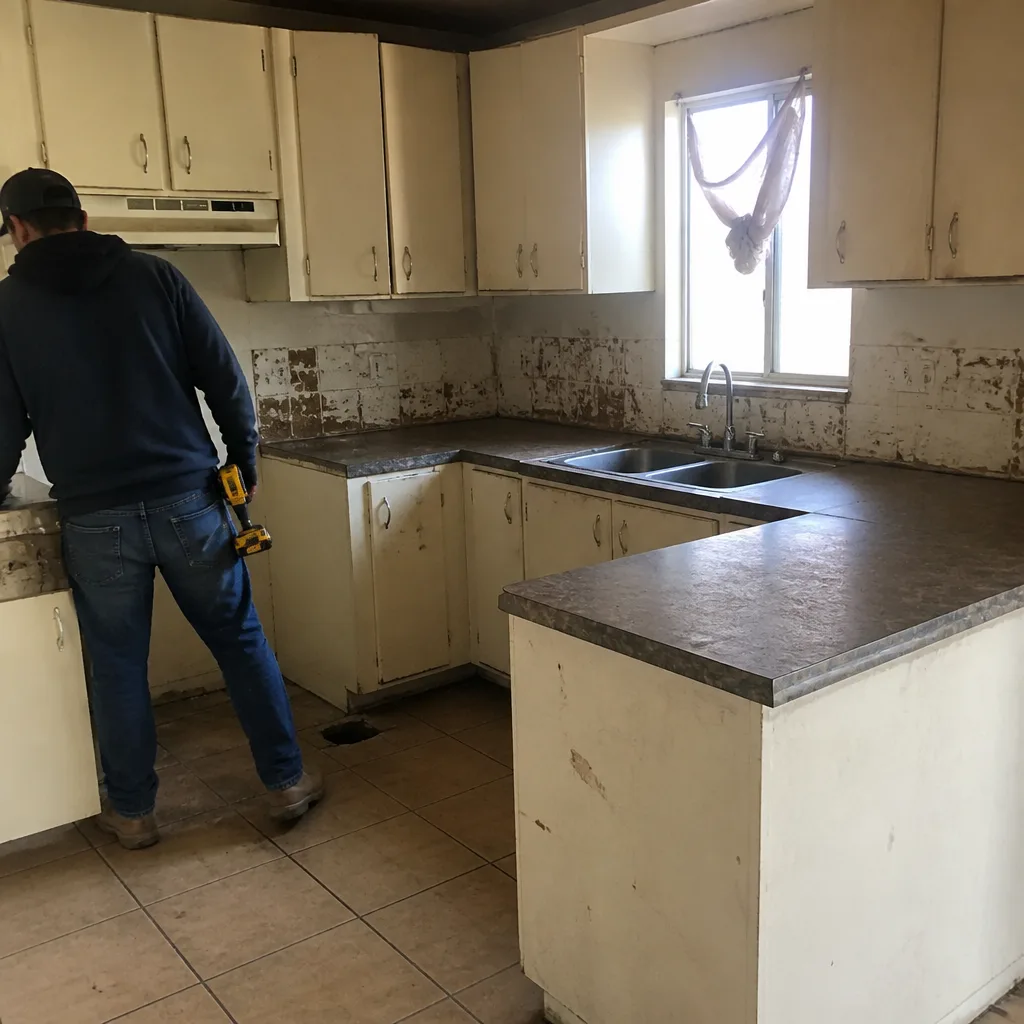
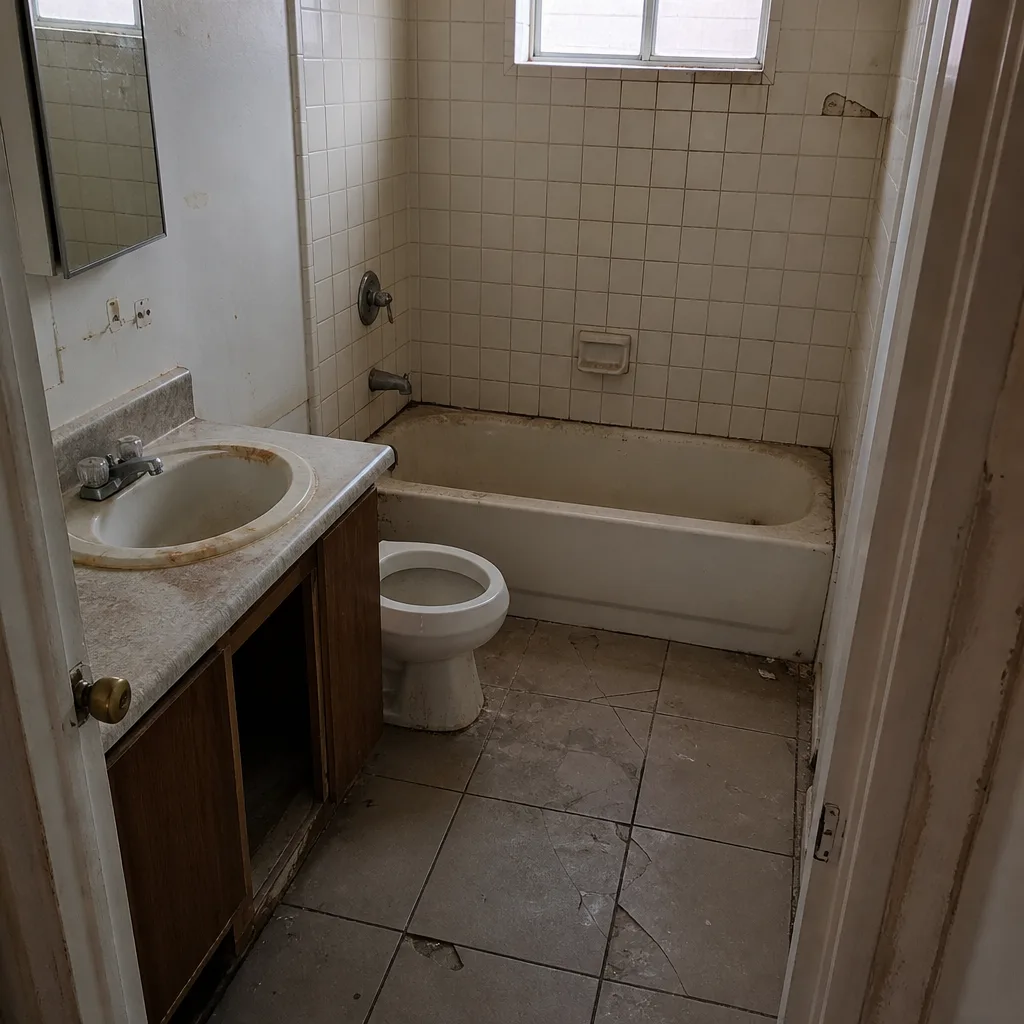 Before
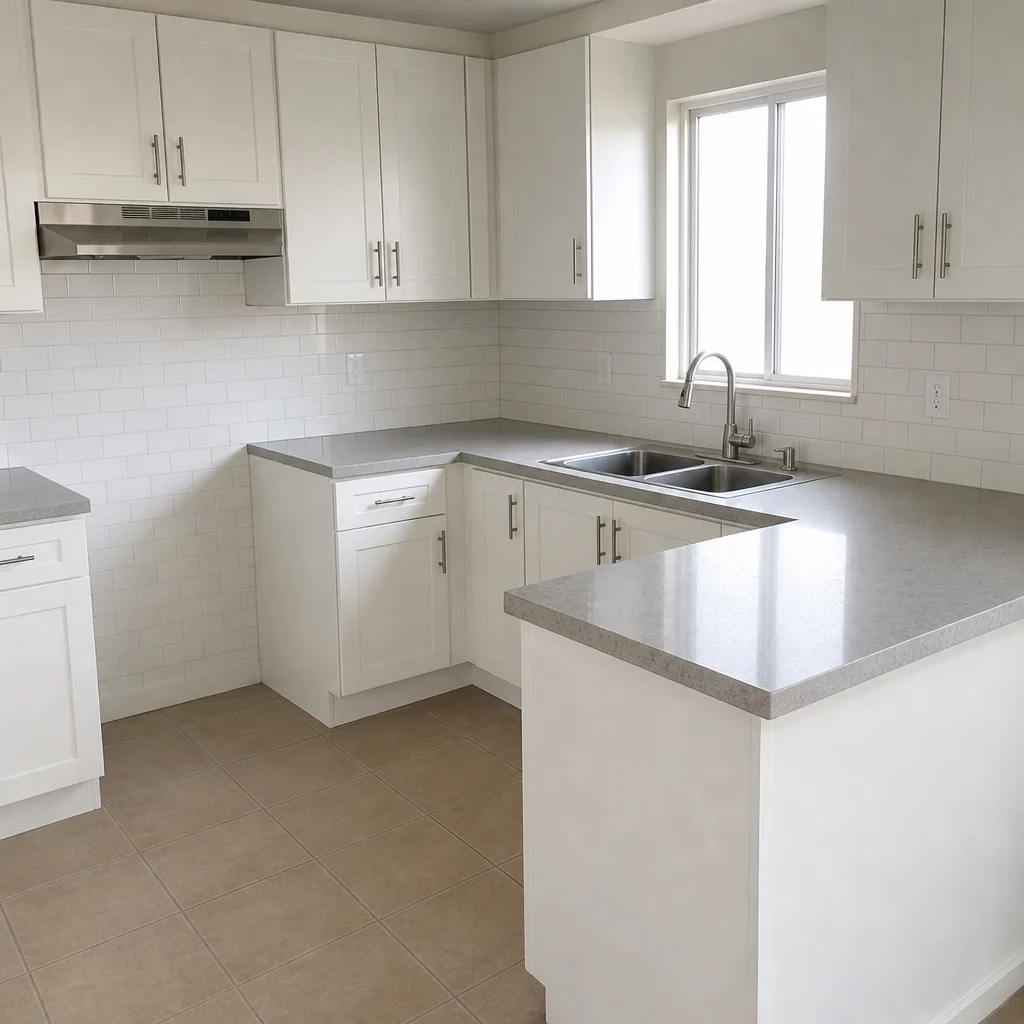
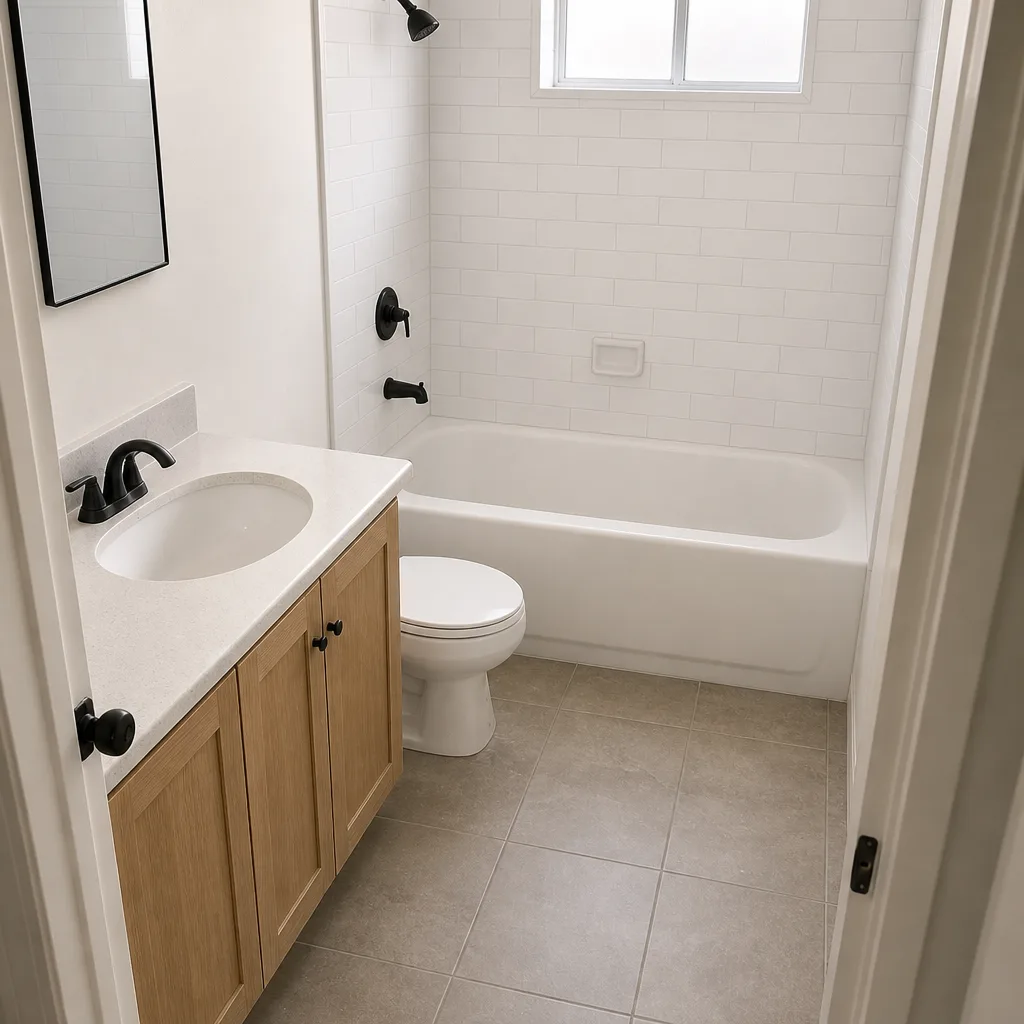 After
 Before
 After
 Before
 After
Frequently Asked Questions

Four times a year, timed to the two threat windows: a pre-summer check in April or May, a monsoon prep in June, a post-monsoon assessment in September, and a winter grout-and-caulk check in December. The two most important are the spring seal and the post-monsoon walk. Call (844) 834-2810 for a free estimate if any inspection turns up something you want a pro to look at.
Water intrusion through failed caulk joints and roof penetrations. The desert is dry most of the year, so a small leak goes unnoticed until the monsoon dumps water in a hurry, and by then the moisture has been trapped in the wall or attic for a while. Sealing those openings before summer and checking them after the rains is the fix. Call (844) 834-2810 to schedule a free estimate for repairs.
No. Every project gets a written price before any work begins, and that’s not negotiable – it’s part of The Garrison Standard. If we find something during the work that’s outside the agreed scope, you’ll get a written update before we proceed. Call (844) 834-2810 to schedule your free estimate.
It depends on the scope. Caulk, roof boot replacement, and drain-clearing are repairs and typically don’t need a permit. Structural work, added square footage, or anything that changes a wall or roof assembly does, and we pull permits and pass inspections as part of the job when they’re required. Clark County Building permits vary by work type, so the free estimate is the place to settle it. Call (844) 834-2810 to schedule yours.
Plan on weeks, not days. A caulk-and-seal job is usually one to three days. A stucco repair or envelope rebuild with roofing involved typically runs a few weeks depending on square footage, and any full exterior remodel is longer. Weather windows in the pre-summer and post-monsoon periods are the best times to schedule. Call (844) 834-2810 for a free estimate and a written timeline.
Every completed project carries a full-year written guarantee. If the work fails within that window, we come back and correct it at no charge – a free return visit, no argument. The scope of the guarantee is spelled out in writing before work begins so you know exactly what it covers. Call (844) 834-2810 to schedule a free estimate.
The Bottom Line
Sunrise Manor’s climate doesn’t follow the four-season calendar. Your home is stressed by a thermal-stress summer and a monsoon window, and the maintenance that actually protects it happens before, during, and after those two periods – not according to a generic checklist written for somewhere with a real winter. Seal in spring, clear drainage in June, map damage in September, and check tile and grout in December. Keep a written log of every finding, because that record is what protects your warranty when something fails. And when a finding is beyond a tube of caulk, get a written price before the work starts. That’s how a home in Sunrise Manor stays squared away year round.
Written by the team at Bradford Remodeling Sunrise Manor.
Call (844) 834-2810 for a free estimate. We put the price in writing before any tool comes out, and every finished project is backed by the 365-Day Done Right Promise: if the work fails inside a year, we return and correct it at no charge.