Last updated November 17, 2026




Free written scope consultation - allowances, timeline, and change-order rules on paper before a single trade is scheduled
Bathroom Remodeling Warning Signs Every Homeowner Should Know
The most expensive bathroom remodeling failure is the one nobody sees at job completion. A compromised waterproofing membrane behind fresh tile looks perfect when the crew packs up: level grout, clean caulk lines, gleaming fixture trim. Then, somewhere between 6 and 18 months later, the homeowner notices soft drywall in the hallway behind the shower, a subfloor that gives slightly underfoot, or a musty smell that no amount of ventilation clears. By then, the fix means demolition. In our years of work across Sunrise Manor, we’ve seen this pattern repeat because the shortcuts that cause it are invisible on sign-off day. This guide covers what to check before you hire, during the job, and at the final walkthrough so nothing hides behind the walls.
Quick Answer
The biggest bathroom remodeling warning signs are missing waterproofing specifications in the bid, tile labor quoted without a substrate inspection, walls closed before you’ve seen the membrane, and a guarantee that covers “workmanship” but never names water. If a contractor can’t tell you which membrane they’ll use, what backer board goes in the wet zones, and what exactly their guarantee covers for water intrusion, don’t sign. Verify those three things and you’ve avoided most of the risk that turns a bathroom remodel into a six-figure repair.
Styles & brands we work with
- Kitchen remodeling
- Bathroom remodeling
- Home additions & ADU
- Roofing
- Windows & doors
- Driveway & pavers
- Fence
Table of Contents
- Pre-Hire Warning Signs Specific to Bathroom Work
- What a Suspiciously Low Bathroom Bid Omits
- What to Inspect During the Job, Before Walls Close
- The Final Walkthrough Checklist Before You Release Payment
- What the Contractor’s Guarantee Must Say About Water
- Sunrise Manor Climate and Bathroom Moisture
- Permits, Code, and Why They Matter
- Reading the Contract Line by Line
Pre-Hire Warning Signs Specific to Bathroom Work
Bathrooms are the one room where the bid tells you almost everything. A contractor who understands water will name it everywhere. A contractor who doesn’t will talk about tile, vanities, and fixtures and leave the substrate to fate. When you’re pricing a Bathroom Remodeling in Sunrise Manor, these are the red flags that should stop you mid-conversation.
- No mention of a waterproofing membrane. A real bathroom bid names the product: Schluter Kerdi, RedGard, or an equivalent. If the proposal is silent on this line, the wall behind your tile is probably just cement board and thinset.
- No backer board specification. The bid should state the exact product and thickness. “Cement board” alone isn’t a specification. DensShield, HardieBacker, and Schluter board all behave differently and none of them are a substitute for a membrane.
- Tile labor quoted without a substrate inspection. If a contractor quotes tile installation before pulling trim to check the drywall, the subfloor, or the framing behind a wet wall, they’re guessing. In Sunrise Manor’s older ranch homes, we routinely find drywall where cement board should be, and the tile labor number never reflects the repair.
- No wet-zone diagram. Good contractors sketch where the shower, tub, and splash zones sit and note the membrane extents. No diagram, no confidence.
- No p-trap or vent discussion. A bath that gurgles when the toilet flushes or smells faintly of sewer after a hot shower usually has a vent issue. If the contractor doesn’t ask about it before the wall opens, that problem stays hidden.
- No permit line item. Bathroom work that moves plumbing, adds a fixture, or changes electrical layout requires a permit in nearly every jurisdiction. A bid without a permit line is either going to be an unpermitted job or an expensive surprise later.
You don’t need to be a tradesperson to spot these. You need a proposal that answers water, substrate, and inspection before it talks about finishes.
What a Suspiciously Low Bathroom Bid Omits
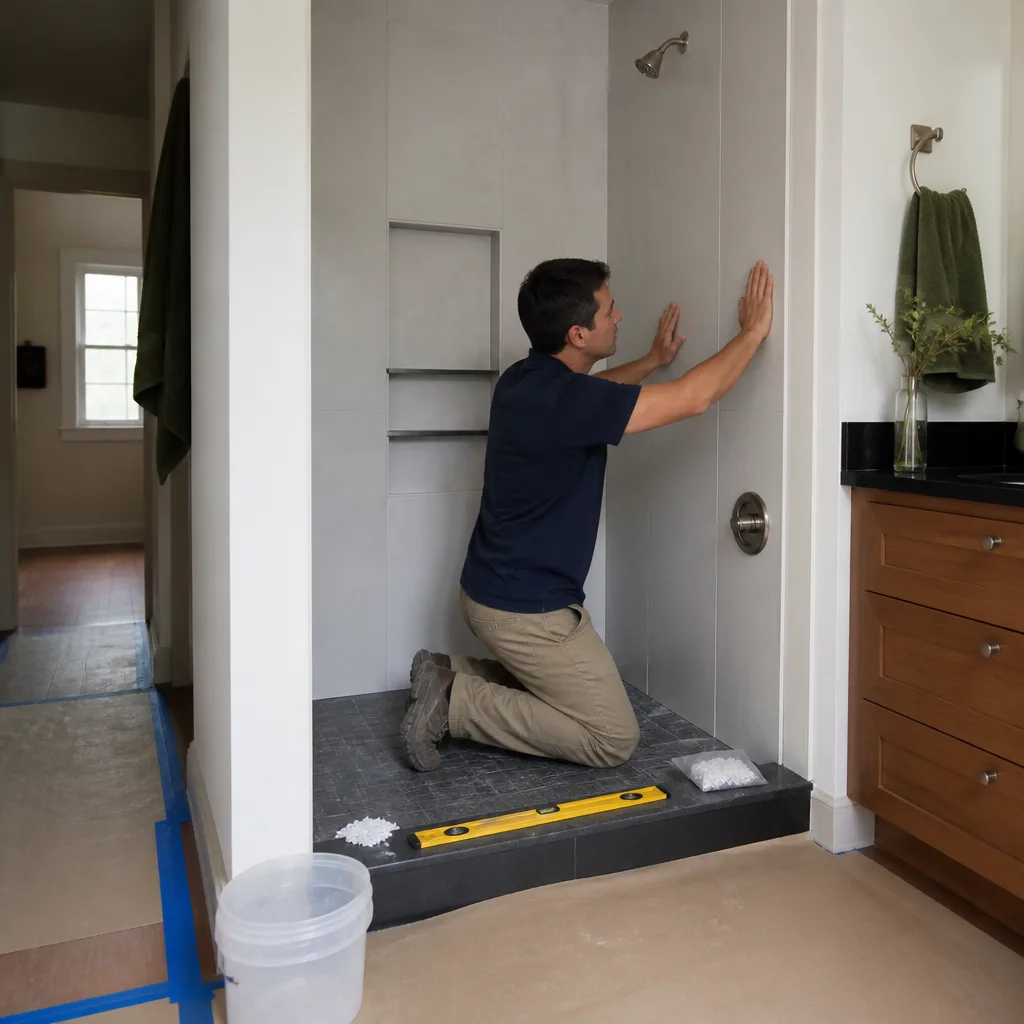
A low bathroom bid isn’t necessarily a bad contractor. It’s a bid that has made different choices about what to include. In our experience, the three items most frequently stripped from a low bid are waterproofing materials, permit fees, and backer board. Every one of them is invisible on the invoice and expensive to fix later.
- Waterproofing materials. A full Schluter or RedGard system on a standard tub surround runs several hundred dollars in materials alone, plus the labor to install it correctly. A bid missing this line saves the contractor that cost and transfers the risk to you.
- Permit fees and inspections. In Southern Nevada, a bathroom permit plus the inspections that come with it are a real line item. A bid without it generally means the work will be done unpermitted, and a future home sale or insurance claim can become a nightmare.
- Backer board. Skipping cement board or a bonded membrane in wet zones and tiling directly over drywall saves material and labor. It also lowers the installation by 40-60 percent of a proper wet zone because the framing and substrate work disappears from the scope.
- Subfloor repair. Once tile and old underlayment come up, soft spots frequently appear. The low bid assumes none will. The real bid reserves a specific allowance for it.
- Disposal and dumpster. Old tile, cabinets, and thinset weigh a lot. Removal and disposal are often quietly dropped.
A well-run contractor doesn’t mind showing you where every dollar sits. When you price general contracting work through a General Contractor in Sunrise Manor, ask for a line-item comparison between two bids. The gap is usually waterproofing, permits, and prep.
What to Inspect During the Job, Before Walls Close
This is the single most important window in a bathroom remodel. Once the tile goes up, you have no way to verify what’s behind it without tearing it out. Ask the crew to pause before the closed-wall phase and walk through the following with you, or ask for photos and video if you can’t be there in person.
- Confirm membrane coverage. Schluter or RedGard should visibly coat every wet surface including the shower pan, curb, wall seams, and at least 2 inches past the shower opening. No thin spots, no skipped corners, no dry patches on an inside corner.
- Check the backer board at wet zones. Cement or gypsum-based backer board should be screwed to the framing with the manufacturer’s specified fasteners and spacing. Look for screw heads sunk slightly below the surface without tearing through the facing.
- Confirm the shower pan slope. The pan should slope toward the drain at a quarter-inch per foot. A quick way to see this: pour a small amount of water on the pan before tile; it should move to the drain without pooling.
- Inspect the p-trap and vent. The trap should be visible under the floor or in the wall, with a vent line running up. If the tile setter is finishing before the plumber has confirmed the vent, ask for a plumbing inspection first.
- Verify the framing and blocking. Grab bars, shower doors, and wall-mounted fixtures need solid blocking behind them. If it’s missing, that gets cut into the finished wall later.
- Photograph everything before it closes. Ask the contractor for photos of the open wall with a tape measure in frame. This documentation is what you’ll rely on if something does fail, and a disciplined contractor provides it without being asked.
If a contractor resists pausing for this inspection, that’s the warning sign. Every job we run through The Garrison Standard includes a documented pass through these checkpoints before walls close, because that’s the moment when a hidden defect can still be caught for $150 rather than $15,000.
The Final Walkthrough Checklist Before You Release Payment
The final walkthrough is often rushed. Don’t let it be. Here’s what to physically check before you sign off and release the balance. Bring a small flashlight and a level. Ten minutes now saves months of arguments later.
- Grout joint consistency. Run your eye down a grout line across the room. Widths should be even, and there should be no voids. Joints that transition from 1/8 inch to 3/16 inch indicate the tile wasn’t leveled correctly.
- Caulk placement at movement joints. Any corner where two planes meet, the tile-to-tub joint, and the tile-to-doorframe joint should be caulk, not grout. Grout cracks there because those surfaces move at slightly different rates.
- Fixture seal-out. Every escutcheon plate around the shower and tub valve, every faucet base, and the toilet base should be sealed with a smear of silicone or plumber’s putty. A toilet that rocks indicates a missing wax ring seal, which will show up as a subfloor stain within a year.
- Door and drawer operation. Open and close every vanity door and drawer. They should be aligned without rubbing, the soft-close should engage, and no fastener should be visible from the front.
- Shower door and glass. The door swing should clear the toilet, towel bars, and the wall. The glass should be level side to side and should have a bead of sealant on every edge where glass meets tile.
- Drain flow and trap seal. Run water for two minutes and note how quickly it drains and whether you smell anything. A faint sewer smell during this test means a vent issue that was never fixed.
- Water spot check at adjacent rooms. Look at the base of the wall behind the shower in the next room. Run your hand along the baseboard. Any softness or discoloration is a membrane failure that happened during the job, and you want to know before you sign.
- Written documentation before payment. You should be holding a signed written guarantee, the permit and inspection sign-off, and photos of the open-wall phase before you write the final check.
If your contractor walks you through those eight items without prompting, you’re working with someone disciplined. Bradford’s version of that walkthrough is called a squared-away close: clean site, documented scope, and a signed guarantee in your hand.
What the Contractor’s Guarantee Must Say About Water
A general “one-year warranty on workmanship” sounds reassuring and covers surprisingly little. The word “workmanship” can be argued about for months, and water damage that starts inside a wall rarely gets resolved by arguing. A bathroom guarantee needs to do three specific things.
- Name waterproofing as a covered component. The guarantee language should explicitly say that a failure of the waterproofing membrane or the integrity of the wet-zone assembly is covered, not just “workmanship” in the abstract.
- State the inspection cadence and who performs it. A guarantee is stronger when it says a return inspection happens at an agreed point (say, 11 months in) so water intrusion that starts slow gets caught before the window closes.
- Define failure and remedy. What counts as a failure? Discoloration of adjacent drywall? A wet-reading on a moisture meter? Once failure is defined, the remedy should be a return visit and correction at no charge, not “we’ll evaluate.”
The 365-Day Done Right Promise is how Bradford handles this: every completed bathroom remodel carries a full-year written guarantee, and if the work fails within that window, we come back and correct it at no charge. That’s specific language in writing, not a verbal assurance. Ask any contractor you price to put their own version of this on paper, and read what water-related words actually appear.
Sunrise Manor Climate and Bathroom Moisture
Southern Nevada is dry, and that climate can make bathroom failures sneakier than they’d be on the coast. In a wet climate, a leaking shower pan announces itself with stains within weeks. In Sunrise Manor, the ambient air pulls moisture out of the drywall, so a slow leak behind a tub surround dries to the eye while the substrate underneath stays compromised. That extends the hiding window considerably, and by the time the neighbor’s closet shows a soft spot, the substrate damage is usually extensive.
Two things about Sunrise Manor homes specifically are worth knowing:
- Hard water. Water in the Las Vegas Valley runs high in dissolved minerals. That mineral load accelerates grout erosion and scale buildup on shower glass, which means a shower that looks “fine” is often showing you what’s happening behind the tile at a distance. Look for white crust along the bottom grout line of a shower wall particularly; that’s the location where water is getting past the surface.
- Home vintage. A lot of Sunrise Manor ranch housing dates to the late 1950s through the 1970s. In that age range, drywall was used in wet zones as standard practice, copper plumbing has been through several decades of thermal cycles, and original shower pans are often at the end of their life. Any bathroom remodel of a home in that age range should assume a substrate inspection and a shower pan replacement in scope.
Permits, Code, and Why They Matter
In Sunrise Manor, bathroom work that moves plumbing, adds electrical, or changes the footprint requires a permit and inspection. Many homeowners skip this because it feels like paperwork. It’s not. An inspection is a second set of trained eyes at exactly the phase where hidden failures occur: rough plumbing, rough electrical, and the shower pan flood test.
A flood test is standard. The plumber fills the shower pan with water and it sits for 24 hours. If the water level drops or a moisture reading confirms leakage, the work fails inspection and has to be redone before tile goes in. That single test catches the majority of membrane failures. Unpermitted work skips it entirely.
If you’re doing a larger remodel that touches the kitchen at the same time, code requirements often interact with ventilation and exhaust. We cover the relevant context in our Kitchen Remodeling in Sunrise Manor guide, because bath and kitchen exhaust are commonly specified together. Every permitted job we run pulls the permit and passes the inspection; that’s a floor for what a contractor should be doing, not a selling point.
Reading the Contract Line by Line
The written contract is the last gate. If any of the following is missing, get it added before you sign, regardless of what the verbal conversation sounded like. Verbal promises do not survive a change in crew, a change in ownership, or a dispute at month thirteen.
- Brand-named materials. “Premium fixtures” is not a specification. “Kohler or Grohe shower valve, model X” is. Our own specifications name brands because manufacturer warranties back our own guarantee: a Grohe shower cartridge has a factory warranty that a generic import won’t. The same principle applies to GAF and CertainTeed roofing products if the bathroom remodel triggers any venting work at the roof line.
- Written price with no change-order clause. The contract should state a firm price and define exactly what triggers a legitimate change order (unforeseen rot, code corrections discovered at permit, etc.). Anything else, and you’re signing up for numbers that move at the door.
- Crew identity. Who is walking into your home, and how are they vetted? Bradford background-checks and uniforms every technician, which is an identity standard set at the Garrison Partners level rather than left to individual job sites. Ask your contractor what their version of this is.
- Written guarantee language. As above. If it isn’t in the contract, it doesn’t exist.
- Schedule and no-show language. What happens if the crew doesn’t show? What’s the schedule penalty? A disciplined contractor is willing to put it in writing.
See the difference
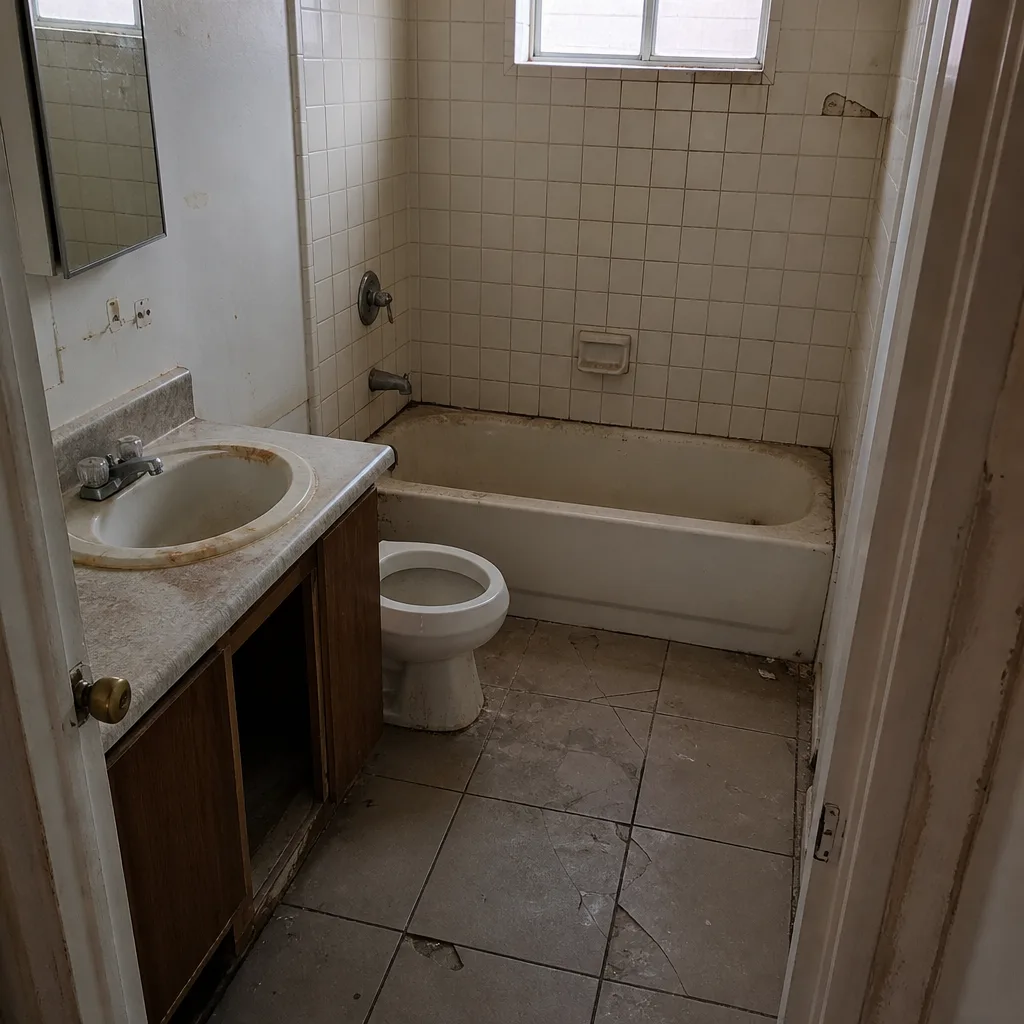 Before
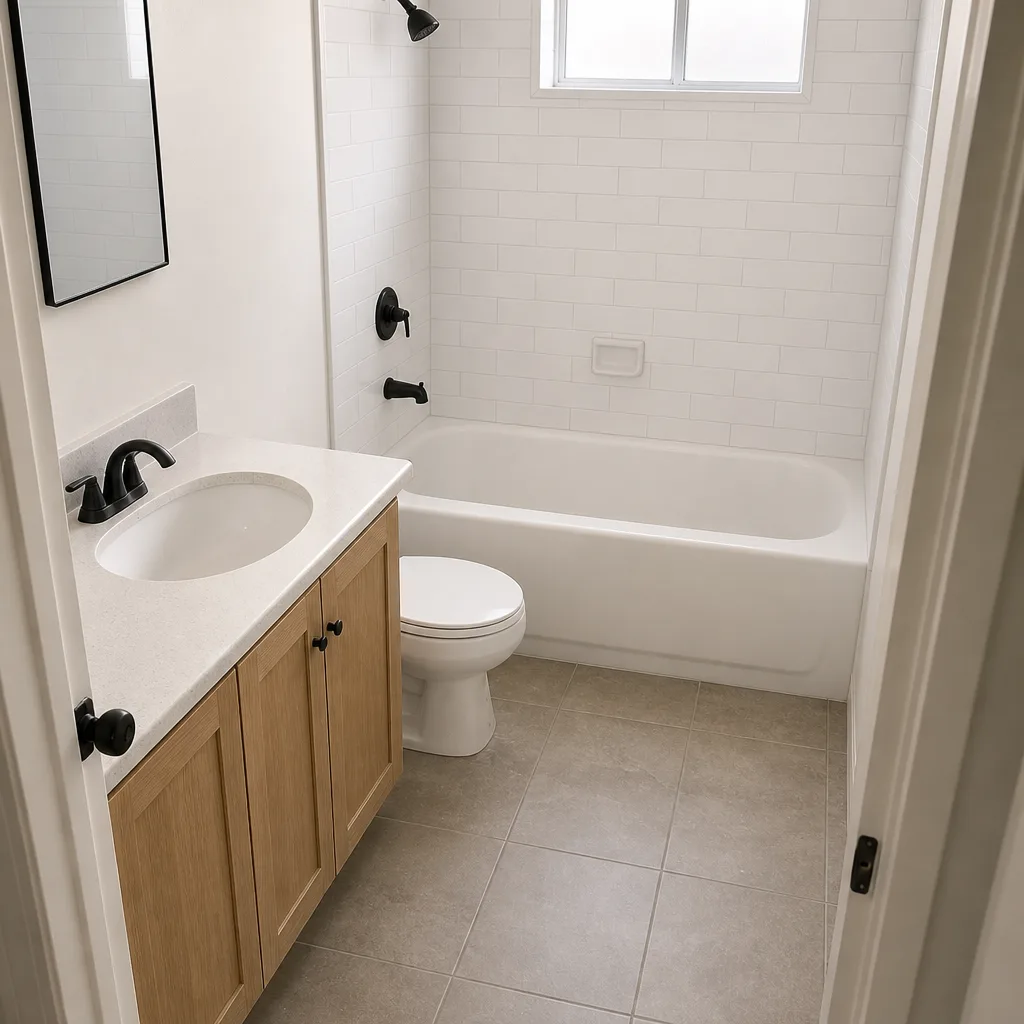 After
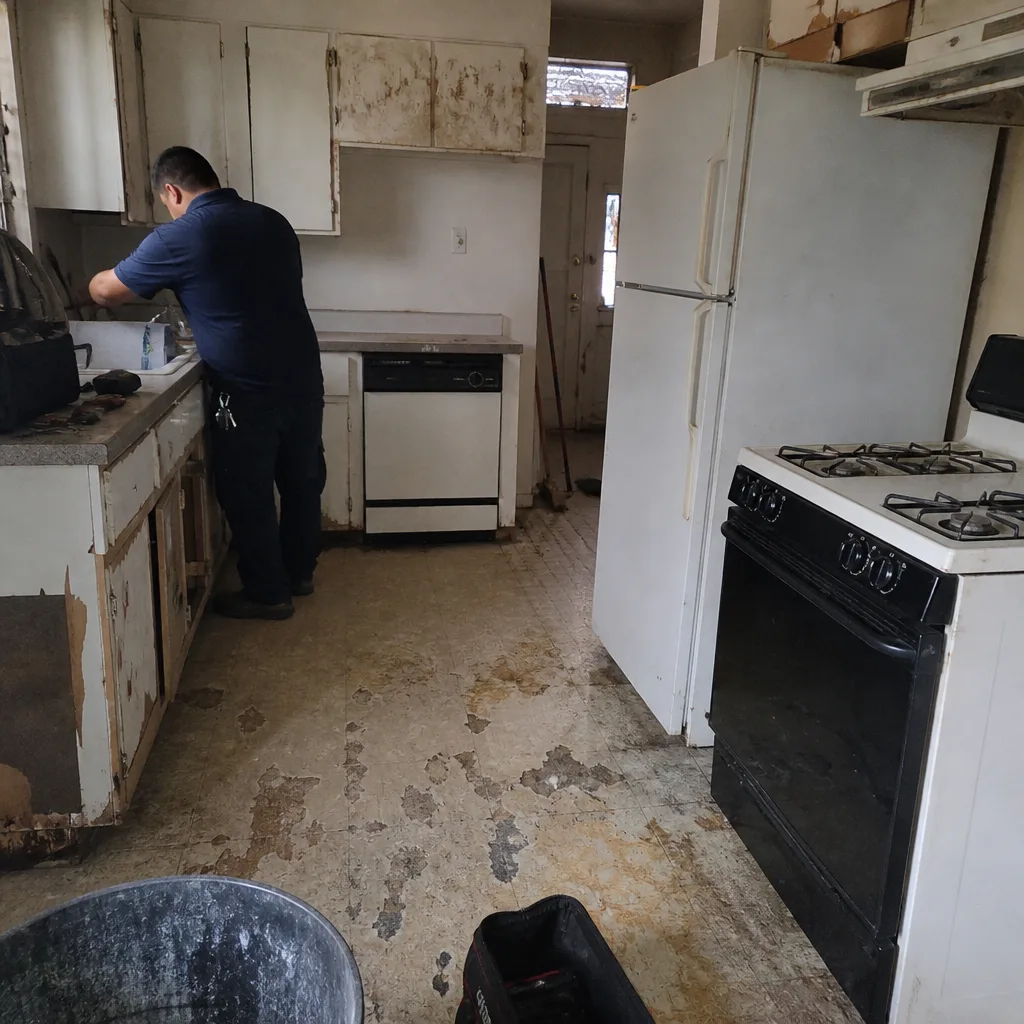 Before
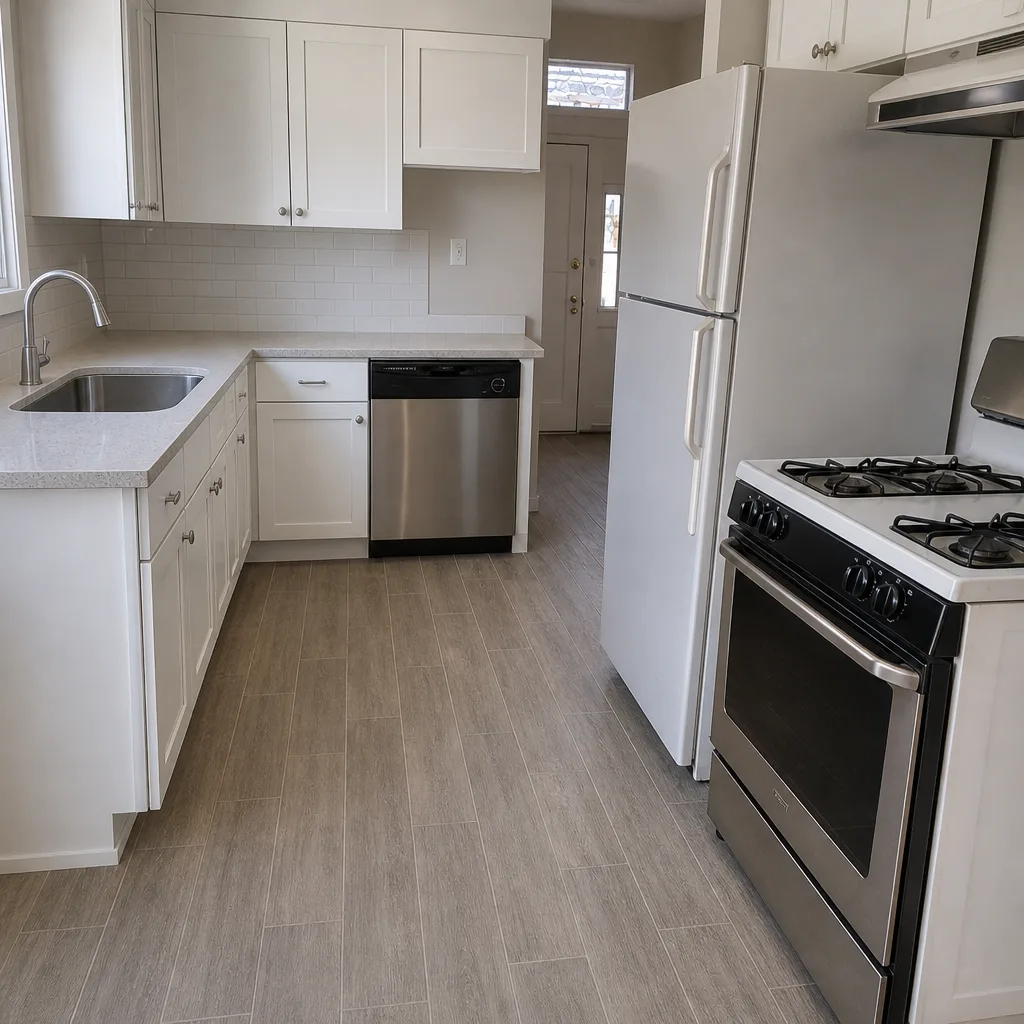 After
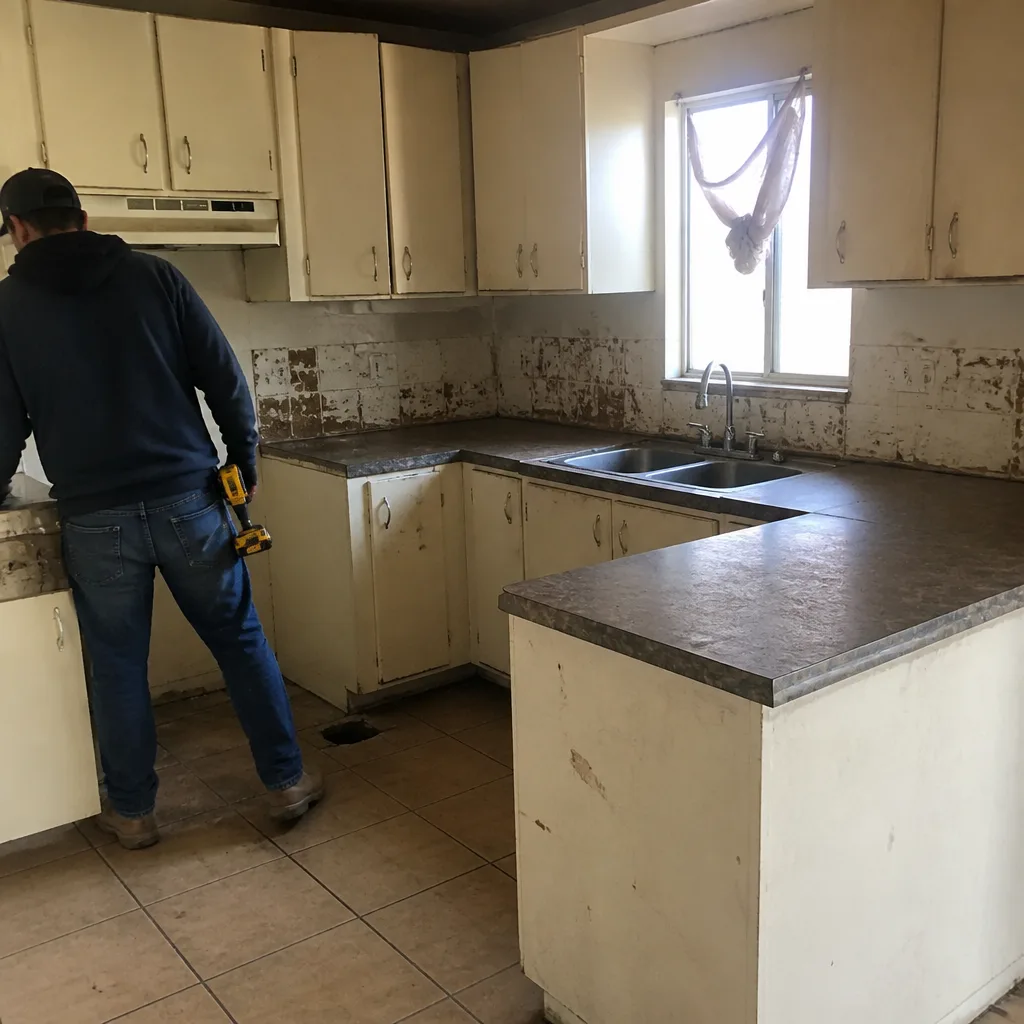 Before
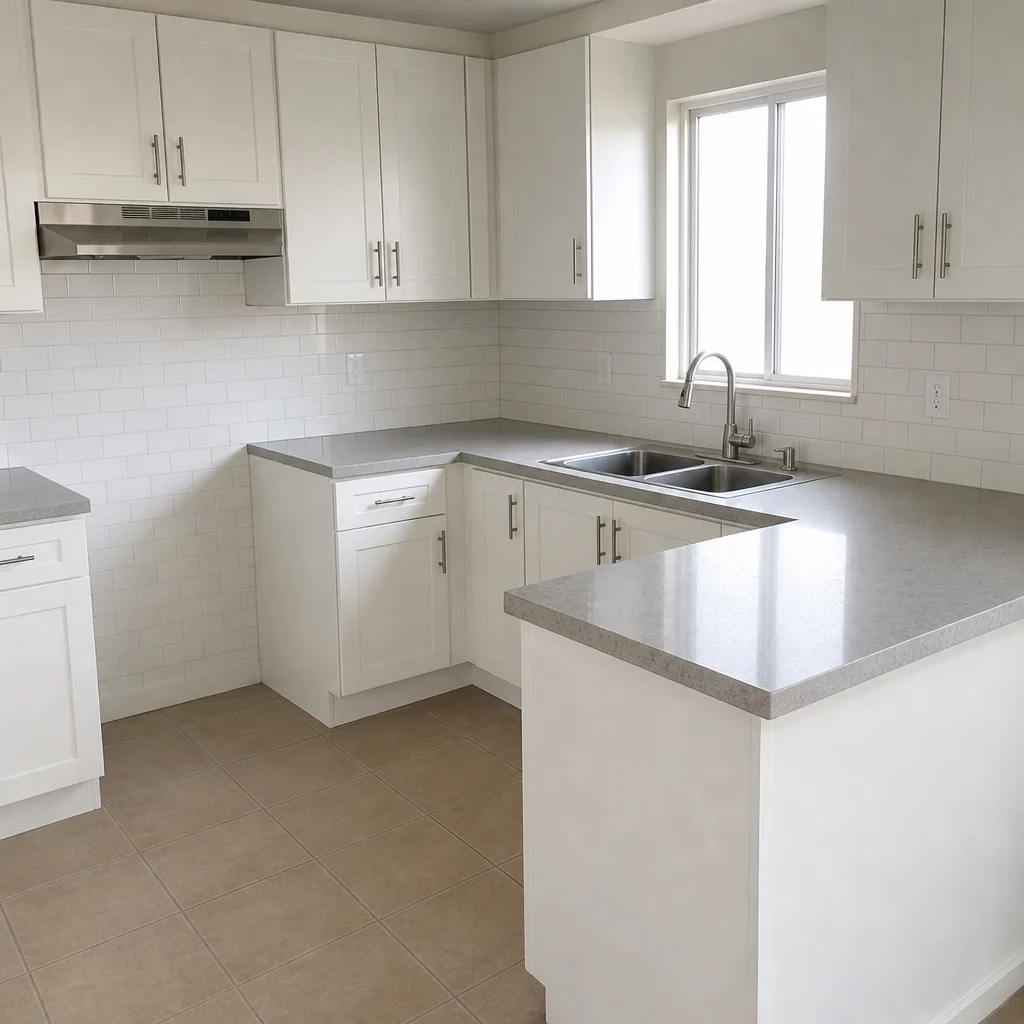 After
Common Mistakes to Avoid
- Signing on the finished materials and skipping the scope. Homeowners get excited about tile and cabinetry and forget to check that water, substrate, and permits are all in the price. Read the scope before you fall in love with the finish.
- Assuming the current bathroom is up to code. In Sunrise Manor’s older housing stock, original 1960s bath plumbing is rarely compliant with current code. Assume any remodel pulls permits and triggers corrections; a bid that ignores this becomes a mid-job surprise.
- Accepting the low bid without a line-item comparison. The difference between bids is almost always waterproofing, permits, and backer board. Ask to see the line items, not just the total.
- Not pausing before the walls close. The single biggest mistake. Ask for a documented walkthrough before tile and refuse to move forward without it.
- Skipping the moisture meter at the walkthrough. A $40 meter at Home Depot answers questions no visual inspection can. Run it along the base of every wall touching the shower at job close.
- Reading “one-year workmanship warranty” as a waterproofing guarantee. They are not the same thing. Ask the contractor to put water-specific coverage in writing.
- Releasing final payment before all documents are in hand. Permit sign-off, inspection record, written guarantee, and photos of the open-wall phase should all be in your possession before the final check.
When to Call a Professional
Some bathroom issues are cosmetic and you can plan a remodel on your own schedule. Others need a professional eyes-on before you sign a single estimate. Call us if any of these are true in your home:
- The wall behind the shower in the next room feels soft or has a visible water stain
- You smell sewage or damp earth in the bathroom after hot showers
- The floor gives slightly underfoot near the tub or toilet
- Your current bathroom has never been updated and belongs to a home older than 1975
- You’re being asked to release final payment without a written guarantee or inspection record in hand
Bradford Remodeling Sunrise Manor offers free estimates in Sunrise Manor. That means a written price with the waterproofing, permits, and backer board line items where they belong, before any work starts. Call (844) 834-2810 to schedule. A live person answers 24 hours a day, 7 days a week, so you’re never talking to a queue.
Frequently Asked Questions
Check the wall behind the shower in an adjacent room: soft drywall, discoloration, or a musty smell are the three most reliable early signs. Run a hand along the baseboard behind the shower wall, and if a moisture meter shows elevated readings, the membrane likely failed at installation. In Sunrise Manor, the dry climate pulls surface moisture away quickly, so these hidden symptoms are usually the first clue. Call (844) 834-2810 for a free estimate if you want a professional read before assuming the worst.
A complete bathroom bid names the waterproofing product, specifies the backer board by brand and thickness, includes permit and inspection fees as a line item, and reserves an allowance for unforeseen substrate repair. Tile labor should appear after a substrate inspection, not before. If your bid is missing any of those, ask why before you sign. Call (844) 834-2810 to see what a written line-item estimate looks like.
The three items most often stripped out to lower a bid are waterproofing materials, permit fees, and backer board in wet zones, and each of those omissions hides a repair cost inside the finished wall. The low bid usually also drops shower pan flood testing, disposal, and substrate repair allowance. Compare line items, not totals. Call (844) 834-2810 for a free written estimate with every scope item visible.
Yes, if the work moves plumbing, adds a fixture, or changes electrical layout, a permit is required and inspections are part of the process. The most important inspection is the shower pan flood test, which catches membrane failures before tile goes up. Unpermitted work skips that step entirely, and it can affect home sales or insurance claims down the road. Call (844) 834-2810 to schedule a free estimate that includes the permit line item.
A strong guarantee specifically covers the waterproofing assembly, not just general “workmanship,” and it names a return inspection and a remedy at no charge if the work fails within the guarantee period. Bradford’s 365-Day Done Right Promise does exactly that: a full-year written guarantee on every completed bathroom remodel, with a free return visit if something fails inside the window. Call (844) 834-2810 to see the guarantee language before you commit.
Hold final payment until the permit has passed inspection, you’re holding a signed written guarantee, you have photos of the open-wall phase, and the final walkthrough items (grout consistency, movement-joint caulk, fixture seal-out, door and drawer operation) have all been verified. There’s no rush. A legitimate contractor expects to wait for all of that. Call (844) 834-2810 if you want a second set of eyes before releasing that final check.
The Bottom Line
Bathroom remodels fail on the parts you can’t see. The pre-hire warning signs, the during-job inspection, the final walkthrough, and the guarantee language all point to the same thing: water is either specified, inspected, and covered in writing, or it isn’t. In Sunrise Manor, the dry climate makes a hidden failure easier to miss, so documentation matters more, not less. A contractor who names the membrane, pulls the permit, walks the closed-wall phase with you, and hands you a signed waterproofing guarantee is the one to hire. Start with a free written estimate that spells out every line. Call (844) 834-2810 to schedule.
You can also read more about how we run projects from top to bottom on our Bradford Remodeling Sunrise Manor home page, or check what a completed scope looks like on our general contracting and kitchen remodeling pages.
Written by the team at Bradford Remodeling Sunrise Manor.