Last updated November 17, 2026








Free written scope consultation - allowances, timeline, and change-order rules on paper before a single trade is scheduled
Kitchen Remodeling Warning Signs Every Homeowner Should Know
A contractor who asks for more than 30% upfront isn’t being aggressive. In Nevada, it’s a licensing violation, and it tells you the crew on your job may be financing the last one with your deposit. Here’s the pattern we’ve watched play out across Sunrise Manor: homeowners who get burned didn’t miss a warning sign. Someone told them the sign was normal. This guide walks through the specific red flags that show up before you sign anything, what they look like mid-job, and the exact language in a scope of work that protects your money.
Quick Answer
The biggest kitchen remodeling red flags are no written scope of work, verbal-only pricing, a deposit over 30% before work begins, a contractor who can’t produce a valid Nevada license number, and pressure to sign the same day. Mid-job warning signs include no permit posted, subcontractors who don’t know the plan, and verbal “while we’re at it” upsells with no written change order. Any one of these is a reason to slow down before the first cabinet comes off the wall.
Styles & brands we work with
- Kitchen remodeling
- Bathroom remodeling
- Home additions & ADU
- Roofing
- Windows & doors
- Driveway & pavers
- Fence
Table of Contents
- Pre-Contract Red Flags: What Shows Up Before You Sign
- Nevada Licensing Law: What You’re Legally Entitled to Verify
- Scope of Work Language That Actually Protects You
- What “Allowances” Really Mean for Your Final Bill
- Mid-Job Warning Signs: When to Stop the Work
- A Legitimate Change Order vs. a Verbal Upsell
- The Permit Question Nobody Asks Until It’s Too Late
- Why an Unlicensed Sub Can Cost You Your Coverage
Pre-Contract Red Flags: What Shows Up Before You Sign
The warning signs are almost always in the room before the contract. They come in bundles, and the most common bundle is a crew that wants to move fast and keep the paperwork thin. In our experience, a contractor who avoids a written scope isn’t disorganized. They’re keeping room to reprice later.
Here’s what to watch for before you sign anything:
- No written scope of work. If the plan lives in texts and a handshake, your project has no definition of “done.” That is the setup for the classic dispute: they say the job is finished, you say half the kitchen is missing, and there’s no document to settle it.
- Verbal pricing only. Numbers that only exist in the air can move at the door. A written price before any work starts is the only version you can hold anyone to.
- A deposit over 30%. That’s a licensing issue in Nevada, covered in the next section.
- Pressure to sign the same day. Scarcity language (“only two slots left this month”) is the opposite of a disciplined operation. A crew that runs on a real schedule doesn’t need to corner you.
- No physical address you can verify. You should be able to look up a license, a business registration, and a mailing address in ten minutes.
- Cash-only with no receipt trail. Every dollar should have a paper trail. If it can’t be traced, it can’t be disputed.
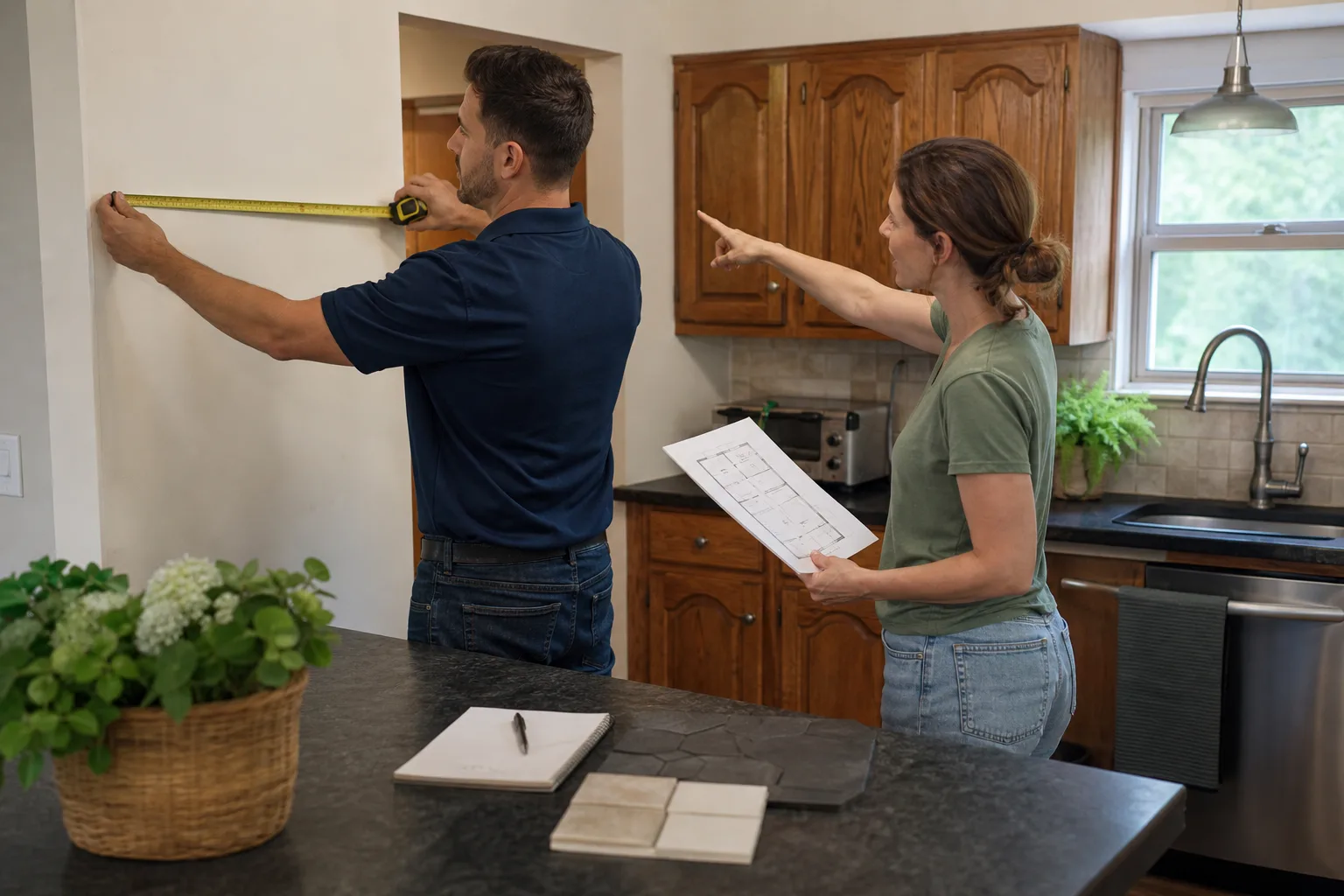
Sunrise Manor kitchen remodels often sit in older housing stock where walls are rarely plumb and cabinet boxes weren’t built to today’s dimensions. That’s normal. What’s not normal is a crew that looks at a 1970s galley kitchen and quotes a firm number without checking a single wall for deflection. A real bid includes time for opening up the substrate (the surface under the tile or flooring) and inspecting what’s under it. If nobody’s looking, nobody’s planning.
Nevada Licensing Law: What You’re Legally Entitled to Verify
Nevada Revised Statutes Chapter 624 requires anyone contracting to construct, alter, repair, or remodel a residential structure to hold a state contractor’s license from the Nevada State Contractors Board. That’s not a suggestion. It’s the law that protects your deposit, your permit, and your insurance coverage.
What that means in practical terms before you sign:
- Ask for the license number and look it up directly on the Nevada State Contractors Board’s public license search. Don’t take a screenshot as proof. Verify the number against your project address yourself.
- Confirm the license covers the work. Residential remodeling, cabinetry, and electrical are separate classifications. A license with no residential classification can’t legally do your kitchen.
- Check the deposit cap. Nevada rules restrict how much a licensed contractor can collect before work starts. A request for more than 30% upfront isn’t aggressive negotiating – it’s a violation, and it means either the crew isn’t licensed or isn’t following the rules.
- Ask to see a certificate of insurance with your address listed. General liability and workers’ compensation should both be current. Ask for the certificate directly from the insurer if you want to be certain.
- Confirm whether the contractor will pull the permit. The permit must be pulled by the licensed contractor of record. If they ask you to pull it as the homeowner, that’s a signal they don’t want their name on the inspection record.
Part of what makes a kitchen job in Sunrise Manor run clean is that every crew member knows exactly who’s licensed, who’s insured, and who’s on the permit. We’ve had homeowners call us after another crew asked for 50% down and vanished. The fix always starts with the same step: pull the license record and see what the job legally looked like. If you want the broader overview of how we structure work, our General Contractor in Sunrise Manor page lays out the standard we hold every project to.
Scope of Work Language That Actually Protects You
A scope of work is either a protection document or a decoration. The difference is in the specifics. Vague language reads fine at signing and gets expensive at close-out. Here’s what a protective scope actually contains, section by section.
- Product specifications by brand and model. Not “premium cabinets.” Write in the line item: KraftMaid or Wellborn cabinetry, Cambria or Caesarstone surface, Kohler or Moen fixtures, model numbers included. A documented brand set means quality isn’t left to guesswork, and the manufacturer warranty travels with the product.
- Dimensional detail. Square footage of tile, linear feet of countertop, number of cabinet boxes. Underspecified quantities are where “we ran short” turns into a change order at the end.
- Explicit exclusions. A good scope says what isn’t included: new rough-in for plumbing, substrate repair, appliance relocation, soffit (the dropped ceiling box above the cabinets) changes. Exclusions in writing are honest. Exclusions discovered mid-job are surprises.
- Written line-item pricing on the whole document. One number on a cover letter is not pricing. A line-item price for demo, cabinets, countertop, tile, electrical, plumbing, and finish covers the entire job.
- Payment schedule tied to milestones, not dates. Payments should track completed work: demo complete, cabinets set, countertop templated, countertop installed, punch list signed. Never a lump sum at the start.
- A written guarantee term. Every completed project should carry a written guarantee with a specific length and coverage. Ours is the 365-Day Done Right Promise: a full year, in writing, and if the work fails inside that window, we come back and correct it at no charge.
- Change order procedure in writing. Before signing, ask how a change order gets approved, who signs it, and how the price is set. This one page prevents most mid-job fights.
The trade calls this a “written price before work begins.” Call it by whatever name you want. The point is that no number moves after the contract is signed without a signed change order that you can read before work starts.
What “Allowances” Really Mean for Your Final Bill
An allowance is a placeholder dollar figure for a material you haven’t picked yet – a common, legitimate item in kitchen remodels. The trap is when the allowance is set so low that it can’t possibly cover the material, and the contractor knows it. Your final bill closes the gap, and the gap is often several thousand dollars.
Here’s what a contractor-friendly allowance looks like versus a realistic one on a Sunrise Manor kitchen:
- Countertop allowance: a $1,200 figure that doesn’t cover even entry-level quartz for a 40-square-foot run, versus a realistic number based on the surface you actually want – Cambria or Caesarstone slabs vary substantially by pattern, and the allowance should reflect the one on the design sheet.
- Tile allowance: “backsplash tile: $8 per square foot” when most of the tile you’d actually want to install is $14 or more.
- Lighting allowance: a lump number that doesn’t mention whether fixtures, cans, wiring, or dimmers are included.
- Cabinetry allowance: a per-linear-foot figure that ignores the door style, the drawer upgrade, and the installation hardware. KraftMaid and Wellborn both price their lines substantially across door styles and finishes.
Ask two questions about every allowance before you sign: What happens if I go over? and What happens if I come in under? A legitimate contractor refunds or credits the difference on the under side and writes in the over side as a signed change order, not a hidden adjustment at close-out. If the answer to the first question is a shrug, the allowance isn’t a placeholder. It’s a planned overrun.
Mid-Job Warning Signs: When to Stop the Work
Some red flags appear after the first hammer swing. These are your signal to slow the job down and check the paperwork before the next milestone.
- The permit isn’t posted. Nevada requires a permit for most kitchen work that touches electrical, plumbing, structural, or gas lines. The permit card should be visible on the site with the licensed contractor’s name on it. No card, no proof of legal work.
- Subcontractors don’t know the plan. If the electrician shows up and asks you where the outlets go, they weren’t briefed, and that’s a documentation failure. A squared-away job includes a written schedule and a copy of the plan for every trade on site.
- The crew changes. A rotating cast of unfamiliar faces and no name tags is a sign the crew isn’t background-checked by the general contractor. You should know who’s walking through your door before they arrive. We run background-checked, uniformed technicians for exactly that reason, and that standard is set at the Garrison Partners level, not left to the job site.
- The site isn’t cleaned daily. A crew that leaves cabinets in the walkway and construction dust in the hall is signaling that close-out will be messy too. Clean site daily is the floor, not a bonus.
- Electrical or plumbing work happens without inspection scheduling. Rough-in work requires a rough-in inspection before the walls close. If the drywaller shows up before the inspector does, stop the job and call.
- Verbal “while we’re at it” suggestions. Covered in the next section, but treat this as a stop sign until you have a signed change order.
- “We’ll finish it when the material comes in.” Legitimate if the material is on order and documented. A red flag if the “material” isn’t on the schedule and nobody can show you the order.
If you’ve already got a crew on site and you’re seeing several of these, the smartest move is to check the license, pull the permit, and compare the invoice to the signed scope. The trouble is almost always in the documentation, not the hammer swing. Our Kitchen Remodeling in Sunrise Manor page describes what a fully documented project looks like from first walkthrough to signed guarantee.
A Legitimate Change Order vs. a Verbal Upsell
Mid-job changes are normal in a kitchen remodel. What’s not normal is a change with no paper. A verbal “while we’re at it, we should also replace the subfloor” is an upsell you have no way to price, verify, or contest after the fact.
Here’s what a legitimate change order looks like versus a verbal one:
- Legitimate: A written document with a description of the change, the reason (for example, water damage behind the cabinets during demo), a line-item price, the added schedule impact in days, and a signature line for the homeowner.
- Verbal: A crew member says “we need to add $2,400 for the substrate repair” and work continues. No signature, no numbers on paper, no choice for you but to accept or stop the job.
- Legitimate: The change order is presented to the homeowner before the crew starts the additional work. You approve, they proceed, and you get a signed copy for your file.
- Verbal: The work is already done when you hear about the price. “We had to do it” is not a change order. It’s a decision made without you.
- Legitimate: A signed change order affects the final invoice, and you can trace every dollar from the signed document to the check you write.
- Verbal: The final invoice doesn’t match the contract, and when you ask why, the answer is “you approved it in the moment.” No paper, no proof, your word against theirs.
This is exactly why we put every price in writing before any work starts, with a signed change order procedure built into the contract. It costs us nothing to write the number down. It costs the homeowner a lot when nobody does. The Garrison Standard is the framework we run on: written price, documented scope, signed guarantee in your hand at close.
The Permit Question Nobody Asks Until It’s Too Late
The permit isn’t bureaucratic noise. It’s the record of who legally performed the work on your house. Skip it and you’ll find the cost three places: at resale, at insurance claim time, and if you ever need to prove a licensed contractor was on the job.
Here’s what the permit protects:
- Resale. A buyer’s home inspector will look for permitted work on kitchens and bathrooms. Unpermitted work is routinely flagged, and the seller usually pays in the negotiation.
- Inspection record. Rough-in electrical and plumbing get inspected before the walls close. That inspection is the only record that legal code-compliant work happened underneath your drywall.
- Homeowner insurance. If an unpermitted electrical fire originates in your kitchen, your insurer can reduce or deny the claim. That’s not a technicality. It’s the clause that decides whether you get made whole.
- Warranty coverage. The 365-Day Done Right Promise, and every manufacturer warranty on KraftMaid cabinetry, Cambria surfaces, or Moen fixtures, depends on proper installation to code. No permit, no paper trail, no coverage you can enforce.
In Sunrise Manor specifically, kitchen remodels frequently touch the electrical panel because so many homes have a 100-amp service that can’t safely support a modern range, microwave, disposal, and dishwasher running at once. A service upgrade means a permit. If a contractor tells you the panel upgrade doesn’t require one, that’s not a shortcut. That’s a sign you should check the license record before the next step.
Why an Unlicensed Sub Can Cost You Your Coverage
Every trade on your kitchen – electrician, plumber, drywaller, tile setter – should be covered by the general contractor’s liability insurance and workers’ comp. When a crew brings in an unlicensed sub and something goes wrong, your homeowner’s insurance is often where the loss lands. That’s the quiet cost nobody prices in upfront.
What to verify before your kitchen starts:
- Ask for the general contractor’s certificate of insurance with your job address listed. Confirm general liability and workers’ compensation are both active.
- Ask who’s on the job and whether each sub is licensed and insured. You’re entitled to that list before the crew shows up.
- Look up each sub’s license on the Nevada State Contractors Board site. It takes ten minutes per name.
- Confirm the crew is background-checked by the general contractor, not verified by the sub themselves. The standard should sit with the GC.
If a sub is injured on your property and they’re not covered by workers’ comp, they can pursue a claim against your homeowner’s policy. That’s not a theoretical worry. In our experience, it’s the most common reason a homeowner discovers an unlicensed sub after the fact. Our Bathroom Remodeling in Sunrise Manor page walks through the same verification standard we apply to kitchen work, because the rules are the same on every room.
Common Mistakes to Avoid
- Signing the same day you meet the contractor. Walk-throughs are for gathering information, not for committing to the largest check you’ll write this year. Sleep on it, every time.
- Accepting a lump-sum number on a cover sheet. Line-item pricing protects you from scope gaps, and the missing line item is always the expensive one. Insist on line items.
- Treating “we’ll sort it out” as a plan. On a Sunrise Manor kitchen, the “it” is usually the substrate under the old flooring or the electrical panel. Both are real costs that need a real number on the contract.
- Trusting the allowance figure without checking the material. Visit the showroom and price the cabinet line and slab you actually want. If the allowance can’t cover it, the allowance is a setup.
- Assuming the general contractor insures the subs. Verify it, in writing, before the first day on site.
- Skipping the permit to save time. The time saved now gets paid back with interest at resale or insurance claim time.
- Not reading the guarantee. Ask what’s covered, for how long, and who signs. A guarantee with no signature line and no term isn’t a guarantee – it’s a brochure.
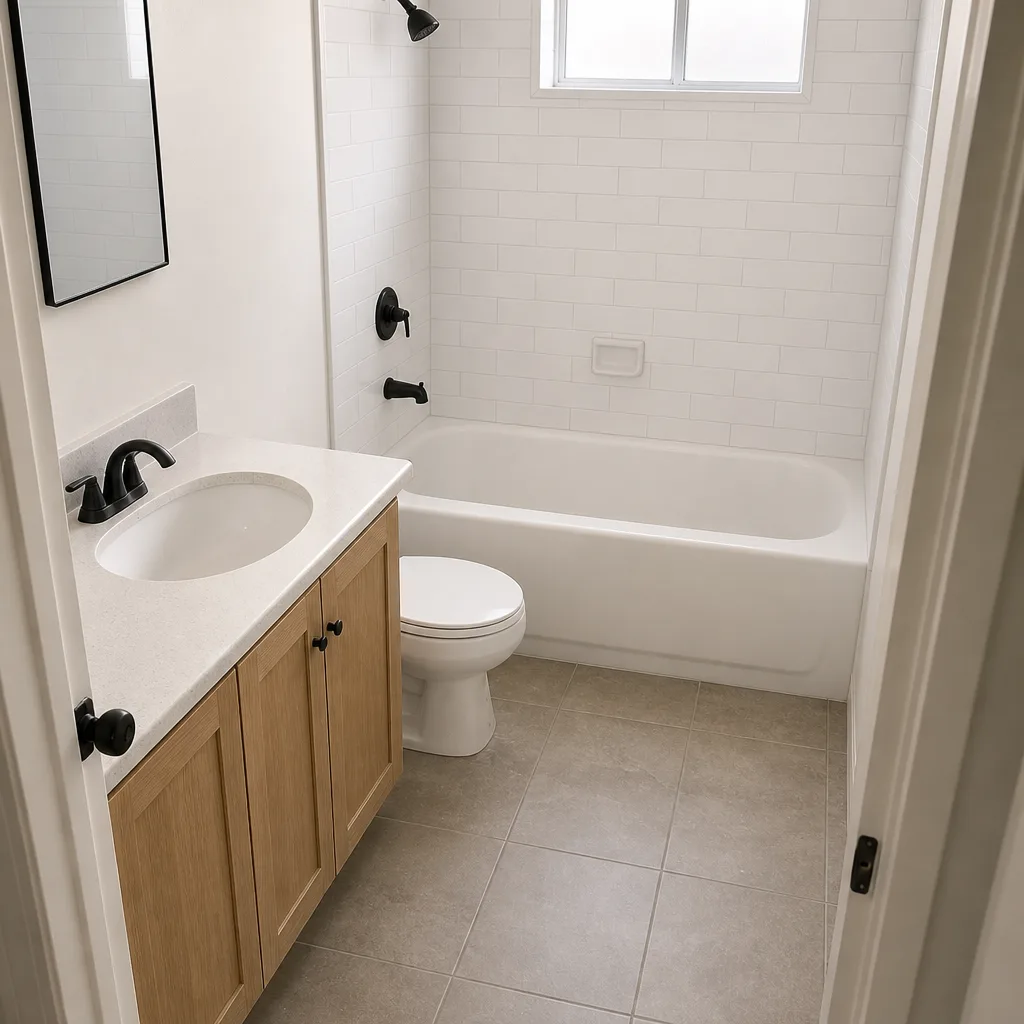
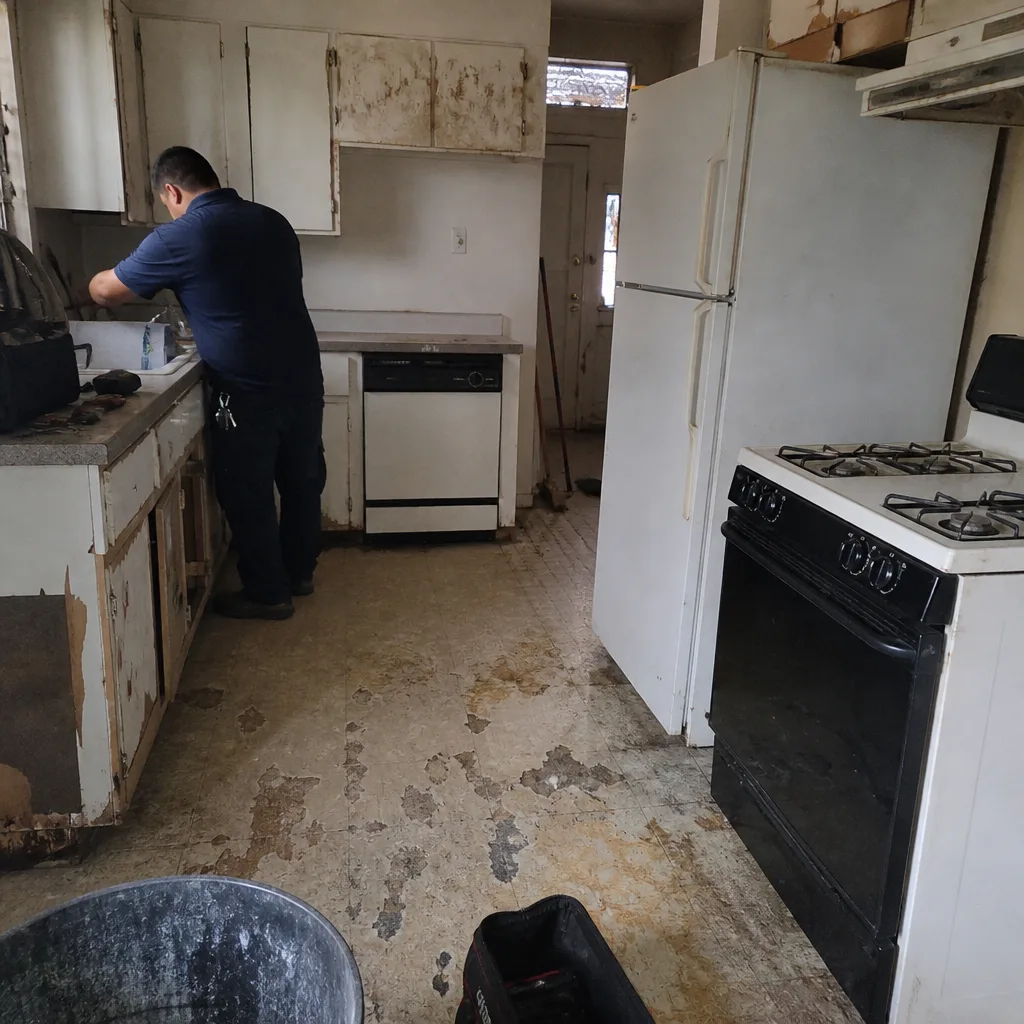
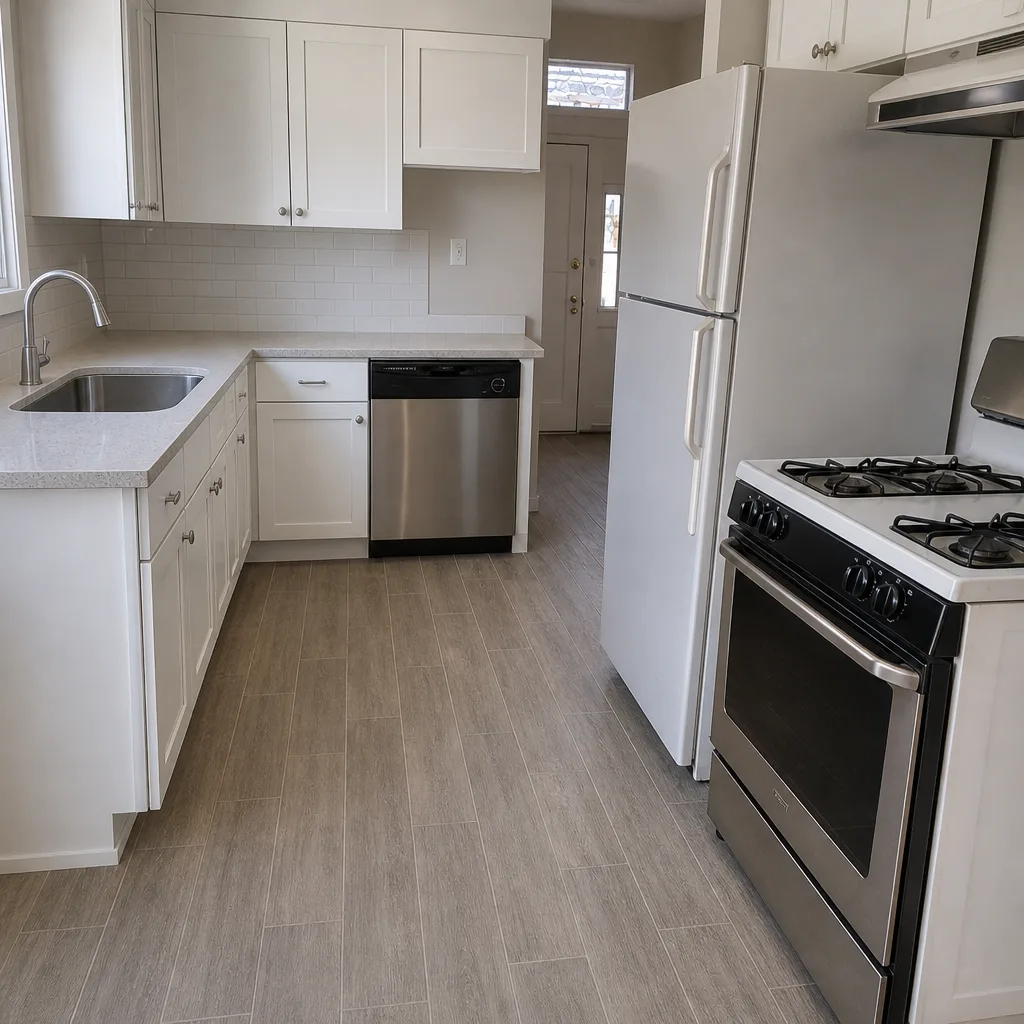
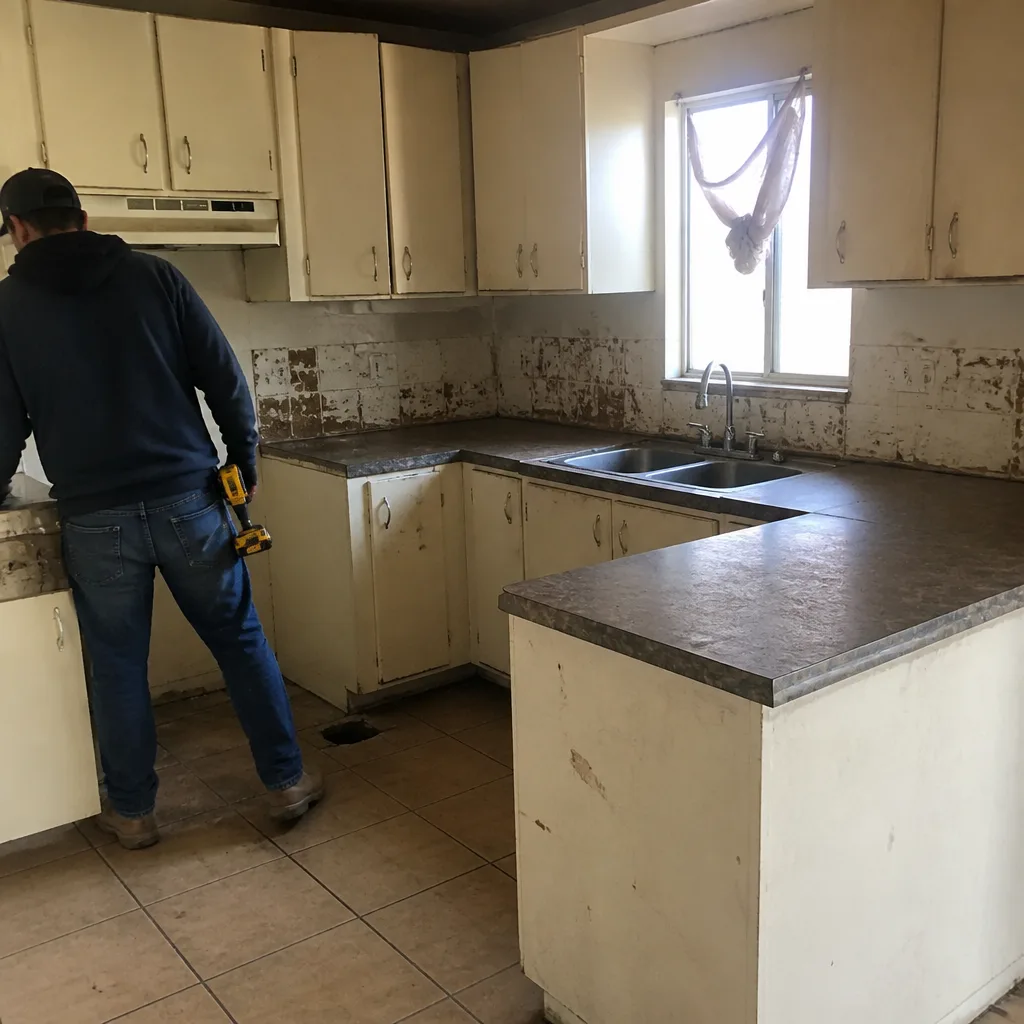
See the difference
 Before
 After
 Before
 After
 Before
 After
When to Call a Professional
Call a professional before you sign if any of these is true: no written scope exists, the deposit is over 30%, a contractor can’t produce a license number you can verify, or the price is verbal. Call us mid-job if you’re already under contract and see a permit missing, electrical work happening without inspection, or a verbal “while we’re at it” price show up on the invoice. And call before the project starts if you want a written price and a signed guarantee in the same packet as the scope. Our technicians have up to 22 years of experience running kitchens in Sunrise Manor, and that experience goes into the scope before a tool comes out. Bradford Remodeling Sunrise Manor offers free estimates in Sunrise Manor. Call (844) 834-2810 to schedule yours.
Frequently Asked Questions

A typical Sunrise Manor kitchen remodel runs roughly $24,000 to $58,000 depending on whether you’re keeping the cabinet footprint and panel, or moving plumbing and electrical. A pull-and-replace with KraftMaid or Wellborn cabinetry and a Cambria or Caesarstone surface usually sits in the middle of that range. Panel upgrades, substrate repair, and soffit changes push it higher. Call (844) 834-2810 for an exact written estimate – free, and line-item from the first page.
Say no and verify their license on the Nevada State Contractors Board site. In Nevada, a 30% deposit before work begins is the legally protected limit for licensed residential contractors. A request above that isn’t just aggressive – it’s a compliance issue, and it means the crew is either unlicensed or ignoring the rules. Call (844) 834-2810 if you’re not sure whether a bid is standard or not.
Yes, for anything that touches electrical, plumbing, structural, or gas lines. Most kitchens touch at least two of those. The permit must be pulled by the licensed contractor of record and posted on site – not pulled by you as the homeowner. Skipping it affects resale, insurance claims, and every manufacturer warranty on your cabinet and fixture brands. Call (844) 834-2810 if you want a permit status checked before you sign.
An allowance is a placeholder dollar figure for a material not yet selected. A change order is a signed, written adjustment to scope and price mid-job. Both are legitimate when written. The problem is when an allowance is set too low on purpose and the gap shows up as a verbal upsell – which is what you’ll want to screen for before signing. Call (844) 834-2810 and we’ll walk you through the difference on your specific contract.
Not on a properly documented job. A written price before work begins means your number holds unless a signed change order is approved in advance. Water damage, unexpected substrate failure, and panel upgrades are the three most common legitimate change orders – and every one of them should be in writing before the crew proceeds. Call (844) 834-2810 for a written estimate with a firm price and a signed change order procedure built in.
Every completed Bradford Remodeling Sunrise Manor project carries a full-year written guarantee. If the work fails inside that window – a cabinet comes loose, a surface delaminates, a fixture fails on install – we come back and correct it at no charge. The term is 365 days from close-out, in writing, signed, and in your hand before the last walkthrough. Call (844) 834-2810 and ask for a copy of the guarantee language before you sign.
The Bottom Line
The warning signs of a bad kitchen remodel show up before the contract, not during the job. No written scope, verbal pricing, a deposit over 30%, same-day pressure, an unverifiable license, and an undersized allowance for materials you actually want – those are the signals that matter, and they’re all checkable in an afternoon. The mid-job flags (no permit, unverified subs, verbal change orders) usually trace back to a contract that was never specific enough to hold anyone to. Get everything in writing, verify what you’re legally entitled to verify, and know what your guarantee says before the first tool comes out.
If you’re pricing a kitchen remodel in Sunrise Manor and want the written price, the documented scope, and the 365-Day Done Right Promise on the same page, call Bradford Remodeling Sunrise Manor at (844) 834-2810 for a free estimate. You can also start at our Bradford Remodeling Sunrise Manor home page or our Kitchen Remodeling in Sunrise Manor overview to see the same standard applied to every project we take on.
Written by the team at Bradford Remodeling Sunrise Manor.