Last updated November 17, 2026






Free written scope consultation - allowances, timeline, and change-order rules on paper before a single trade is scheduled
How to Hire a Construction Contractor in Sunrise Manor: A Step-by-Step Guide
Nevada’s State Contractors Board consistently logs more complaints per capita than most other states, and a disproportionate share come from the unincorporated Clark County communities east of Las Vegas – Sunrise Manor among them. The problem is not that homeowners here skip due diligence. Most people ask for three bids and read reviews. The problem is that they don’t know which specific documents to demand before money changes hands. This guide covers the four contract clauses, the license check, and the payment structure that actually protect you when you hire a contractor in Sunrise Manor.
Quick Answer
To hire a construction contractor in Sunrise Manor, verify the contractor’s license status on the Nevada State Contractors Board (NSCB) portal, confirm the license classification matches your project, demand a written scope of work with a fixed price, and structure payments so the bulk of the money lands after inspections pass and the punch list closes. Never pay a large deposit before a signed contract exists. In Nevada, the license check takes under three minutes and eliminates most of the risk.
Styles & brands we work with
- Kitchen remodeling
- Bathroom remodeling
- Home additions & ADU
- Roofing
- Windows & doors
- Driveway & pavers
- Fence
Table of Contents
- How to verify a Nevada contractor license in under three minutes
- The four contract clauses that stop surprise invoices
- Why a low bid in Clark County can signal unlicensed labor
- Nevada deposit limits: what a contractor can legally collect up front
- How to structure a final-payment holdback
- Permits and inspections in Sunrise Manor
- How to read a scope of work like a contractor
- Common mistakes to avoid
How Do You Verify a Nevada Contractor License in Under Three Minutes?
Open the NSCB license search portal, type in the company name or license number, and read three fields: the license status, the classification, and the expiration date. That’s the whole check. It takes about two minutes if you have the license number in front of you.
Here’s what the status fields actually mean:
- Active: The license is in good standing. The contractor can legally contract for work in the licensed classification. This is what you want to see.
- Conditional: The license is active but carries a restriction, often a disciplinary condition or a limit on the dollar value of contracts the contractor can sign. Ask what the condition is before you sign anything. A conditional license is not automatically disqualifying, but you need the specifics in writing.
- Inactive or expired: The contractor cannot legally take your job. Walk away.
- Suspended or revoked: The Board has pulled or paused the license. Do not sign.
The classification matters just as much as the status. Nevada licenses contractors by trade and by scope – residential, commercial, specialty. A contractor licensed for residential remodeling is not automatically licensed for structural work or for a project that crosses into commercial scope. If your Sunrise Manor project involves adding square footage or moving load-bearing walls, confirm the classification covers it. The NSCB portal lists every classification attached to a license.
We’ve watched homeowners skip this step because a contractor showed a license card. A card proves nothing. The portal is the only source of truth.
What Four Contract Clauses Stop Surprise Invoices?
Surprise invoices almost always trace back to a vague contract. The fix is four clauses, written plainly, that any reputable contractor will sign without argument. If a contractor pushes back on any of them, that’s your answer about how the job will go.
- Scope-of-work definition. The contract must list every task, every material by brand and product line, and every exclusion. “Install cabinets” is not a scope line. “Install KraftMaid Thornton maple cabinets, 42-inch uppers, per attached layout” is a scope line. Exclusions matter too: if the contract doesn’t say who handles drywall repair after a plumbing rough-in, assume nobody does until you get a change order.
- Change-order authorization threshold. Set a dollar figure – $250 is common – below which the contractor can absorb small adjustments, and above which a signed change order is required before work proceeds. This single clause eliminates the “we found rot, that’s another $4,000” phone call that arrives after the crew has already torn out the wall.
- Lien-waiver requirement. A lien waiver is a document where a subcontractor or supplier confirms they’ve been paid. Without waivers, a supplier who didn’t get paid by your contractor can file a lien against your property. Nevada law allows it. Require a conditional lien waiver from every sub and supplier at each payment milestone, and a final unconditional waiver at close.
- Payment-trigger milestones. Payments should release on completed, inspected work – not on a calendar schedule. “50% at start, 50% at completion” is a schedule, not a milestone. “30% at material delivery, 30% at rough-in inspection pass, 30% at final inspection, 10% at punch-list close” is a milestone structure. Only the second one protects you.
Bradford Remodeling Sunrise Manor works from a written price before any work starts – no numbers that move at the door. That commitment is part of our general contractor work in Sunrise Manor, and it’s why every scope line gets spelled out in trade terms and then explained in plain language.
Why Does a Low Bid in Clark County Often Signal Unlicensed Labor?
A bid that comes in 20% below every other number usually isn’t efficiency. In Clark County, it’s often a contractor planning to sub the labor to unlicensed day crews, skip the permit, or both. Unlicensed labor is cheaper because it carries no insurance, no workers’ comp, and no accountability. The savings show up on the bid. The risk shows up later – in failed inspections, injuries on your property, or a stop-work order that leaves your kitchen half-demolished.
The one contract line that closes this door:
“All work on this project will be performed by licensed, insured personnel employed or subcontracted by Contractor. Contractor will provide, on request, proof of licensure and insurance for any subcontractor assigned to this project.”
That sentence forces the contractor to either disclose their subs or lie in writing. A contractor with nothing to hide will sign it. A contractor planning to use unlicensed labor will find a reason to negotiate it out. Pay attention to which one you’re talking to.
Sunrise Manor sits in unincorporated Clark County, which means permitting runs through Clark County Building and not a city office. Unpermitted work here is common in older housing stock, and it’s one of the top reasons resale deals fall apart. If a contractor offers to “skip the permit to save you time,” understand what they’re actually offering: a project that fails disclosure at sale, plus a contractor who has now demonstrated they’ll cut a corner in writing.
How Much Can a Contractor Legally Collect Before Work Begins in Nevada?
Nevada caps the deposit a contractor can collect before starting work. Under Nevada Revised Statutes, a residential contractor generally cannot collect more than 10% of the contract price (or $1,000, whichever is less) as a down payment before work begins, unless a performance bond or another arrangement is in place. The exact limits depend on the project type and how the contract is written, so check the current statute or call the NSCB directly before you sign anything with a large up-front number.
What this means in practice:
- A contractor asking for 50% up front on a $40,000 kitchen remodel in Sunrise Manor is outside the limit unless a bond or specific contract structure justifies it. Ask them to explain the basis in writing.
- Materials-heavy projects sometimes require a larger up-front payment to cover cabinet and surface orders. That’s legitimate, but it should be documented as a materials deposit with receipts, not a lump sum.
- Cash deposits with no receipt are a red flag. So is a request to pay a subcontractor directly.
Get the deposit number into the contract alongside the milestone schedule. It should be unambiguous: this much before work starts, this much at rough-in, this much at final inspection, this much at close.
How Do You Structure a Final-Payment Holdback That Keeps the Contractor On Site?
Hold back 10% of the total contract price until the punch list is fully closed and final inspection has passed. This is the single most effective tool a homeowner has, because it aligns the contractor’s economic interest with finishing the last 5% of the job – the trim, the touch-up, the drawer that sticks.
Structure it this way:
- Set the holdback at 10% in the contract, in writing, tied to a specific list of close-out conditions.
- Define “punch list closed” as the contractor’s own list plus any items you add, all signed off.
- Tie the holdback release to final inspection pass and a final unconditional lien waiver from every sub and supplier.
- Release the holdback within a set window – five business days is common – after all close-out conditions are met.
The 365-Day Done Right Promise from Bradford Remodeling uses the same principle after the job closes: if the work fails inside a full year, we return and correct it at no charge. That’s a written guarantee on every completed project, and it’s stated in full in the contract so you know exactly what’s covered and for how long. A holdback protects you during construction. A written guarantee protects you after. You want both.
Do You Need Permits and Inspections for a Sunrise Manor Remodel?
Yes, for almost anything beyond cosmetic work. Kitchen remodels that move plumbing or electrical, bathroom remodels that relocate a drain, additions, structural changes, and roofing all trigger permits through Clark County Building. The permit process includes plan review, rough-in inspections before walls close, and a final inspection.
Skip the permit and three things happen: your homeowner’s insurance may decline a claim tied to unpermitted work, resale disclosure requires you to disclose it, and the county can require demolition to inspect the work. In Sunrise Manor’s older homes, unpermitted additions and converted garages are common enough that buyers’ agents now check permit history routinely.
Ask the contractor for the permit number once it’s pulled. Verify it on the Clark County permit portal. Confirm the inspection schedule lands on the contract milestones – the rough-in inspection should be a payment trigger, not an afterthought. Bradford Remodeling pulls permits on every job that requires one and schedules inspections to match the milestone structure, so nothing gets buried behind drywall.
If your project includes a kitchen or bath, our pages on kitchen remodeling in Sunrise Manor and bathroom remodeling in Sunrise Manor walk through the permit-sensitive scope items to flag before you sign.
How Do You Read a Scope of Work Like a Contractor?
A scope of work is a document that lists every task, every material, and every exclusion in the project. Most homeowner complaints about surprise invoices start with a scope that said “replace flooring” without saying which flooring, from which manufacturer, installed how. Here’s how to read one before you sign.
- Materials should be named by brand and product line. “Luxury vinyl plank” is not a specification. “Techo-Bloc or Cambridge Pavers, per sample approved by Owner” is. Insist on approved-brand language in every material line.
- Exclusions should be listed explicitly. Anything not listed is effectively included. If drywall repair, trim, or paint are not named, they are not covered.
- Quantities should be stated. Linear feet of cabinets, square footage of tile, number of doors. Quantities protect you from change orders driven by “we underestimated.”
- Installation methods matter. “Set on Quikrete base per manufacturer spec” is a scope line. “Paver patio” is not.
- Every line should map to a price. A written price before work starts, line by line, is the standard. If the scope and the price don’t line up, the gap is where the surprise invoice lives.
You don’t have to know every trade term to read a scope. You have to know that a scope without names, quantities, and exclusions isn’t finished yet. Ask the contractor to add them. A contractor who wants your business will. One who pushes back is telling you something about how the job will go.
Common Mistakes to Avoid
- Hiring on the bid number alone. A low bid in Sunrise Manor often hides skipped permits or unlicensed labor. Compare scopes, not just totals, and demand a written scope line by line.
- Signing without verifying the NSCB license. A license card is not proof. The NSCB portal is. Check status, classification, and expiration before the contractor sets foot on your property.
- Paying a large deposit before a signed contract exists. Nevada law caps what a contractor can collect up front. If the number is bigger than the statute allows and there’s no bond behind it, ask why in writing.
- Skipping the permit to save time. Unpermitted work in Sunrise Manor is a resale disclosure landmine and can void insurance claims tied to the work.
- No lien-waiver requirement. Without waivers, a supplier your contractor didn’t pay can file a lien on your house. Collect waivers at every payment milestone.
- Releasing the final payment before the punch list closes. The last 10% is your only leverage to get the trim finished, the drawers adjusted, and the site cleaned.
- Accepting a verbal price. A written price before work starts is the standard, and it should be part of the contract, not a text message.
See the difference
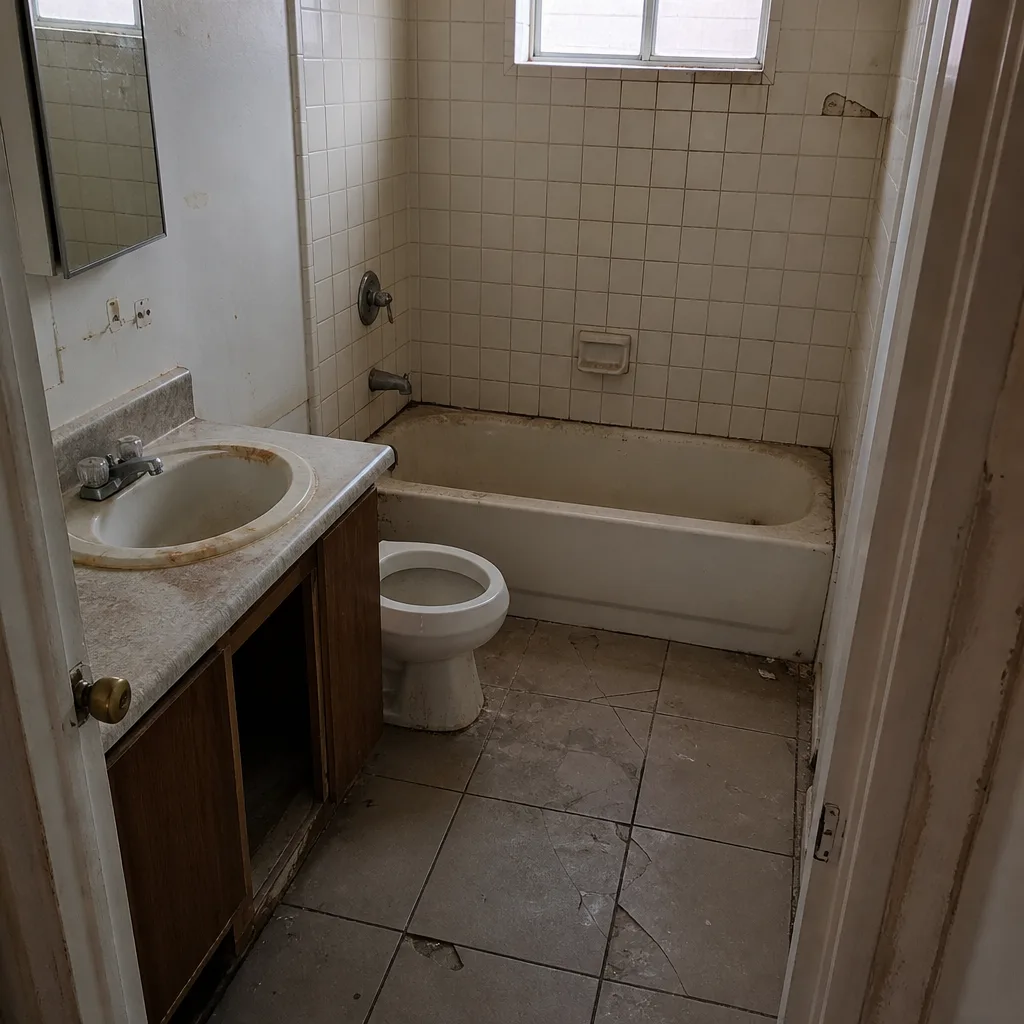 Before
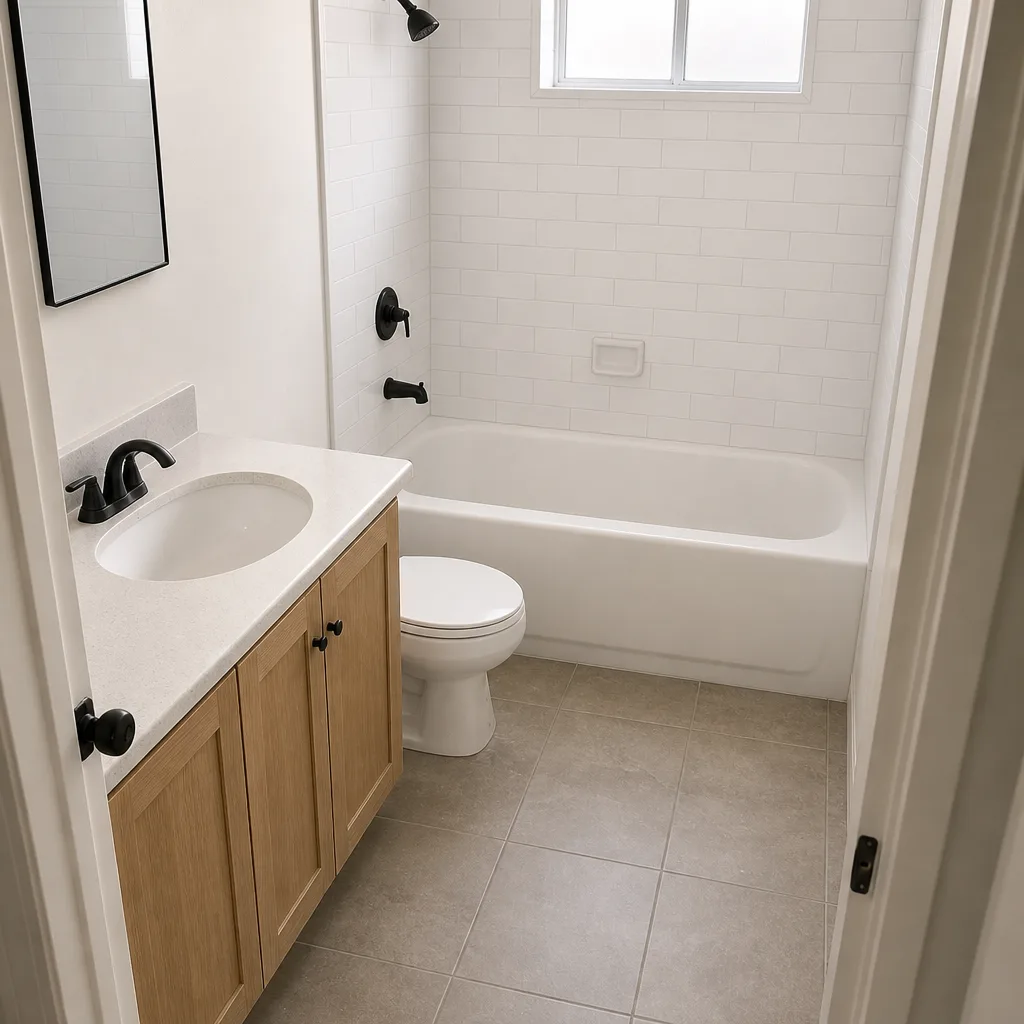 After
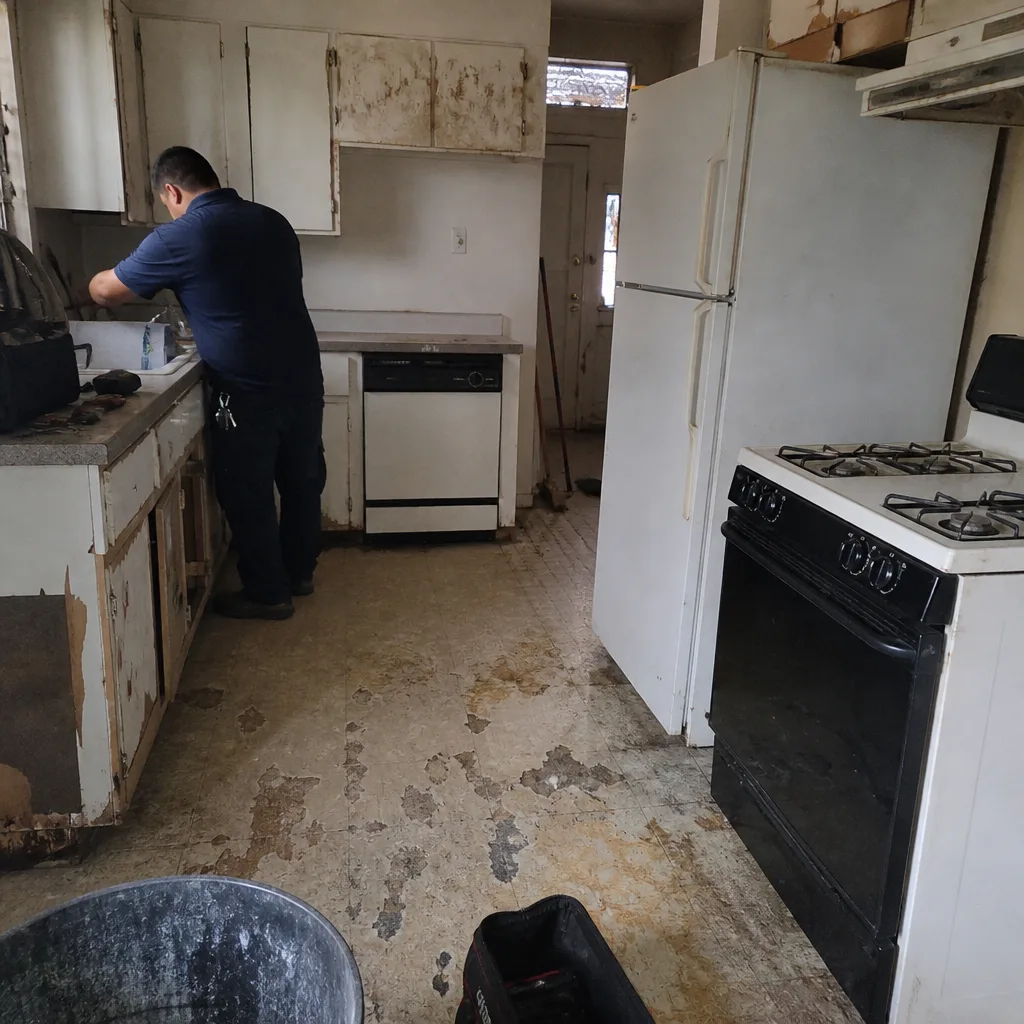 Before
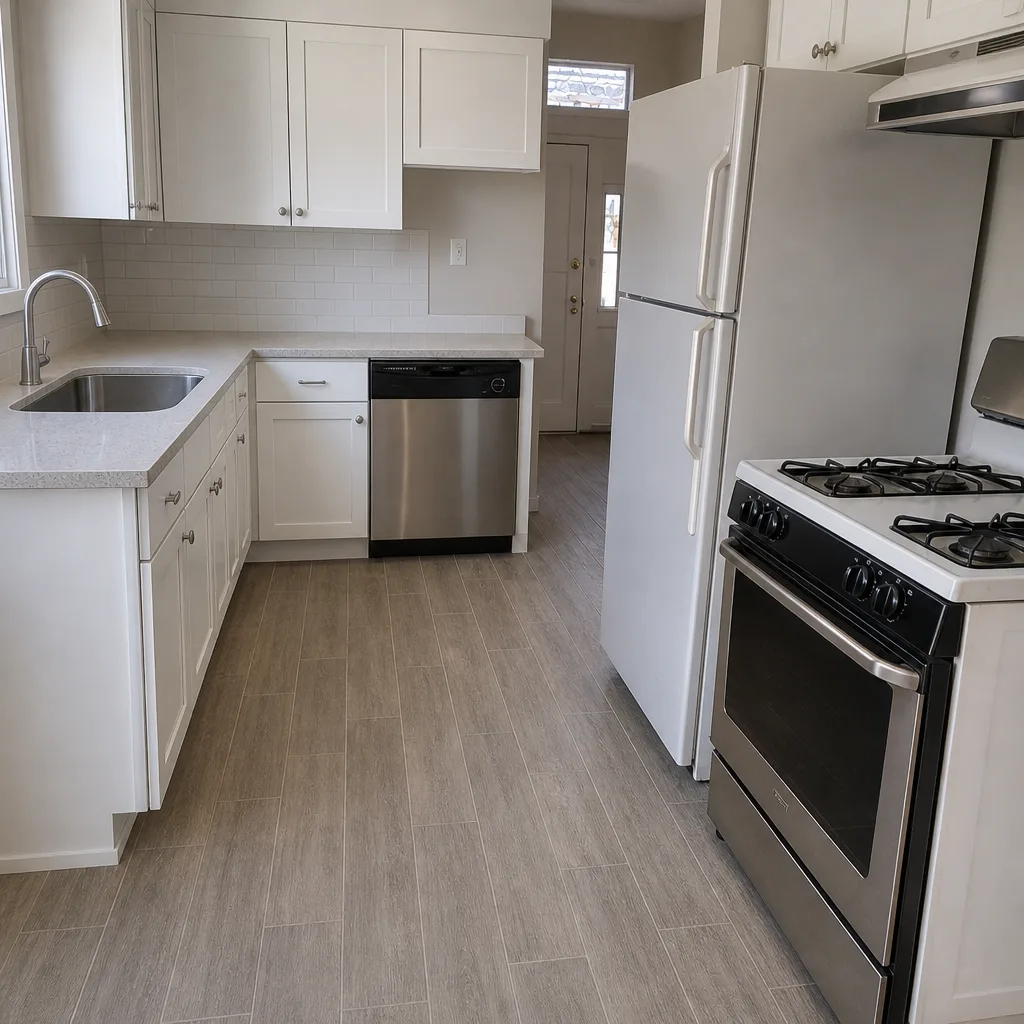 After
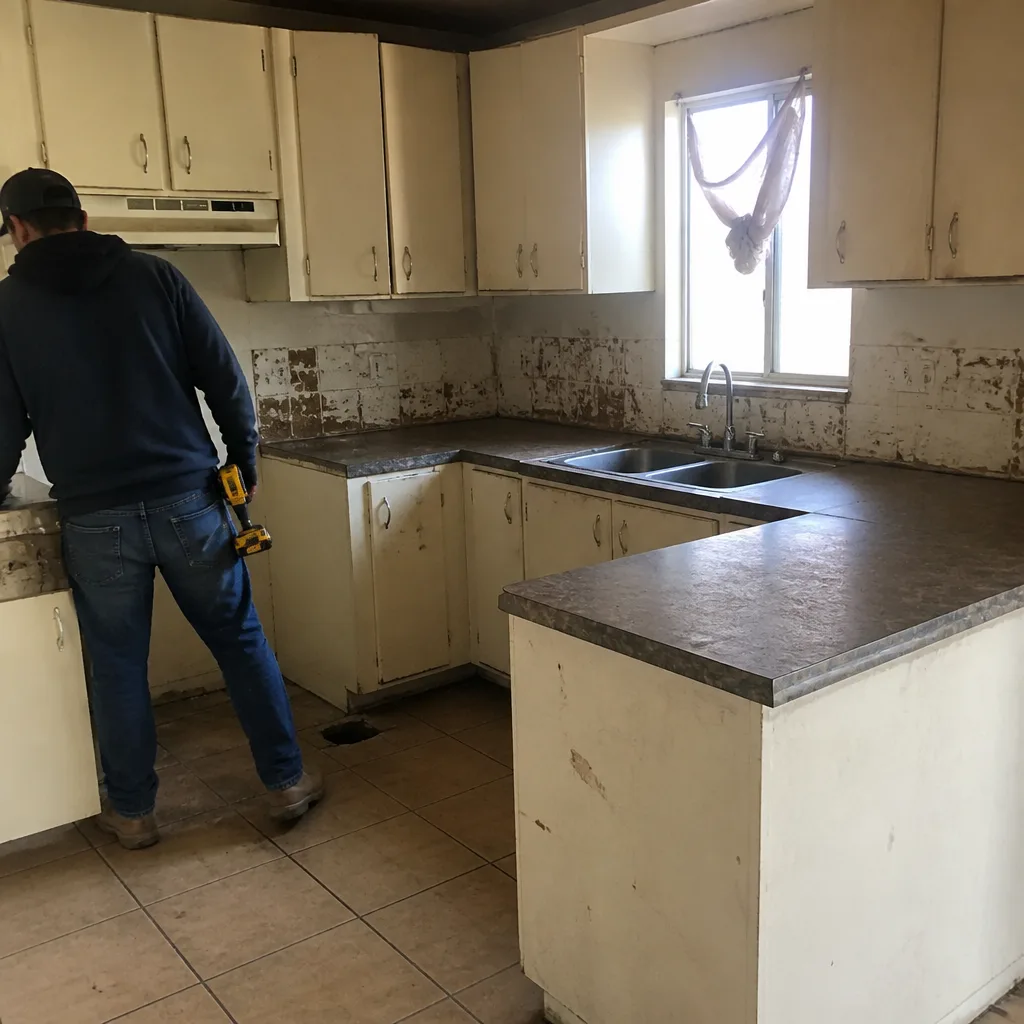 Before
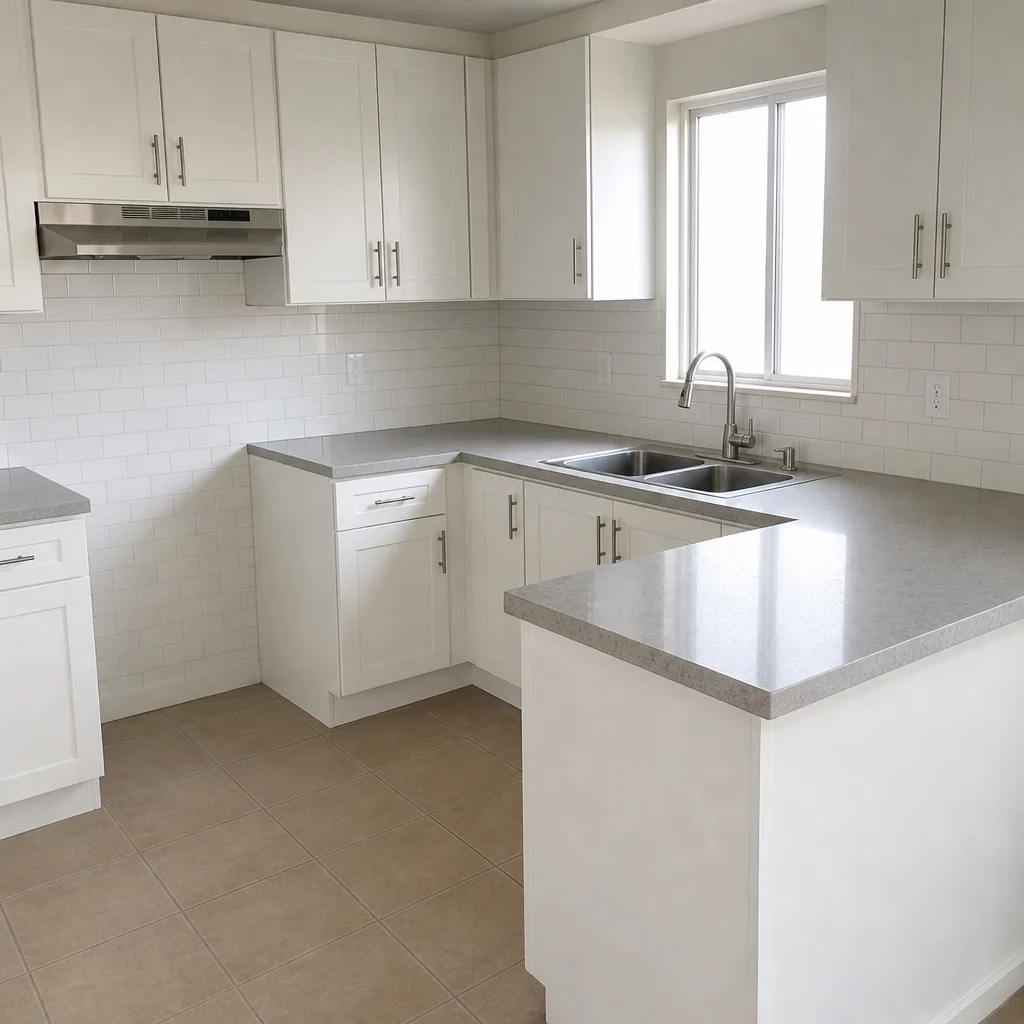 After
When to Call a Professional
Call a licensed contractor when the work involves anything structural, anything behind a wall, anything touching electrical or gas, or anything that requires a permit in Clark County. That includes moving a load-bearing wall, relocating a gas line for a range, replacing a water heater, converting a garage, and any kitchen or bath remodel that moves plumbing. It also includes roofing and exterior work where a failed install can let water into a Sunrise Manor home during monsoon season – the one time of year where a leak becomes a mold problem within days.
If you’re unsure whether your project needs a permit, that question alone is a good reason to call. Bradford Remodeling Sunrise Manor offers free estimates in Sunrise Manor – call (844) 834-2810 and we’ll tell you honestly whether your scope needs a permit and what the written price looks like before any work starts.
Frequently Asked Questions

Search the contractor’s name or license number on the Nevada State Contractors Board portal. Confirm three things: the license status is Active (not Conditional, Suspended, or Expired), the classification covers your project type, and the expiration date is current. The check takes under three minutes and is the single most useful step you can take before signing anything.
Nevada law generally caps residential deposits at 10% of the contract price or $1,000, whichever is less, before work begins, unless a performance bond or specific contract structure is in place. Verify the current statute or call the NSCB before signing a contract with a larger number.
Four clauses do most of the work: a detailed scope-of-work definition with brand names, quantities, and exclusions; a change-order authorization threshold with a specific dollar figure; a lien-waiver requirement from every sub and supplier; and payment triggers tied to inspected milestones rather than a calendar.
Yes, if the remodel moves plumbing, electrical, or gas, or changes the layout. Permits run through Clark County Building because Sunrise Manor is unincorporated. Cosmetic-only changes (paint, cabinet hardware, countertop swap) typically don’t require a permit, but confirm with the county before work starts.
Put it in the contract: “All work will be performed by licensed, insured personnel employed or subcontracted by Contractor, with proof of licensure provided on request for any subcontractor.” A contractor with nothing to hide signs it without argument. One who negotiates it out is telling you something.
A holdback is the last 10% of the contract price, released only after the punch list closes and final inspection passes. It keeps the contractor on site through the finishing work, which is where most projects stall. Tie the release to a written close-out list plus a final unconditional lien waiver.
The Bottom Line
Hiring a construction contractor in Sunrise Manor comes down to written documents: a verified NSCB license, a scope with names, quantities, and exclusions, four contract clauses that stop surprise invoices, a deposit within Nevada limits, and a 10% holdback released on inspection pass. A 365-Day Done Right Promise that covers the work for a full year after close complements the holdback, and a written price before any work starts is the standard to insist on. Get the paperwork squared away before the crew arrives, and the job runs the way it should.
Bradford Remodeling Sunrise Manor is part of the Garrison Partners family and operates independently under The Garrison Standard. Our technicians have up to 22 years of experience, every project gets a written price before work starts, and a live person answers the phone 24/7. If you’re planning a project and want a straight answer on scope, permits, and price, call (844) 834-2810 for a free estimate.
Written by the team at Bradford Remodeling Sunrise Manor.