Last updated November 17, 2026

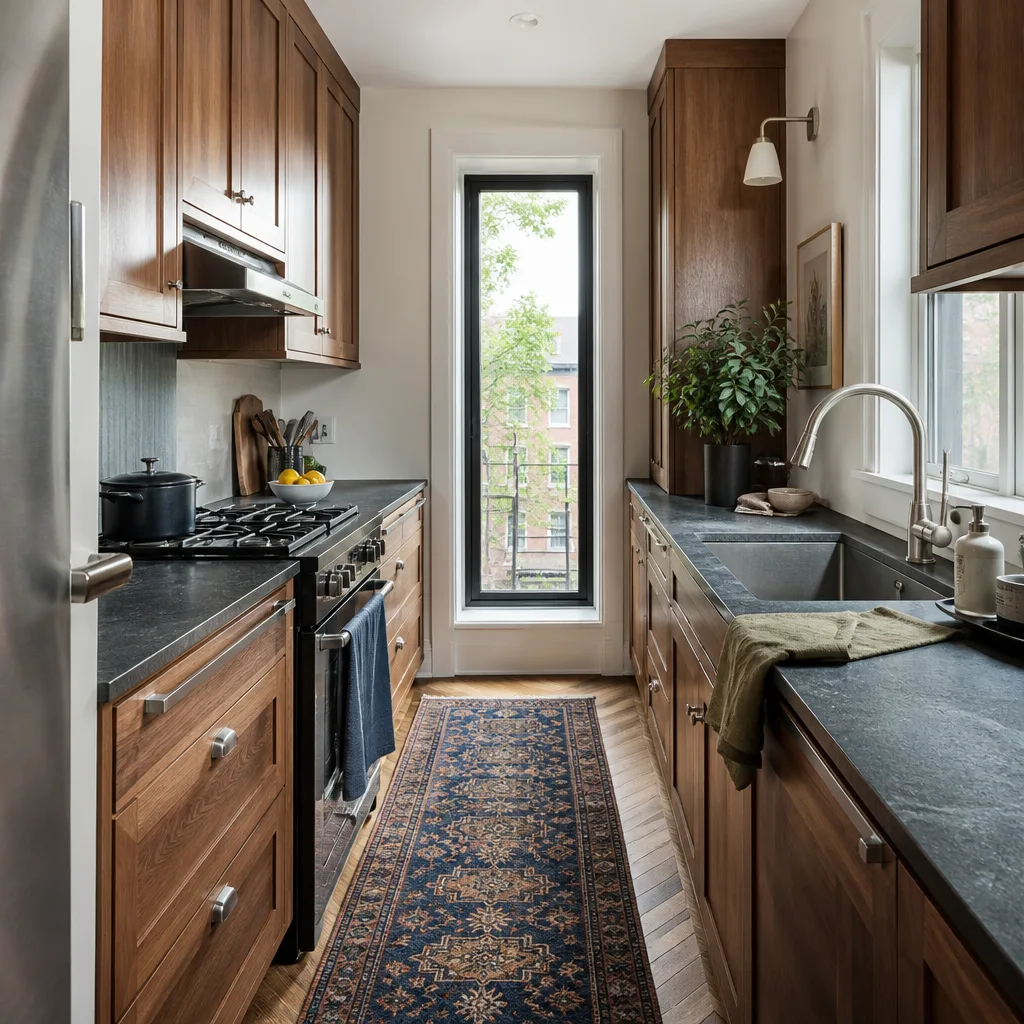





Free written scope consultation - allowances, timeline, and change-order rules on paper before a single trade is scheduled
DIY vs Professional Kitchen Remodeling: What’s Safe to Do Yourself
Here’s a number worth sitting with. A homeowner who installs their own kitchen cabinets to save $3,000 in labor often turns around and spends $1,200 correcting alignment problems on a floor that was never level to begin with. We’ve watched this play out in Sunrise Manor more than once. The homeowner did nothing wrong that a pro wouldn’t also check. They just discovered the problem after every screw was already in. This guide breaks the DIY question down scope by scope, because demo and countertops carry completely different risk. We’ll cover the Nevada licensing rules, the Clark County permit triggers, and which jobs protect your money by handing off.
Quick Answer
Demolition, painting, hardware swaps, and a low-moisture backsplash are safe to do yourself if you’re careful. Cabinet installation is legal for a homeowner but depends on real skill and floor-flatness checks. Anything that adds or moves an electrical circuit or plumbing line requires a licensed trade in Nevada, and skipping the permit on that work follows the house on title. The line isn’t “easy versus hard.” It’s “cosmetic versus systems.”
Styles & brands we work with
- Kitchen remodeling
- Bathroom remodeling
- Home additions & ADU
- Roofing
- Windows & doors
- Driveway & pavers
- Fence
Table of Contents
- The Scope-by-Scope Audit: How to Make the Call
- Demolition: Legal, Manageable, With Caveats
- Cabinet Installation: Skill-Dependent but Allowed
- Countertops: The Material Changes the Risk
- Plumbing Rough-In: Not a DIY Job in Nevada
- Electrical Circuits: Licensed Electrician Required
- The Clark County Permit Trigger List
- How Unpermitted DIY Work Hits Your Insurance Claim
- The Hybrid Model That Actually Saves Money
The Scope-by-Scope Audit: How to Make the Call
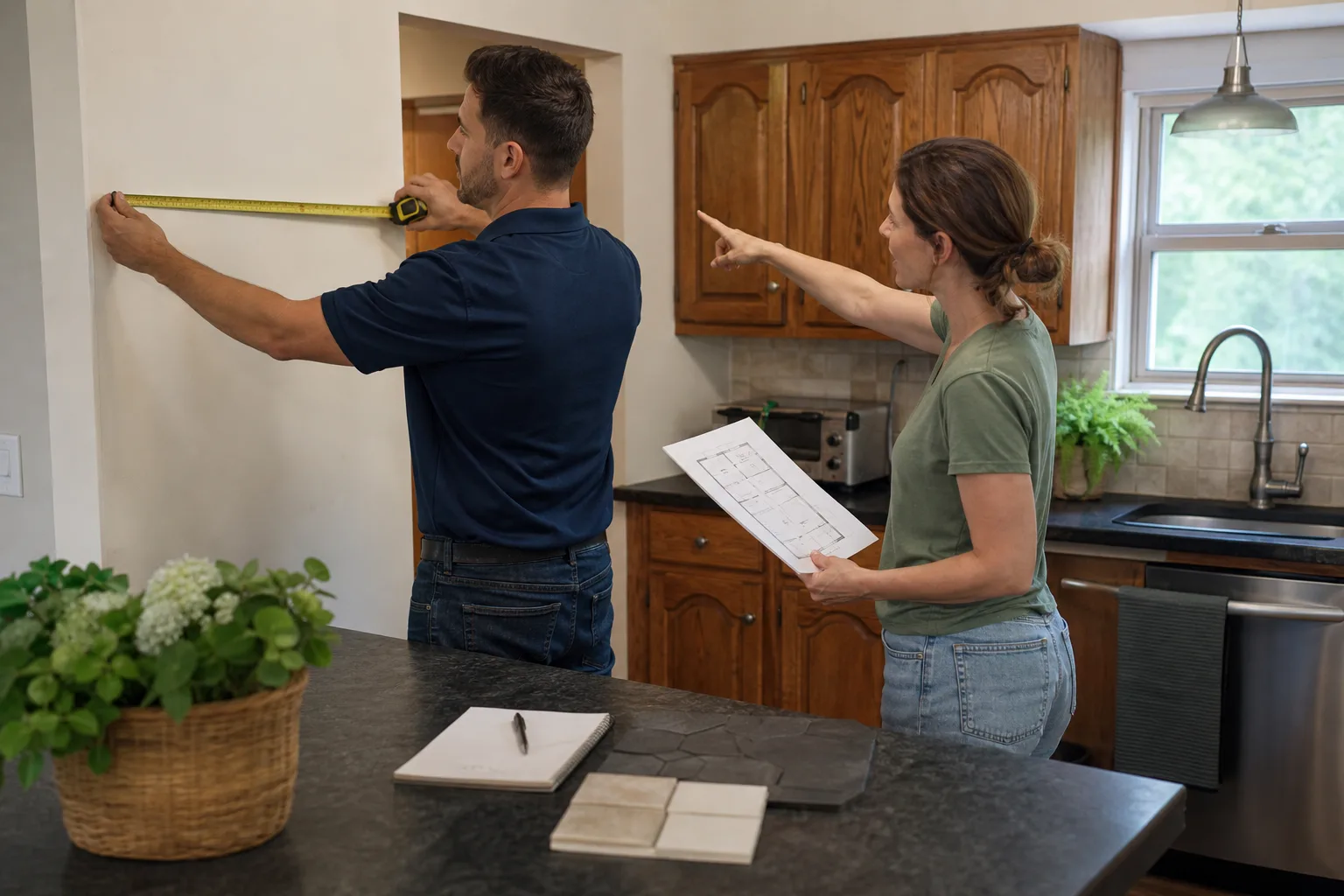
Most DIY-versus-pro advice treats a kitchen remodel as one decision. It isn’t. It’s six or seven separate decisions, and the honest answer flips depending on which one you’re looking at. Demolition is largely a brute-force task a careful homeowner can handle. Countertop templating is a precision task that depends entirely on the material. Electrical circuit work in Nevada means a licensed electrician, no exceptions, no matter how handy you are.
The reason this audit matters so much in Sunrise Manor is the housing stock. A lot of the single-family homes here were built in the 1970s through the 1990s, and plenty still have the original wiring, the original galvanized or early copper plumbing, and floors that have settled on our expansive clay soils. When you open a wall in a 1985 kitchen near Nellis Boulevard, you don’t always know what you’re going to find. That uncertainty is exactly why the permit question, not the skill question, is the first thing to settle before you pick up a demo bar.
Here’s the frame we use. For each scope item, ask three questions in order:
- Does it touch a system? Electrical circuits, gas lines, or new plumbing runs. If yes, a licensed trade is involved and often a permit.
- Does it change the footprint or structure? Moving a wall, relocating a sink, widening a doorway. If yes, permit and engineered plans.
- Is it cosmetic and reversible? Paint, cabinet doors, hardware, backsplash, appliance swaps on existing hookups. If yes, and you’re comfortable, it’s yours to do.
That sequence protects you two ways. It stops you from hiring out work you could genuinely do (and pocketing the savings). And it stops you from self-performing the one scope that turns a clean remodel into unpermitted work that surfaces during a future inspection or a sale. If you want the full-service version of this thinking, our kitchen remodeling in Sunrise Manor page walks through how a properly documented project is sequenced.
Demolition: Legal, Manageable, With Caveats
Demo is the safest DIY scope on the list, and for good reason: taking things apart doesn’t require a license, doesn’t usually require a permit on its own, and doesn’t create a safety hazard if you follow a few rules. You can pull cabinets, lift a laminate counter, remove a backsplash, and haul old appliances to the curb. That’s real money in your pocket, and we don’t talk homeowners out of it.
The caveats are where people get hurt or create extra cost.
- Shut off the utilities first. Kill the breaker to the kitchen circuits, close the gas valve if a range is involved, and shut the water supply before you pull a sink. Do this before any demolition starts, not after you find a wet valve.
- Test for lead and asbestos before you break anything. Homes built before 1978 can carry lead paint, and older vinyl flooring and some adhesives can contain asbestos. A cheap test kit prevents a very expensive problem.
- Never swing a hammer at a wall you haven’t confirmed is non-load-bearing. In Sunrise Manor’s ranch and two-story plans, the wall between kitchen and dining is sometimes structural. When in doubt, stop and have it checked.
- Protect the subfloor. A demo crew that drags a full cabinet across a wood or tile floor leaves gouges that cost more to fix than the demo saved.
The one piece of demo we’d steer you away from: tearing out drywall around plumbing or electrical without knowing what’s behind it. That’s the moment a manageable weekend job becomes a call to a pro. If you’re already pulling walls in a Sunrise Manor kitchen, that’s a good moment to read our guide to working with a general contractor in Sunrise Manor before you go further.
Cabinet Installation: Skill-Dependent but Allowed
A homeowner can legally install cabinets in Nevada. No license is required to hang boxes in your own home. The question is whether you should, and the honest answer is that it depends on your tools and your tolerance for the alignment problems we mentioned at the top. This is where that $3,000-to-$1,200 story comes from.
Cabinets live or die on two measurements most first-timers don’t check: floor flatness and wall plumb. The cabinet industry standard is 3/16 of an inch of variance over any 10-foot span. On a slab or subfloor that has settled unevenly – common on the clay soils around Sunrise Manor – that tolerance is easy to blow through without knowing it. A pro accounts for it in the layout phase by shimming and scribing. A first-time installer discovers it after the boxes are screwed to the wall and the doors won’t line up.
Here’s the tool inventory a homeowner actually needs before taking this on:
- A 4-foot and a 6-foot level (a torpedo level won’t cut it)
- A stud finder and a laser level for a straight cabinet line
- Shims in multiple thicknesses
- A drill-driver with a clutch, plus a good impact driver
- A cabinet jack or a second set of hands for upper boxes
- A miter saw and a table saw for filler strips and scribing
If you don’t own most of that and don’t want to buy it, the labor savings evaporate fast. And if you’re specifying new cabinetry rather than refacing, this is where the material roster matters. We install KraftMaid and Wellborn cabinetry because the manufacturer specs and warranties are documented, which means the guarantee we give you has something real to stand on. A homeowner buying boxes off a truck has no such backstop. If you’re replacing the whole kitchen, it’s also worth reading our piece on Bradford Remodeling Sunrise Manor home to see how the scopes tie together.
Countertops: The Material Changes the Risk
Countertops are the clearest example of why “DIY” isn’t one answer. The same homeowner who can install a laminate top may have no business templating a stone slab. It’s not about talent. It’s about what each material demands.
- Laminate: Genuinely DIY-friendly. You can cut and install a laminate top with basic tools. The risk is minor and cheap to fix.
- Tile: Middle ground. A careful homeowner can lay a tile counter with proper substrate prep, but the grout lines and edge trim are unforgiving, and a bad substrate shows through within a year.
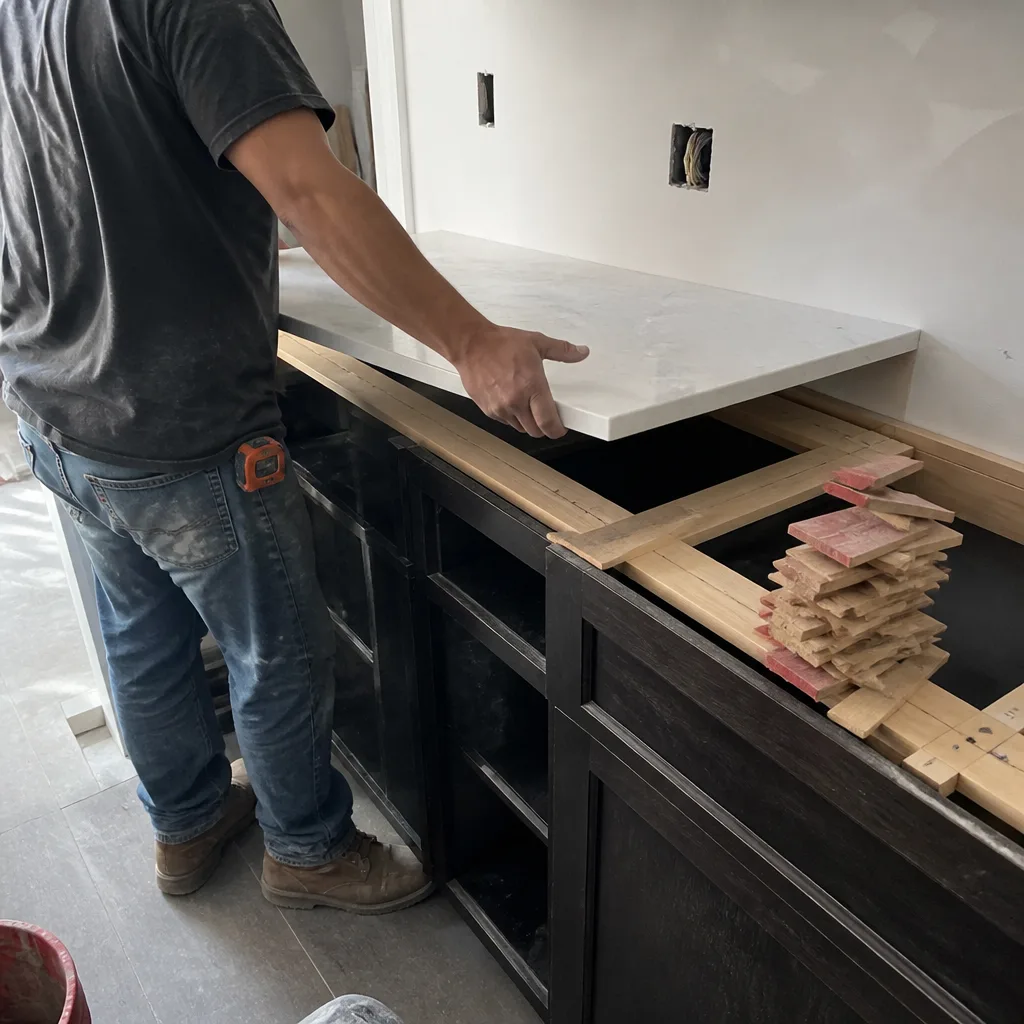
- Stone (quartz, granite, Cambria, Caesarstone): Not a DIY install. Stone is templated on-site with a digital laser, cut in a shop, and installed by a crew. Cutting stone in place is a dust and injury hazard, and a mismeasured slab is a four-figure loss. Nobody templates stone themselves.
In Sunrise Manor, the practical angle is heat. Stone tops in an east-facing kitchen near the Sunrise Mountain foothills take a lot of afternoon sun, and a poorly-supported laminate or tile edge buckles faster under that thermal load than it would in a cooler climate. Templated stone installed over a level cabinet run avoids that whole class of problem. When we manage a stone install, it’s templated by the fabricator and set against cabinets that were leveled to the 3/16-inch standard first. That sequencing is the part homeowners miss.
Plumbing Rough-In: Not a DIY Job in Nevada
Nevada requires a licensed plumber for new plumbing rough-in, and that includes moving a sink, adding a dishwasher line, or relocating a supply or drain. Swapping a faucet on an existing rough-in is a different thing – that’s a fixture change most careful homeowners handle. But the moment you’re running new pipe through a wall, the law wants a licensed trade, and so does your insurance.
Why the hard line? Two reasons. First, water damage is the single most expensive failure a bad kitchen remodel produces, and it doesn’t show up on day one. A slow leak behind a new cabinet can rot a subfloor for a year before you notice during a Sunrise Manor monsoon-season downpour that finds its way in. Second, unpermitted plumbing work is a disclosure item. It follows the house on title, and a buyer’s inspector will catch it.
This is one of the two scopes where DIY costs far more than it saves. The other is electrical. If your kitchen plan involves moving the sink, adding a prep sink, or any new drain line, budget for a licensed plumber and factor the permit into the schedule. We’d rather tell you to hire that out than watch a homeowner flood a brand-new kitchen.
Electrical Circuits: Licensed Electrician Required
Adding a circuit in Nevada requires a licensed electrician regardless of scope. This isn’t a gray area. A new dedicated circuit for a refrigerator, a range hood, a dishwasher, or countertop receptacles is licensed-trade work. And for a genuinely good reason: kitchen circuits are among the most heavily loaded in a house, and modern code requires GFCI and often AFCI protection at the counter. Getting that wrong is a fire hazard, not just a paperwork problem.
Here’s what a homeowner legitimately can do on the electrical side:
- Replace a light fixture on an existing switched circuit
- Swap a switch or outlet cover
- Install under-cabinet LED strips that plug into an existing outlet
And what a homeowner should not touch:
- Adding any new circuit, including a dedicated appliance line
- Moving a receptacle or switch to a new location
- Any work inside the electrical panel
We’re direct about this because we’ve seen the aftermath. A homeowner adds a circuit for a new fridge, wires it to the existing counter circuit, and a year later the insurance adjuster asks for the permit when a fire starts. Without a licensed sign-off, the claim has problems. The safety and the money point in the same direction here: hire the electrician, pull the permit. If you want to see how a properly sequenced electrical scope fits a whole-home plan, our bathroom remodeling in Sunrise Manor page shows the same discipline applied to a wet room.
The Clark County Permit Trigger List
This is the list to keep open on your phone while you plan. Clark County Building Department permits a kitchen remodel only when the work crosses certain lines. Knowing which side of the line you’re on before you start is the single most valuable DIY decision you’ll make.
Work that typically requires a permit:
- Adding a new electrical circuit (dedicated appliance, range hood, new receptacles)
- Relocating plumbing (moving a sink, adding a dishwasher or ice maker line, new drain)
- Removing or modifying a structural wall, including widening a doorway in a bearing wall
- Changing a window or exterior door opening
- Any gas line work
Work that typically does not require a permit:
- Like-for-like appliance replacement on existing hookups (same fuel type, same location)
- Cabinet swap on the existing layout, with no plumbing or electrical relocation
- Cosmetic backsplash tile
- Painting, flooring replacement, and hardware
- Countertop replacement on existing cabinets (check with the county if the sink cutout moves)
The most common Sunrise Manor mistake we see is a homeowner who plans a like-for-like swap, then decides mid-demo to move the sink six inches. That single move converts a cosmetic job into a plumbing and electrical permit job, and it usually happens on a Saturday when the plumbing is already open. Decide the layout before demo starts. Changing your mind after the walls are open is where the budget goes sideways.
How Unpermitted DIY Work Hits Your Insurance Claim
Most homeowners never think about this until they need it. If a plumbing or electrical failure occurs on work you did yourself without permits, your homeowner’s insurance claim can be reduced or denied. Insurers aren’t looking for a reason to deny you. They’re looking for whether the work that failed was done to a known standard. Unpermitted work has no inspection record, and no inspection record means no proof it was done correctly.
The exposure runs three ways:
- The claim itself. Water or fire damage from an unpermitted failure can trigger an adjuster review that scrutinizes the whole project.
- Your resale. Most disclosure forms ask about unpermitted work. A buyer’s inspector finds it, and you’re negotiating a credit or a fix on the way out the door.
- The future buyer’s insurance. Some carriers won’t write a policy on a home with known unpermitted electrical or plumbing modifications.
The mitigation is straightforward. For any scope that touches a system, use the licensed trade and pull the permit. Keep the inspection card and the signed-off documentation with your closing paperwork. When Bradford runs a project, the permit is pulled and inspected, and the written price is set before a tool comes out – no numbers that move at the door, and no loose ends on title. That paper trail is the thing a homeowner actually wants at close.
The Hybrid Model That Actually Saves Money
The best financial outcome for most Sunrise Manor homeowners isn’t all-DIY or all-pro. It’s a hybrid: self-perform the scopes that are safe and reversible, and protect the money by using licensed trades on the systems. Here’s how we’d split it.
Self-perform (real savings):
- Demolition and haul-away
- Painting walls, ceiling, and cabinet fronts
- Hardware installation (pulls, knobs, hinges)
- Backsplash tile in a low-moisture zone, with proper substrate
- Flooring replacement if you’re comfortable with the product
Protect with a licensed trade (avoid the loss):
- Plumbing rough-in and any relocation
- Electrical circuits and panel work
- Gas line work
- Structural wall changes
- Stone countertop templating and install
- Cabinet installation if you don’t have the tools or the floor is out of tolerance
The discipline is keeping the two lists separate and not letting the demo weekend tempt you into crossing the line. If you self-perform demo and painting on a typical Sunrise Manor kitchen and hand off the plumbing, electrical, and stone, you keep genuine savings and still end up with a project that closes clean, passes inspection, and carries a written guarantee. That’s the version of DIY that makes sense.
Common Mistakes to Avoid
- Changing the layout after demo. Moving the sink mid-project converts a cosmetic job into a permit job. Decide the layout before you swing a hammer.
- Assuming the floor is level. The 3/16-inch-over-10-feet standard trips up first-time cabinet installers on Sunrise Manor’s settled soils. Check it before you buy boxes.
- Skipping the lead and asbestos test. Homes built before 1978 can carry lead paint, and older flooring adhesives can contain asbestos. A cheap test prevents a very expensive fix.
- Wiring a new circuit to an existing one. It’s tempting and it’s a fire risk. A dedicated circuit needs a licensed electrician and a permit.
- Treating the permit as optional paperwork. Unpermitted work follows the house on title and can reduce an insurance claim. It’s the most expensive “savings” on the list.
- Buying cabinets before measuring the walls. Plumb and square checks on a 1990s Sunrise Manor kitchen often reveal out-of-square walls that change the filler-strip plan.
- Forgetting the dust and the cleanup. A demo weekend without plastic sheeting and a proper dust barrier contaminates the whole house. Containment is a skill of its own.
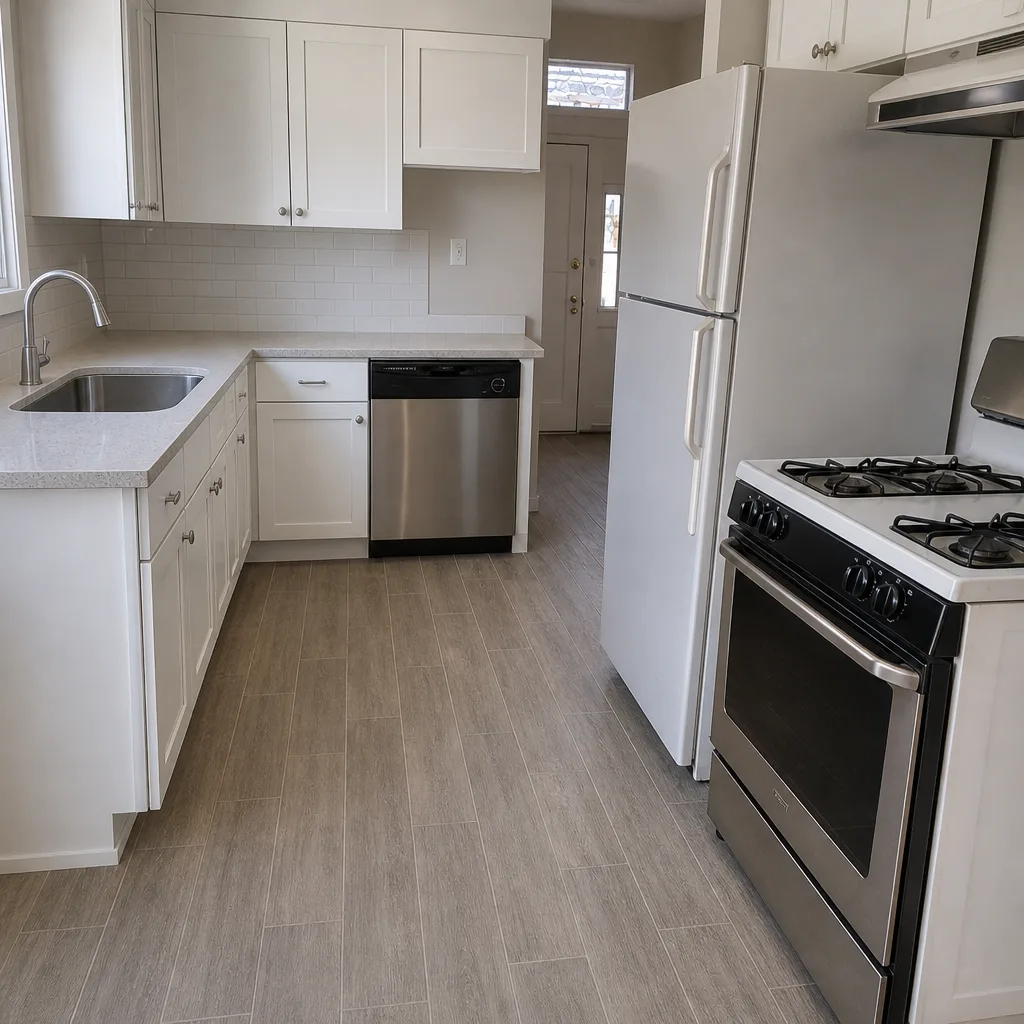
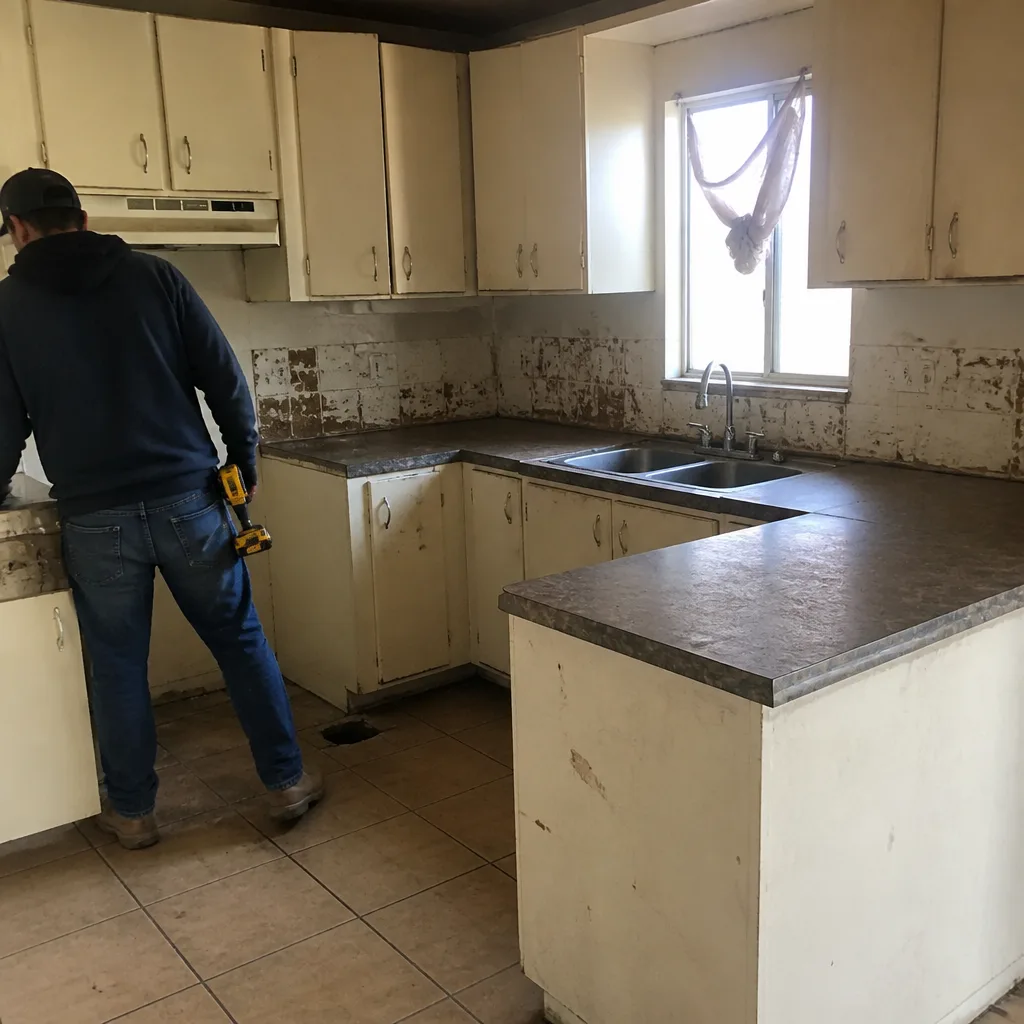
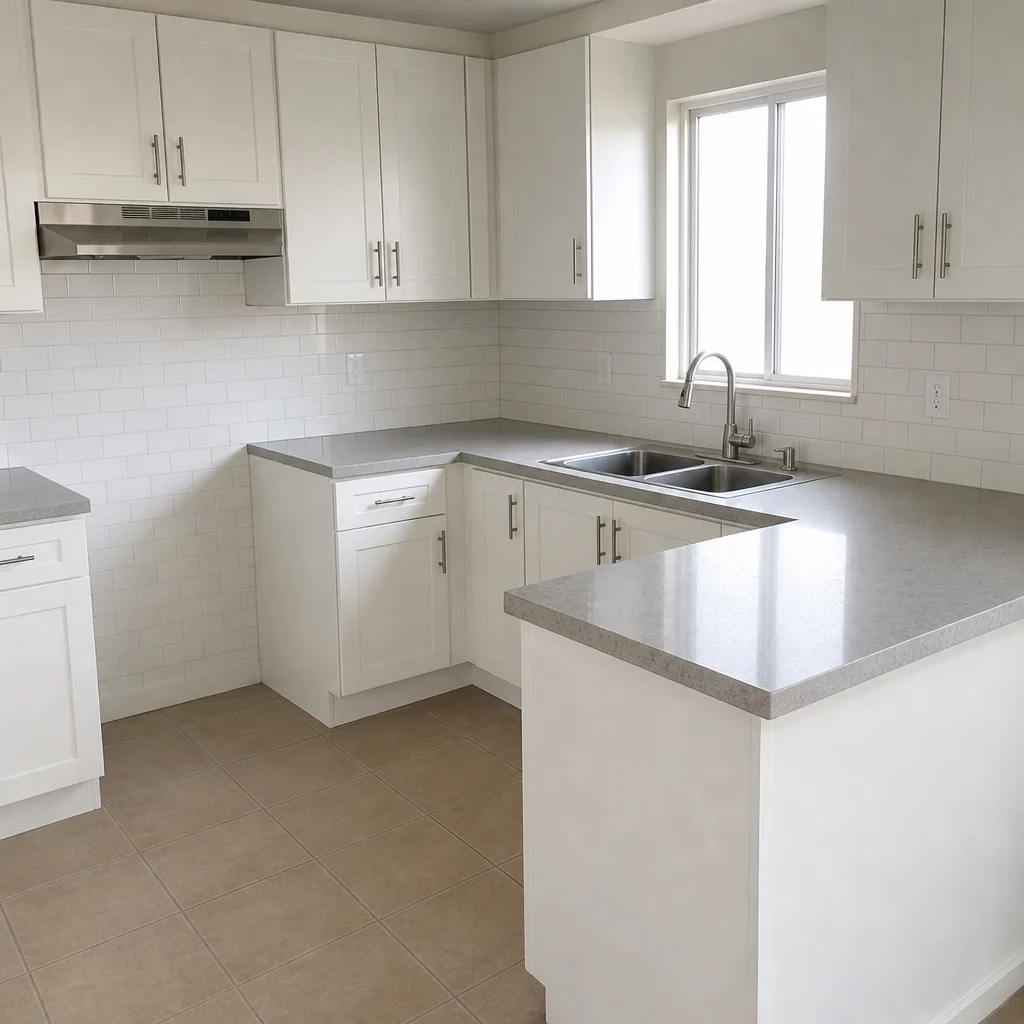
See the difference
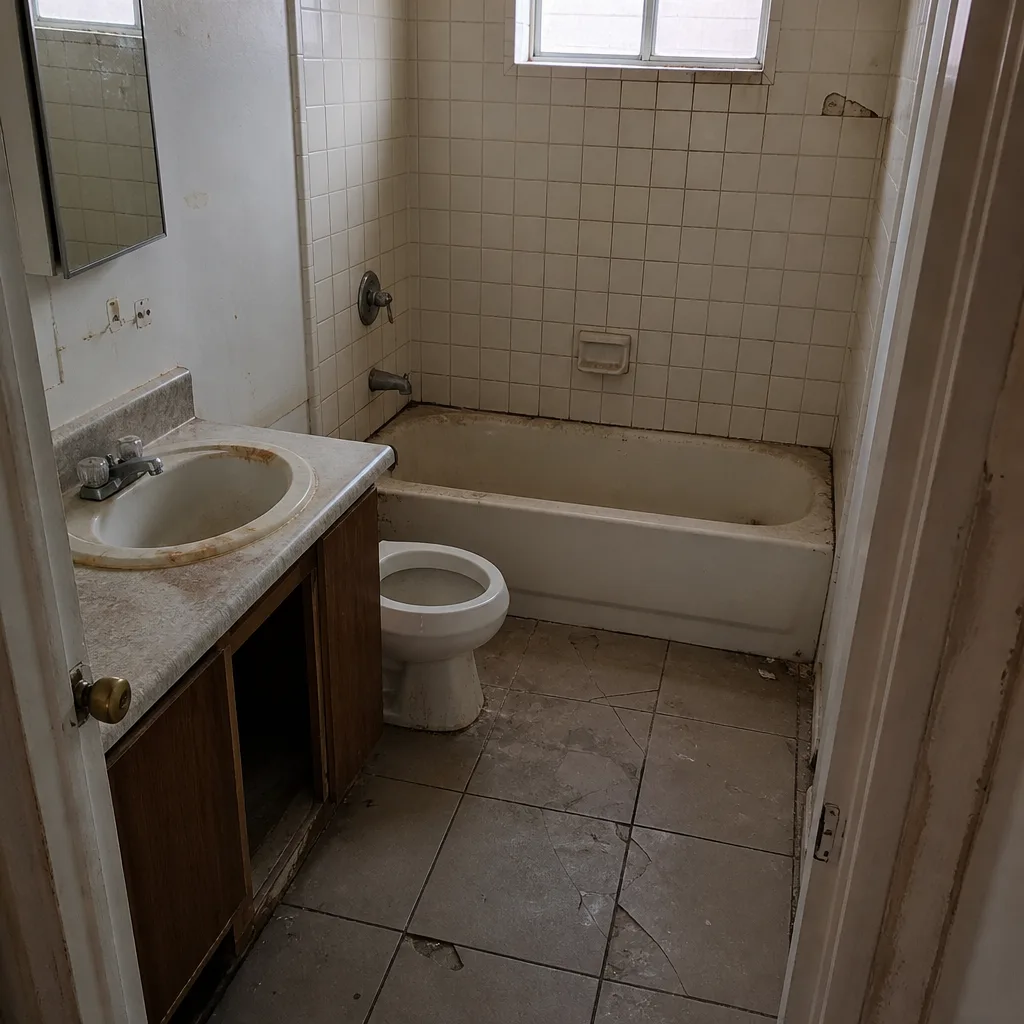 Before
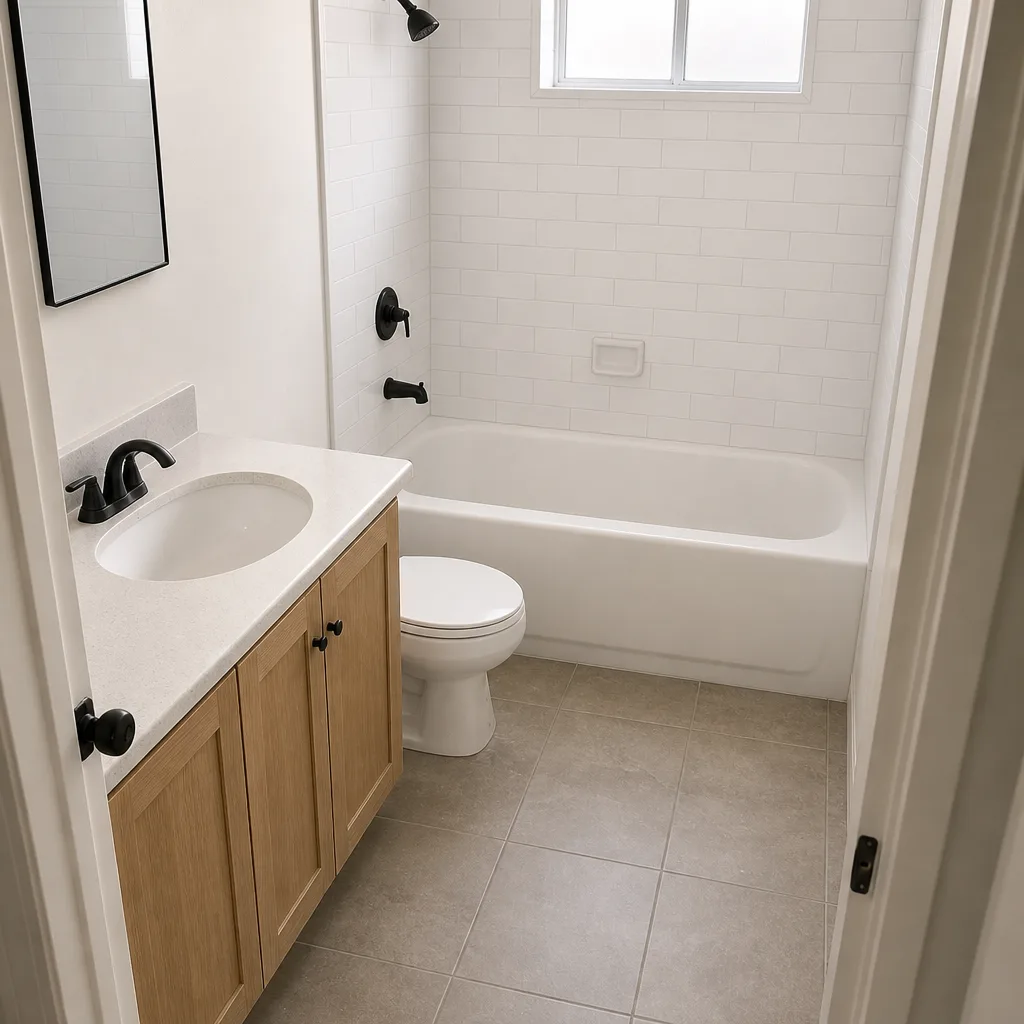 After
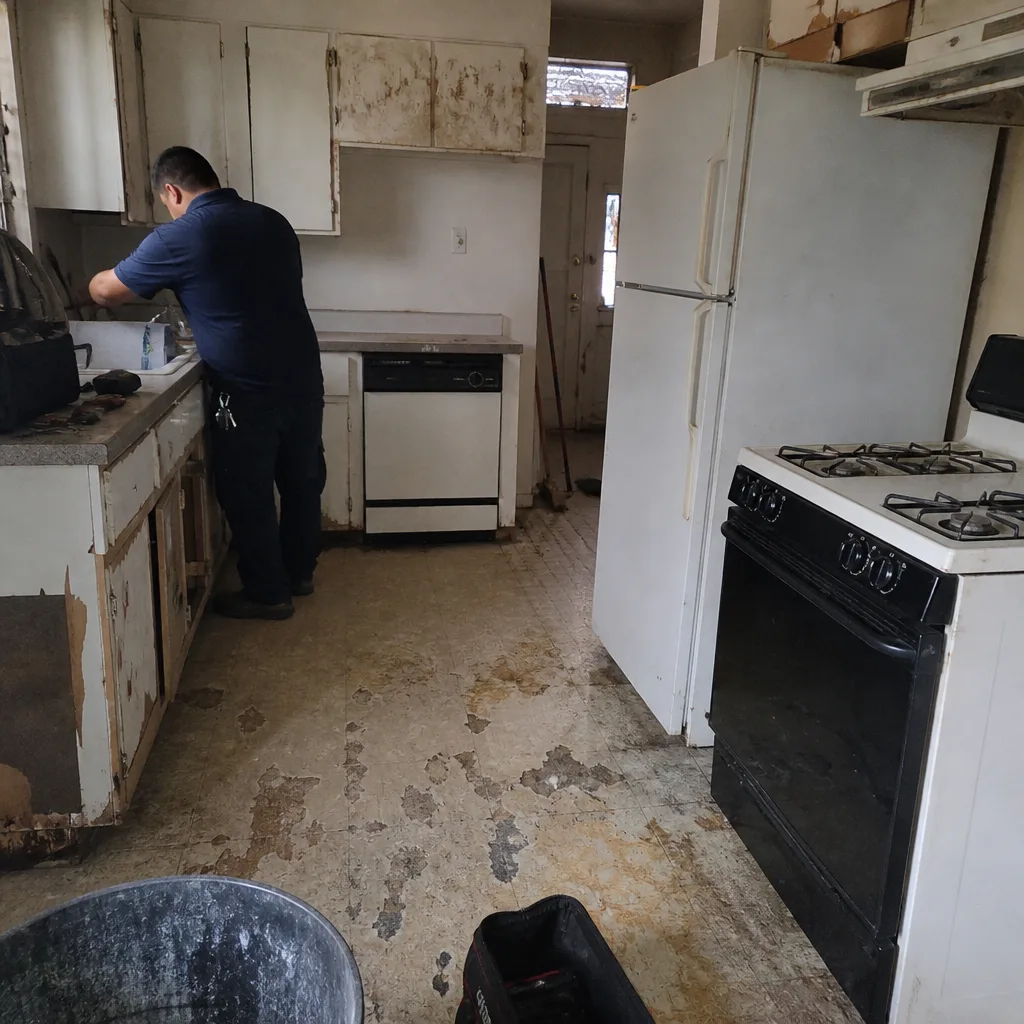 Before
 After
 Before
 After
When to Call a Professional
Call a professional when the scope touches a system, changes the structure, or exceeds your tools and tolerance. That means any new electrical circuit, any plumbing relocation, any gas line, any structural wall change, and stone countertops. It also means cabinet installation if your floor is out of the 3/16-inch tolerance or you don’t own the levels, shims, and jacks to do it right.
The other trigger is time. A Sun City kitchen remodel that a homeowner plans to finish in three weekends often stretches to three months, and the cost of a stalled kitchen affects how the whole house feels. A crew that shows up when it says it will, gives you a written price before work starts, and leaves the site clean at close is worth a real number. Bradford Remodeling Sunrise Manor offers free estimates in Sunrise Manor – call (844) 834-2810 to schedule yours. A live person answers, any hour.
Frequently Asked Questions

Yes. Nevada doesn’t require a contractor license for a homeowner to install cabinets in their own home. The constraint is practical, not legal: cabinet installation depends on floor flatness within 3/16 of an inch over 10 feet and plumb walls, and a first-time installer often discovers an out-of-tolerance floor after the boxes are hung. Check those two measurements before you buy. Call (844) 834-2810 if you’d rather have it templated and set by a crew – estimates are free.
It depends on the scope. New electrical circuits, plumbing relocation, structural wall changes, and gas work require a permit in Clark County. Like-for-like appliance swaps, cabinet refacing on the existing layout, cosmetic backsplash, and painting typically don’t. When you’re unsure, call the county before you start. Call (844) 834-2810 for a free estimate that includes the permit scope spelled out in writing.
You can swap a faucet on an existing rough-in. You cannot legally run new plumbing rough-in in Nevada without a licensed plumber, and that includes moving a sink or adding a dishwasher line. Unpermitted plumbing work can reduce an insurance claim and follows the house on title. Call (844) 834-2810 to have a licensed plumber scoped into your free estimate.
Your claim can be reduced or denied. Insurers want to see that the work that failed was done to a known standard, and unpermitted work leaves no inspection record. The fix is simple: licensed electrician, permit, and inspection card kept with your closing paperwork. Call (844) 834-2810 to talk through a properly permitted electrical scope – the estimate is free.
Yes, in a low-moisture zone. A backsplash above a counter sees very little direct water, so a careful homeowner can lay tile over the correct substrate. The failure mode is a bad substrate, not the tile. Call (844) 834-2810 if you want the tile set alongside a stone counter install – we coordinate the two so the sequencing works.
Realistic savings come from demo, painting, hardware, and backsplash, which is often a few thousand dollars in labor on a typical Sunrise Manor kitchen. Savings vanish when you self-perform plumbing, electrical, or stone – those scopes cost more to fix than to hire. Call (844) 834-2810 for a free estimate that separates the scopes and shows you where the honest savings sit.
The Bottom Line
The DIY kitchen remodel question has a different answer for every scope, and the audit is the work. Demo, painting, hardware, and a low-moisture backsplash are yours to do and worth doing. Cabinet installation is legal but depends on floor flatness and tools most homeowners don’t own. Plumbing rough-in and electrical circuits require a licensed trade in Nevada, and skipping the permit is the most expensive shortcut in this guide. Run the scope-by-scope list before you start, keep the licensed trades on the systems, and your Sunrise Manor project closes clean, passes inspection, and comes with a written guarantee you can hold onto. That’s the version that saves money without costing you more later.
Kitchen Remodeling in Sunrise Manor and our General Contractor in Sunrise Manor pages go deeper on how a properly sequenced project runs from the first measurement to the signed guarantee.
Ready to get a written price before any work starts? Bradford Remodeling Sunrise Manor offers free estimates in Sunrise Manor with the scope and the guarantee spelled out in writing, backed by the 365-Day Done Right Promise. Call (844) 834-2810 to schedule your free estimate – a live person answers, any hour of the day.
Written by the team at Bradford Remodeling Sunrise Manor.