Last updated November 17, 2026








Free written scope consultation - allowances, timeline, and change-order rules on paper before a single trade is scheduled
General Contractor Maintenance Checklist for Sunrise Manor Homeowners
Sunrise Manor tap water runs 16 to 18 grains per gallon of hardness. That single number puts your water heater, your supply lines, and your tile grout on a faster degradation clock than a homeowner in Phoenix or Tucson, and nearly every generic maintenance checklist floating around the internet ignores it. Desert heat, caliche soil, and hard water create failure points that a “change your furnace filter every 90 days” list will never catch. What follows is the version we actually use on maintenance visits in Sunrise Manor: what fails here, when it fails, and what you can check yourself versus what belongs in a contractor’s written report.
Quick Answer
A Sunrise Manor home needs three maintenance passes a year, not the standard two. Check hard-water scale and stucco in spring, HVAC and monsoon-driven dust in late summer, and slab movement and exterior seals in fall. Prioritize the water heater, pressure regulator valve, expansion joints, and stucco on south and west walls, because Clark County’s water hardness and UV load hit those four items hardest. Everything else on a maintenance list is secondary.
Styles & brands we work with
- Kitchen remodeling
- Bathroom remodeling
- Home additions & ADU
- Roofing
- Windows & doors
- Driveway & pavers
- Fence
Table of Contents
- Hard-Water Scale: The Sunrise Manor Inspection Schedule
- Stucco and Exterior Paint in the 89110 – 89115 UV Zone
- Caliche, Slab Movement, and Expansion Joints
- HVAC Filters and Duct Seals Around Haboob Season
- What a Contractor Documents vs. What You Can Self-Check
- Spring and Fall Walk-Through Checklists
- When to Call a Professional
- Frequently Asked Questions
Hard-Water Scale: The Sunrise Manor Inspection Schedule
At 16 to 18 grains per gallon, the water coming out of your tap in Sunrise Manor is roughly three to four times harder than what most national maintenance guides assume. Scale builds inside the water heater tank, narrows supply lines, crusts over faucet aerators, and stains tile grout until it looks permanently dirty. None of that happens overnight, which is exactly why it gets ignored.
Here’s the schedule we recommend for a Sunrise Manor home:
- Every 60 days: Unthread the aerators on kitchen and bathroom faucets and look for white crust. Soak them in white vinegar for an hour if you find it. This is a homeowner task, no tools beyond your fingers.
- Twice a year: Open the hose bibs fully and check flow. Weak flow at a bib that used to be strong usually points to scale in the line or a failing pressure regulator valve, not a problem with the bib itself.
- Annually: Have the water heater flushed and the anode rod inspected. On Sunrise Manor water, a tank that goes unflushed loses efficiency noticeably faster than the manufacturer’s service schedule suggests.
- Every two years: Have a contractor check the pressure regulator valve (PRV) at the main. A PRV that drifts high stresses every fixture and supply line in the house.
The PRV is the one worth explaining, because it’s the failure most homeowners don’t know they have. It’s the bell-shaped valve near your main shutoff that drops incoming municipal pressure to a safe level for your plumbing. When it fails, it usually fails open, so your house starts seeing full street pressure. That shows up as a dripping relief valve on the water heater or a sudden leak at a supply line connection. If your water heater relief valve is weeping, don’t assume the heater is bad. Have the PRV tested first.
Stucco and Exterior Paint in the 89110 – 89115 UV Zone
Stucco is the dominant exterior finish in Sunrise Manor, and in the 89110 through 89115 zip codes it takes a beating. UV intensity here stays high for most of the year, and that breaks down exterior paint film faster than the “repaint every 7 to 10 years” advice you’ll read on most national sites. A south- or west-facing stucco wall in Sunrise Manor is the first to show it.
What to check and when:
- Look for hairline cracks wider than a credit card edge. Stucco cracks narrower than that are normal and cosmetic. Wider ones invite water in behind the lath.
- Check the bottom 12 inches of every wall. That’s where stucco wicks moisture from irrigation and where termite inspectors want clean access. Look for crumbling or soft spots.
- Test paint adhesion on south-facing walls. Press a strip of tape onto the paint and pull it off. If paint comes with it, the film is failing and it’s time to plan a repaint.
- Inspect window and door caulk lines every spring. UV degrades caulk before it degrades paint, and a caulk failure is how water gets behind stucco in the first place.
- Check the weep screed at the stucco base. That’s the metal lip at the bottom of the wall that lets trapped moisture drain out. Painting over it or burying it under landscaping traps water in the assembly.
If a repaint is in your future, that’s the point where a maintenance item becomes a project worth pricing properly. We’ve seen south-facing walls in Sunrise Manor chalk and fade well before the rest of the house, and repainting a house one wall at a time looks like a patch job. That’s a conversation for a contractor with a written scope, not a weekend decision.
Caliche, Slab Movement, and Expansion Joints
Caliche is the cemented layer of calcium carbonate that sits under a lot of Clark County soil, and it doesn’t behave like ordinary dirt. It’s hard, it drains poorly, and when it gets wet and dries out repeatedly, it moves. In Sunrise Manor that movement shows up at slab edges, sidewalk panels, driveways, and the thresholds where the slab meets the exterior door.
Every spring, after the winter moisture has cycled through, walk the perimeter and check these four things:
- Expansion joints in the driveway and sidewalks. Look for joints that have closed tight or opened wider than a half inch. Either one means the slab is moving.
- Threshold transitions. Stand inside and look at the gap under each exterior door. A gap that’s growing means the slab or the door frame has shifted, and that’s a water intrusion point.
- Stucco-to-ground line. Step cracks that run from a corner down toward grade are the classic sign of foundation settlement, not just stucco aging.
- Interior door and window operation. If a door that used to close cleanly now sticks, or a window won’t latch, the frame has moved. In Sunrise Manor that’s worth a professional look before you assume it’s a hardware problem.
Here’s where a contractor earns their fee on this item: measuring and documenting slab movement over time, not just eyeballing it. A one-time look tells you a crack exists. A documented measurement across two visits tells you whether it’s active or settled. That distinction decides whether the fix is cosmetic or structural, and it’s the difference between a patched crack and a repair that holds. If you’re seeing movement inside the house as well, that’s a bigger conversation, and it’s one we take on under general contractor services in Sunrise Manor.
HVAC Filters and Duct Seals Around Haboob Season
The standard advice to change your HVAC filter every 90 days was written for a climate without haboobs. Sunrise Manor sits in the path of the summer dust storms that roll through the Las Vegas Valley, and after one of those, your filter is loaded with fine particulate that a 90-day schedule would never have you catch.
Dust storms are the trigger for the HVAC side of the maintenance calendar. After a haboob passes through the valley, check the filter within a week, not whenever the calendar says. A clogged filter is the single most common cause of the airflow problems we see. A restricted filter makes the system work harder, and that shows up as higher energy bills and a shorter equipment life. Beyond the filter:
- Duct seals at the plenum and the boots behind registers. Gaps at those connections leak conditioned air into the attic, and in this heat that’s money out the roof.
- Return-air grilles. Pull them and look at the dust load behind them. If it’s heavy, the duct run may need cleaning before the seals are checked.
- Condensate drain line. Check that it’s draining freely. A clogged line in summer is a water damage event waiting to happen.
If you’re planning a larger project that touches HVAC, like a kitchen remodel where the range hood and duct run are getting replaced anyway, get the duct work looked at as part of the scope rather than as an afterthought. You can see how we handle that kind of scoped work on our kitchen remodeling page for Sunrise Manor.
What a Contractor Documents vs. What You Can Self-Check
A useful maintenance visit produces a written report, not a verbal “looks good.” Here’s how to divide the work, with the actual trade terms and a plain explanation for each.
- Self-check: Faucet aerators for scale. (Aerator: the screen fitting at the tip of the faucet.)
- Self-check: Hose bib flow. (Hose bib: the outdoor spigot.)
- Self-check: HVAC filter condition after a dust storm.
- Self-check: Paint adhesion with the tape test.
- Contractor: PRV pressure test at the main. (PRV: pressure regulator valve, the fitting that keeps your plumbing from seeing full street pressure.)
- Contractor: Water heater flush and anode rod inspection. (Anode rod: the sacrificial metal rod inside the tank that corrodes so the tank doesn’t.)
- Contractor: Duct seal inspection at the plenum and boots. (Plenum: the main supply box connected to the air handler. Boot: the transition between the duct run and your floor register.)
- Contractor: Slab and expansion joint measurements with a record of the readings.
- Contractor: Stucco crack mapping and moisture readings at the base. (Moisture reading: a meter check for water trapped behind the stucco.)
The dividing line is simple. If a task needs a pressure gauge, a moisture meter, or a tool that can be calibrated, it belongs to a contractor who can document the reading. If it’s a visual check or a finger-tight fitting, it belongs to you. Every project we run is documented the same way: every item in the scope is written down before work begins, and that’s the standard we hold to.
Spring and Fall Walk-Through Checklists
Two numbered walk-throughs a year keep the calendar honest. Run these in the order listed so you catch the big items first.
Spring Walk-Through
- Walk the perimeter and photograph every stucco crack over a credit card edge.
- Check caulk lines at every window and door.
- Look at expansion joints in the driveway and sidewalks.
- Check the gap under your exterior doors for growth.
- Test the operation of every interior door and window latch.
- Open every hose bib and check the flow.
- Pull the HVAC filter and inspect it.
Fall Walk-Through
- Check the exterior paint on south- and west-facing walls with the tape test.
- Inspect the bottom 12 inches of stucco for moisture or softness.
- Have the water heater flushed and the anode rod checked.
- Test the PRV pressure at the main.
- Inspect duct seals at the plenum and boots before furnace season.
- Clean the condensate drain line.
- Recheck the expansion joint measurements against your spring photos.
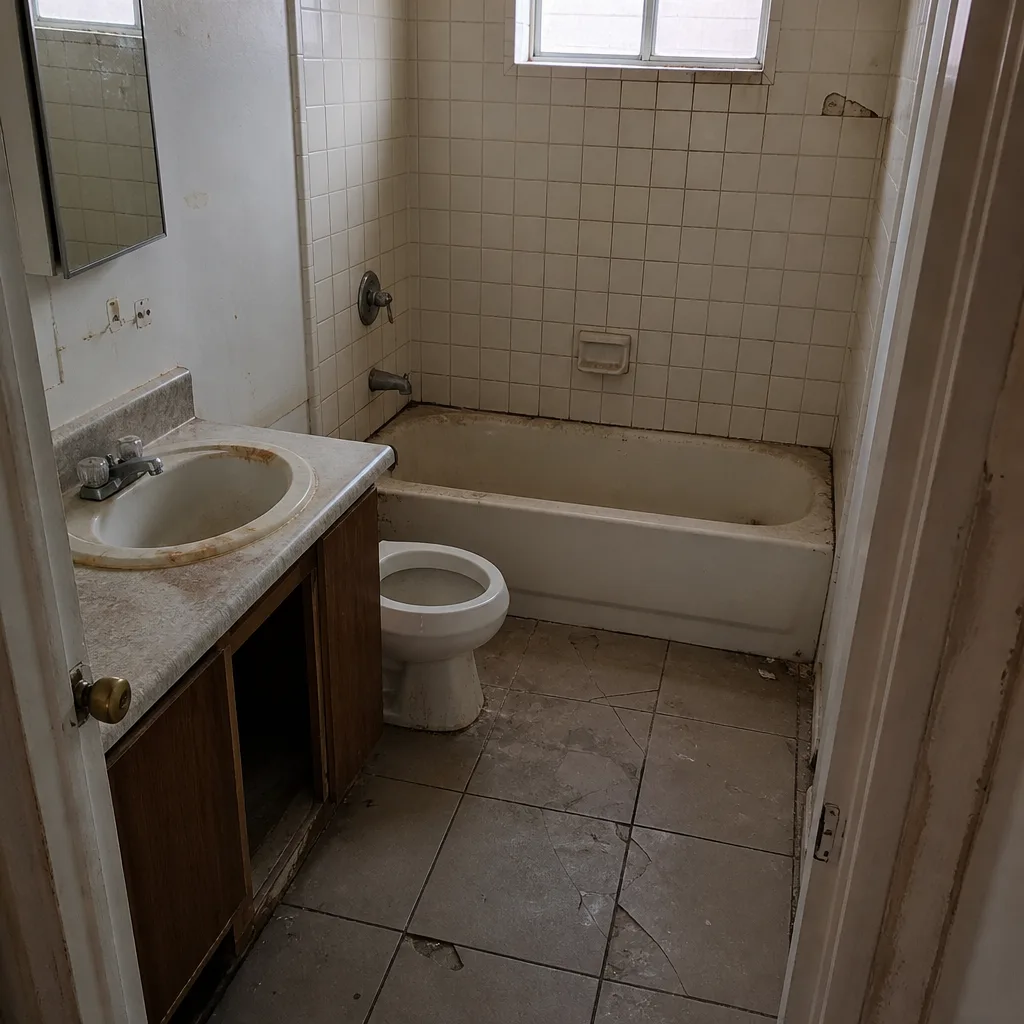
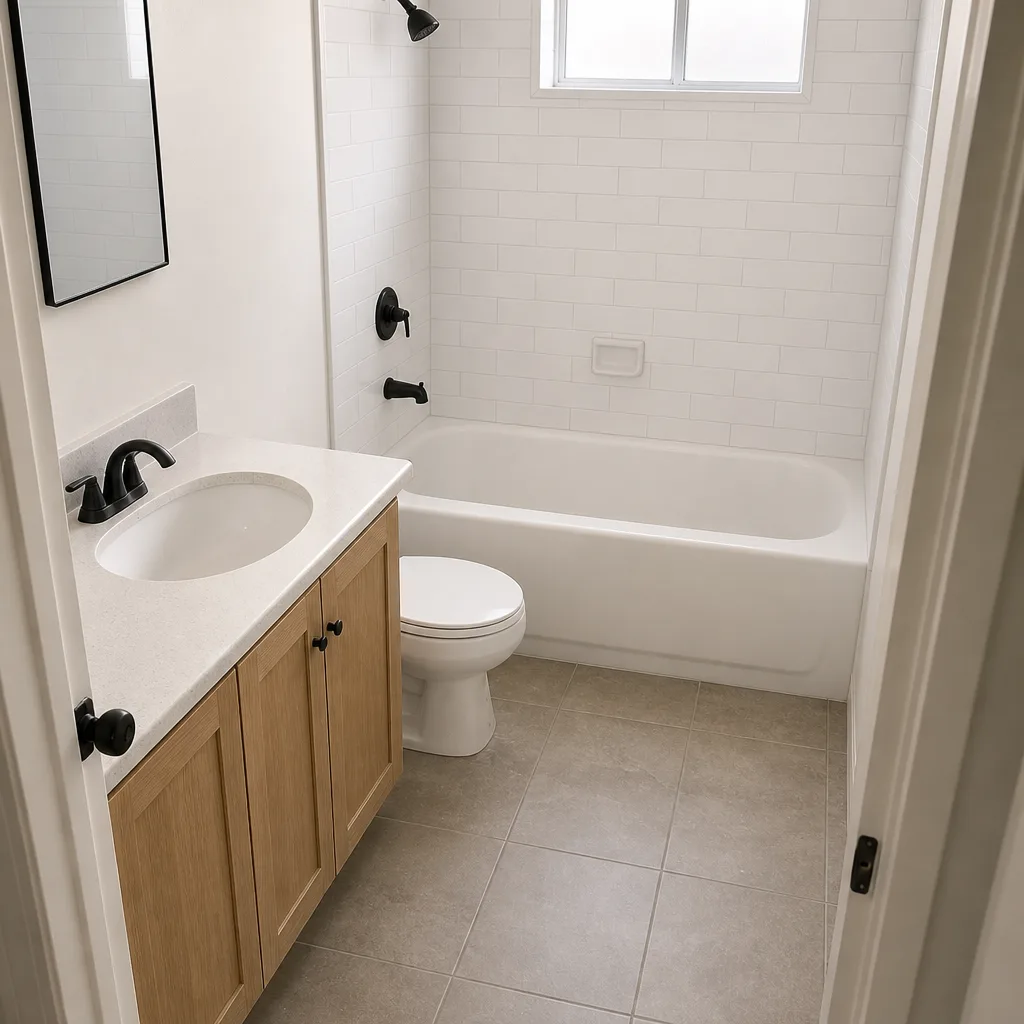
If you’re noticing the same stucco crack has reopened after a patch, that’s the tell that the fix needs to address the cause, not the crack. Same goes for grout in a bathroom that keeps discoloring no matter how often you clean it. Hard water in this part of Clark County eats tile grout on a shorter timeline, and that’s worth knowing before a bathroom remodel conversation starts. You can see how we sequence that work on our bathroom remodeling page for Sunrise Manor.
See the difference
 Before
 After
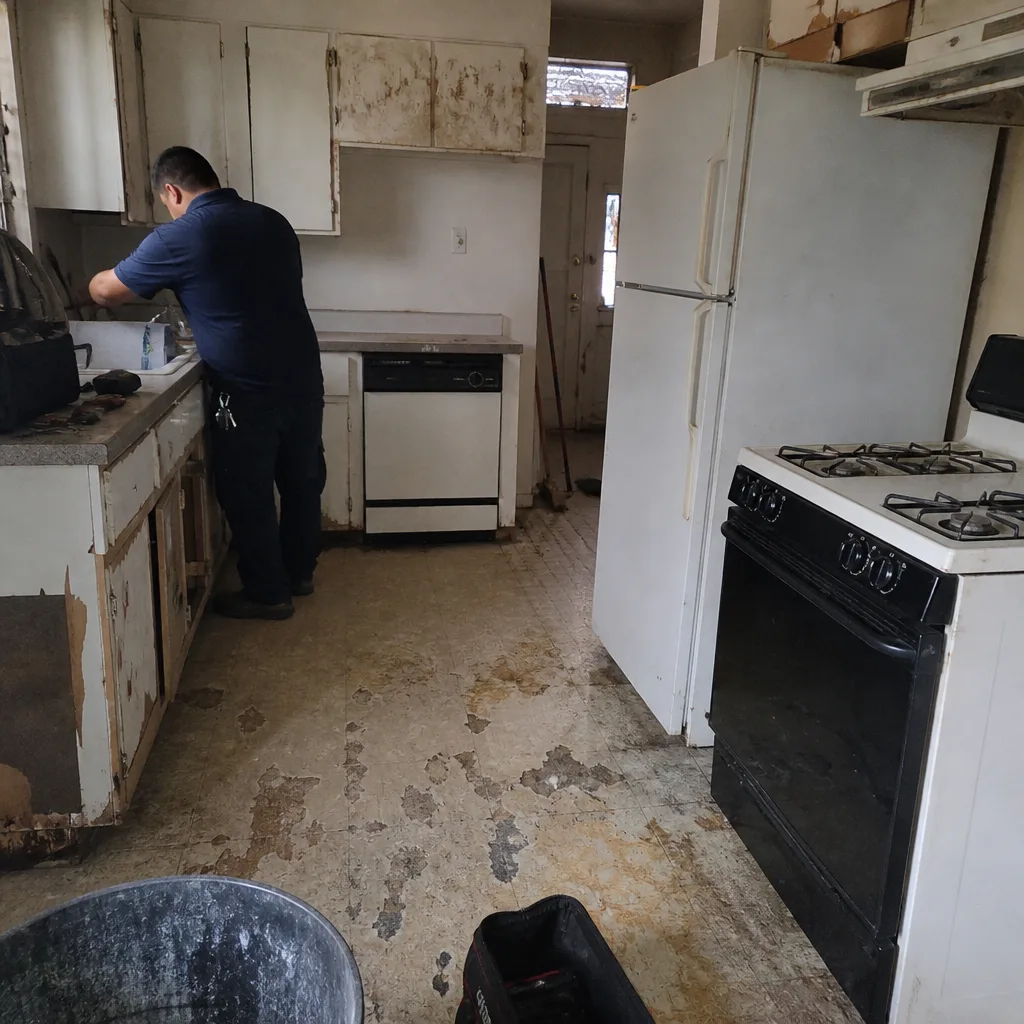 Before
 After
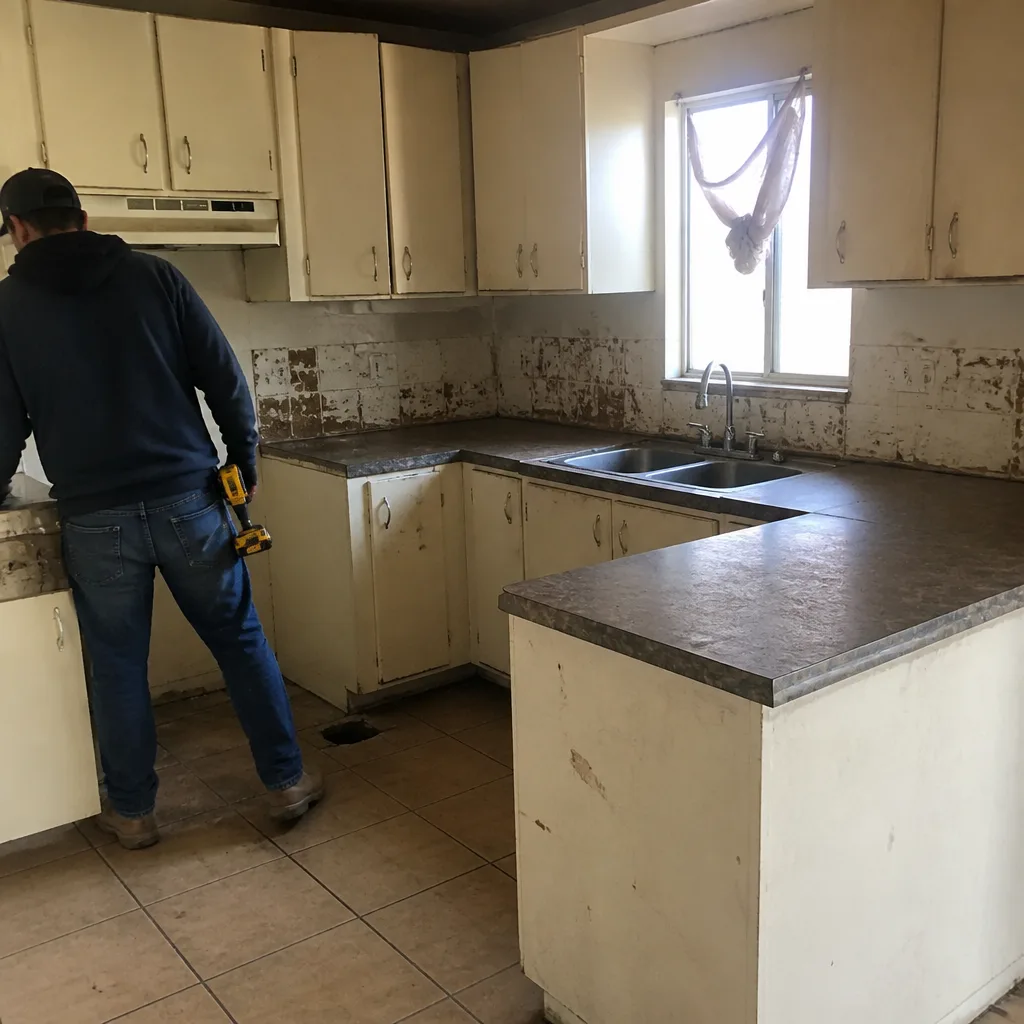 Before
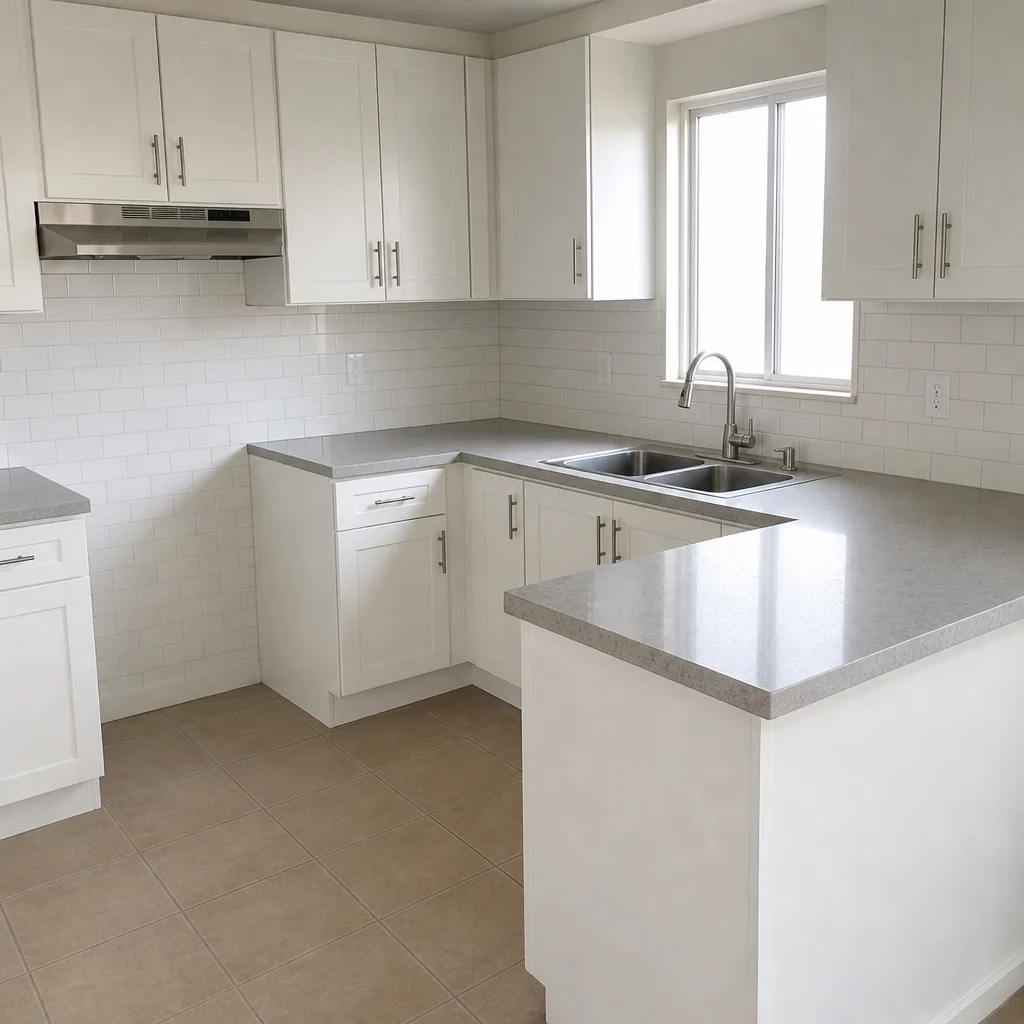 After
Common Mistakes to Avoid
- Following a 90-day HVAC filter schedule in a dust storm climate. In Sunrise Manor, the haboob is the trigger, not the calendar. A filter that’s loaded with dust in July still has two months of life on a calendar that says change it in September.
- Patching a stucco crack without checking if it’s active. A patch that fails within a season means the movement is still happening. Fix the movement first, or the patch is cosmetic.
- Blaming the water heater for a leaking relief valve. A weeping relief valve usually points to a failed pressure regulator valve, not a failing tank. Replacing the heater before testing the PRV wastes money.
- Painting over the weep screed. The weep screed at the base of your stucco is a drain, not a trim piece. Painting over it traps moisture against the wall.
- Ignoring a door that sticks. A door that recently started sticking often means the frame has moved. In caliche soil that’s worth measuring, not adjusting with a plane.
- Assuming every list applies here. Most national maintenance guides are built for humid climates and don’t mention hard water, caliche, or haboob season once. Use a list written from Sunrise Manor.
- Setting up a project without a written scope. Unwritten scopes are how surprise invoices happen. Every project we take on gets a written price before work starts, and that’s the standard, not a favor.
When to Call a Professional
Call a professional when the item is structural or when it involves pressure, moisture, or heat. A stucco crack that reopens after a patch, a slab joint that has moved since you last measured it, duct seals you can’t reach, a water heater flush, a PRV test, or any interior door and window that has shifted, those all need a documented reading, not a visual check. Call sooner, not later, when you see water staining near the base of a stucco wall or an interior crack growing. Bradford Remodeling Sunrise Manor offers free estimates in Sunrise Manor. Call (844) 834-2810. Every completed project carries our 365-Day Done Right Promise, and if the work fails inside that window, we come back and correct it at no charge.
Frequently Asked Questions
Once a year, and more often if your water pressure is running high. At 16 to 18 grains per gallon, Sunrise Manor water builds scale in the tank faster than the manufacturer’s generic service schedule accounts for, so an annual flush and anode rod inspection is the floor. Call (844) 834-2810 for a free estimate on a flush and PRV check.
It’s scale, and it’s caused by hard water, not a failing fixture. It’s cosmetic on the aerator but worth watching because the same scale can narrow supply lines. If you see it on multiple fixtures at once, that’s worth a professional look at the PRV.
Width and reassessment. A crack wider than the edge of a credit card, or one that reopens after a patch, is a candidate for a professional look. Hairline cracks under that size are usually cosmetic. The UV load on south and west walls in the 89110 through 89115 area means stucco failure at the base of the wall is worth checking twice a year.
A dripping water heater relief valve, banging or thumping in the pipes, or a strong flow at hose bibs that seems higher than it used to be. The PRV usually fails open, so the house starts seeing full street pressure. That stresses every line and fixture. Call (844) 834-2810 for a free estimate on a PRV test.
Dust storm timing, return-air design, and filter type all play a part. In Sunrise Manor, the haboob season means filters load fast in summer. If your filter clogs in weeks rather than months, the duct returns may be pulling more particulate than they should, and that’s worth a professional look.
You can handle the visual items: aerators, hose bib flow, filter condition, paint tape test, and photographing stucco cracks. The items that need a calibrated tool, a moisture meter, a pressure gauge, or a documented record with measured movement, belong in a professional report. Not because they’re too hard, but because the value is in the record, not the check.
The Bottom Line
Sunrise Manor maintenance isn’t the standard annual list from a national guide. The water hardness, the UV index across the 89110 through 89115 zip codes, the caliche under the slab, and the haboob season all set a schedule that most checklists don’t account for. Run three passes a year instead of two, inspect the water heater, PRV, stucco, and expansion joints most often, and keep the visual checks yourself while handing the measurable ones to a contractor who produces a written report. That’s the difference between a maintenance plan that holds and a list that gets ignored. Our technicians have up to 22 years of experience with the specific failure points this part of Clark County creates, and we’ll give you a written price before any work starts. For the full picture of what we offer in this part of the valley, see our Bradford Remodeling Sunrise Manor home page.
Call Bradford Remodeling Sunrise Manor at (844) 834-2810 for a free estimate. Calls are answered by a real person around the clock, and every visit includes a written scope and a written price before a single tool comes out. We work with documented brands like KraftMaid and Wellborn cabinetry, Cambria and Silestone surfaces, and Kohler fixtures, so every material on your project has traceable specs and its own manufacturer warranty behind it. The 365-Day Done Right Promise is written into every completed job, and if anything we touched fails inside that window, we come back and fix it at no charge.
Written by the team at Bradford Remodeling Sunrise Manor.