

Last updated November 17, 2026








Free written scope consultation - allowances, timeline, and change-order rules on paper before a single trade is scheduled
Kitchen Remodeling Maintenance Schedule: What to Do and When
Sealed grout in a Southern Nevada kitchen should be re-sealed every 12 to 18 months, not every five years as most national guides say. The low humidity pulls moisture out of the sealant, and the mineral-heavy water that comes out of Sunrise Manor taps leaves deposits that break it down faster. Most homeowners discover this the day the grout stains permanently and no amount of scrubbing brings it back. This guide lays out the maintenance schedule for a remodeled kitchen by component, not by season, so you know exactly what to check, when, and what it costs to skip.
Quick Answer
A newly remodeled kitchen needs grout re-sealed every 12 to 18 months, countertop-to-backsplash caulk replaced annually, exhaust fan filters cleaned every 2 to 3 months depending on cooking frequency, cabinet slides lubricated every 12 months with a dry-film silicone, and under-sink supply lines inspected twice a year. Test GFCI outlets monthly and have the dedicated appliance circuits verified once a year. Follow this schedule and a $30,000 remodel can hold its condition for a decade or more instead of eight or nine years.
Styles & brands we work with
- Kitchen remodeling
- Bathroom remodeling
- Home additions & ADU
- Roofing
- Windows & doors
- Driveway & pavers
- Fence
Table of Contents
- Grout and Caulk Service Life by Joint Location
- Cabinet Hardware, Hinges, and Drawer Slides
- Under-Sink Plumbing Inspections in High-Mineral Water
- Range Hood Filter Cleaning by Cooking Frequency
- Annual Electrical Inspection Items
- The Sunrise Manor Maintenance Calendar
- Common Mistakes to Avoid
- When to Call a Professional
Grout and Caulk Service Life by Joint Location
Grout and caulk fail at different rates depending on where they sit in the kitchen. Treating them as one item is the most common maintenance error we see in Sunrise Manor, and it leads to water getting behind a backsplash that looked fine from the surface.
Here is the service life we plan for in this climate:
- Countertop-to-backsplash caulk: replace annually. This joint moves with the counter and takes the brunt of splash and steam. In Sunrise Manor’s dry air, the caulk skins over quickly and looks intact while the bond underneath has already let go.
- Floor grout: seal every 18 months. Porcelain and ceramic tile hold up, but the grout lines are where grease and foot traffic meet. A penetrating sealer, not a topical coating, is what you want here.
- Kitchen walls adjacent to a shower or wet wall: inspect at 12 months minimum. If your kitchen shares a wall with a bathroom, water migration is the failure mode that costs the most to fix. Look for soft drywall, bubbling paint, or a musty smell near the baseboard.
- Sink-to-counter joint: inspect every 6 months, re-caulk every 12 to 18 months. Undermount sinks depend on this joint completely. When it fails, water runs straight into the cabinet below.
The reason Sunrise Manor runs faster than the national interval comes down to two local factors. First, low ambient humidity during most of the year causes sealant to cure hard and lose flexibility rather than staying pliable. Second, the mineral content in local water leaves calcium deposits on grout lines that act as a mild abrasive every time you wipe the surface. That combination shortens the useful life of a sealer by roughly half compared to a humid climate. When we specify tile and grout on a kitchen remodeling in Sunrise Manor project, we note the sealing interval on the closeout sheet so the homeowner isn’t guessing two years later.
Cabinet Hardware, Hinges, and Drawer Slides
Soft-close hinges and slides are the parts of a cabinetry package that fail first, and they fail quietly. A slide that’s starting to go gives you clues months before the drawer box tears up the face frame. Catching those clues is the difference between a $12 slide replacement and a $400 cabinet repair.
On a remodel where we install KraftMaid or Wellborn cabinetry, the hardware carries a manufacturer warranty. But warranty covers defects, not neglect. Lubrication is on the homeowner.
Lubricant type matters. Use a dry-film silicone spray, not WD-40 and not grease. Grease attracts dust in a kitchen and turns into a grinding paste inside a slide. WD-40 is a solvent, not a lubricant, and it will strip the factory lubricant out of a soft-close mechanism and leave it worse than before.
Lubrication interval: every 12 months for slides, every 18 to 24 months for hinges. Apply to the slide track only, not the piston on a soft-close damper.
- Pull the drawer out and check for side-to-side wobble. Wobble means worn rollers or a loose track.
- Listen for a grinding or scraping sound on the last two inches of travel. That’s metal-on-metal.
- Check that the drawer front sits flush when closed. A drawer that’s drifting out of alignment is loading unevenly.
- Inspect the face frame where the slide mounts. A hairline crack at the screw holes means the drawer has been pulling loose.
- Test the soft-close function by pushing the drawer closed from six inches out. It should catch and glide. If it slams, the damper is failing.
Early warning signs worth acting on immediately: a slide that squeaks only under load, a drawer that needs a second push to latch, or a hinge that lets the door sag a sixteenth of an inch. Each of those is a cheap fix now. When we close out a kitchen in Sunrise Manor, we walk the homeowner through the slide adjustment screws so a small alignment issue doesn’t turn into a cabinet repair.
Under-Sink Plumbing Inspections in High-Mineral Water
Under-sink plumbing is the most neglected zone in a remodeled kitchen. It’s dark, it’s cramped, and nobody looks at it until something is leaking. In a high-mineral water area, the failure mode is calcification at the joints, and it gives you plenty of warning if you know what to look for.
Inspect twice a year. Set a reminder for spring and fall. Here’s what to check:
- Supply line connections at the shutoff valves and the faucet shanks: look for white crusty buildup. That’s calcium carbonate. A thin ring is normal wear. A thick crust means the fitting is seeping.
- Braided stainless supply lines: run your hand along the full length. Any bulging, fraying, or rust bleeding through the braid means replace now. Do not wait for a failure. A braided line is a $12 part and a flooded cabinet is a $3,000 repair.
- P-trap and drain connections: check for moisture at the slip nuts. A dry paper towel pressed against the joint will show a damp spot instantly.
- Garbage disposal mounting ring and flange: inspect for corrosion and confirm the ring is tight. A loose mounting ring is the number one cause of under-sink leaks after a remodel.
- Dishwasher supply and drain lines: check the connection at the cabinet wall and the high loop on the drain hose.
When to replace braided supply lines proactively: every 5 years, or immediately if you see any of the warning signs above. Lines installed during the remodel are already 3 to 5 years old by the time most homeowners think to look at them. We recommend replacing them on the same cycle as the faucet cartridge, which on a Moen or Delta fixture typically means every 5 to 7 years.
The mineral content in the water here accelerates scale on the faucet aerator too. Pull the aerator and soak it in white vinegar every 6 months. It takes ten minutes and restores flow that most people assume is a pressure problem.
Range Hood Filter Cleaning by Cooking Frequency
Range hood filters do one job: trap grease before it reaches the motor. When they’re saturated, the hood has to work against back-pressure, and back-pressure is what shortens motor life. A hood that runs louder than it used to is often just a dirty filter, not a failing motor.
The cleaning interval depends on how much you cook and what kind of filter you have:
- Baffle filters (stainless steel): clean every 2 to 3 months for light cooking, every 4 to 6 weeks for daily cooking, and monthly if you fry or sear regularly. Baffle filters hold up to high heat and last for the life of the hood if cleaned.
- Mesh filters: clean every 4 to 6 weeks for daily cooking, and monthly for heavy use. Mesh clogs faster than baffle and is harder to get fully clean once grease sets.
- Ductless/recirculating hoods: replace the charcoal filter every 3 to 6 months. Cleaning it does not restore it. This is the filter most homeowners forget exists.
Grease saturation thresholds: hold a filter up to a light source. If you can’t see through more than half the surface area, it’s saturated. That’s your threshold, not a calendar date.
Clean baffle filters in a sink with hot water and a degreaser, not the dishwasher on a high-heat cycle. Mesh filters can go in the dishwasher, but run them alone. A greasy filter sharing a load with dishes leaves a film on everything.
The externals matter too. Grease buildup on the hood’s exterior and the underside of the cabinet above is a fire risk, and it attracts pests. Wipe the hood body and the cabinet underside monthly with a degreaser.
Annual Electrical Inspection Items
A remodeled kitchen is packed with dedicated circuits, and the appliances plugged into them change over the years. A circuit sized for the range that was there at completion may be carrying something with a different draw five years later. An annual electrical check catches that before it becomes a tripped breaker or a warm outlet.
GFCI test protocol:
- Press the TEST button on each GFCI outlet. It should click off and cut power to the outlet and everything downstream of it.
- Press RESET. Power should return.
- If the outlet won’t trip or won’t reset, the device has failed and needs replacement. GFCI outlets have a service life of about 10 years.
- Test the GFCI breaker at the panel with the same procedure, once a year.
Do this monthly. It takes two minutes and it’s the single most important safety check in a kitchen.
Dedicated circuit load verification: once a year, confirm what’s actually plugged into each dedicated circuit. Your remodel put the refrigerator, microwave, dishwasher, disposal, and any built-in appliance on their own circuits. If you’ve added a countertop appliance that’s now sharing a circuit, the breaker will tell you eventually. Look for breakers that trip or outlets that run warm to the touch.
When to call an electrician vs. handle it yourself: test and reset GFCI devices yourself. Replace a cover plate yourself. Call a licensed electrician for anything involving the panel, a breaker that trips repeatedly, a warm outlet, a burning smell, or adding a circuit for a new appliance. We do not recommend DIY work inside an electrical panel, ever. The risk of arc flash and shock is real, and the code requirements for kitchen circuits are specific enough that a mistake voids the safety margin a remodel was built to provide.
The Sunrise Manor Maintenance Calendar
Component intervals are the right way to plan maintenance, but a calendar keeps it from slipping. Here’s the schedule we hand homeowners at closeout, adjusted for conditions in Sunrise Manor.
- Monthly: test GFCI outlets, check the range hood filter by the light test, wipe the hood exterior and cabinet underside.
- Every 3 months: clean baffle or mesh filters if you cook daily, replace charcoal filters in a ductless hood, inspect the under-sink area with a paper towel.
- Every 6 months: inspect the sink-to-counter joint and P-trap connections, soak the faucet aerator in vinegar, check supply lines for calcification.
- Every 12 months: re-caulk the countertop-to-backsplash joint, lubricate drawer slides, inspect kitchen walls adjacent to wet walls, verify dedicated circuit loads, test the GFCI breaker at the panel.
- Every 18 months: re-seal floor grout with a penetrating sealer.
- Every 5 years: replace braided supply lines and faucet cartridges, evaluate cabinet slides for full replacement.
The climate here shortens a few of these intervals. Dust in Sunrise Manor blows in with the wind season, and it settles into slide tracks and grout lines faster than in wetter regions. That’s why floor grout gets sealed at 18 months here rather than the 3 to 5 years national guides recommend. And because we run the AC most of the year, the exhaust fan and hood circulate a lot of dry air, which pulls moisture out of caulk joints and speeds up their failure.
Common Mistakes to Avoid
- Treating all grout the same. Floor grout and backsplash grout are on different clocks. Sealing the backsplash every 18 months and ignoring the floor for five years is the mistake we see most often in Sunrise Manor, and the floor is what fails first.
- Using WD-40 on cabinet slides. It feels like a fix because it quiets the squeak for a week. Then it dissolves the factory lubricant out of a soft-close mechanism and turns a $12 slide into a full drawer-box replacement.
- Ignoring the charcoal filter in a recirculating hood. Cleaning it doesn’t restore it, and a saturated charcoal filter pushes grease back into the kitchen instead of trapping it. Replace it every 3 to 6 months.
- Waiting for supply line failure instead of replacing on schedule. A braided line fails catastrophically, and it fails while you’re at work. Five-year replacement is cheap insurance.
- Never testing GFCI outlets. A GFCI that won’t trip is a dead safety device that looks completely normal. Monthly testing is the only way to know it’s working.
- Assuming the exhaust fan above the range is a maintenance-free item. Hoods that run louder after a few years are usually not failing. They’re fighting a clogged filter, and the back-pressure is shortening the motor’s life every time it runs.
- Skipping the closeout walkthrough documentation. A remodel should come with a written maintenance schedule and a documented material list. Without it, you’re guessing at sealant type, grout brand, and hardware warranty terms two years later.
When to Call a Professional
Some maintenance belongs to you and some belongs to a tradesperson. Test your GFCIs and clean your hood filters yourself. Call a licensed electrician immediately if a breaker trips repeatedly, an outlet runs warm, or you smell burning near the panel. Call a plumber if you see an active leak, a bulging supply line, or water staining inside the cabinet. Call a cabinetry specialist if a drawer slide won’t align after adjustment or a hinge has pulled out of the face frame. And call us for the grout and caulk restoration if the joint failure has gone past what a homeowner can address.
Bradford Remodeling Sunrise Manor offers free estimates in Sunrise Manor – call (844) 834-2810.
Every project we complete carries the 365-Day Done Right Promise. If a component we installed fails within a year, we come back and correct it at no charge. That covers installation failure, not neglect, which is exactly why this schedule matters.
See the difference
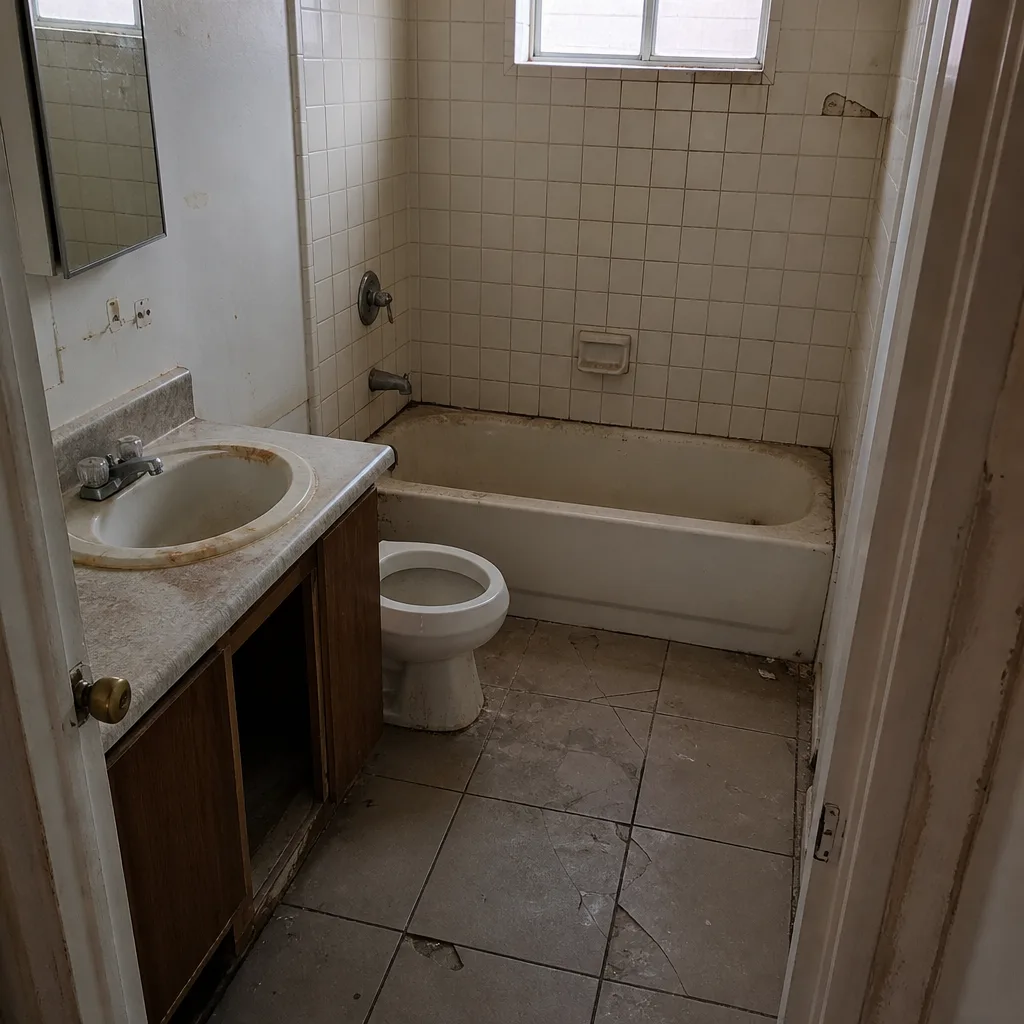 Before
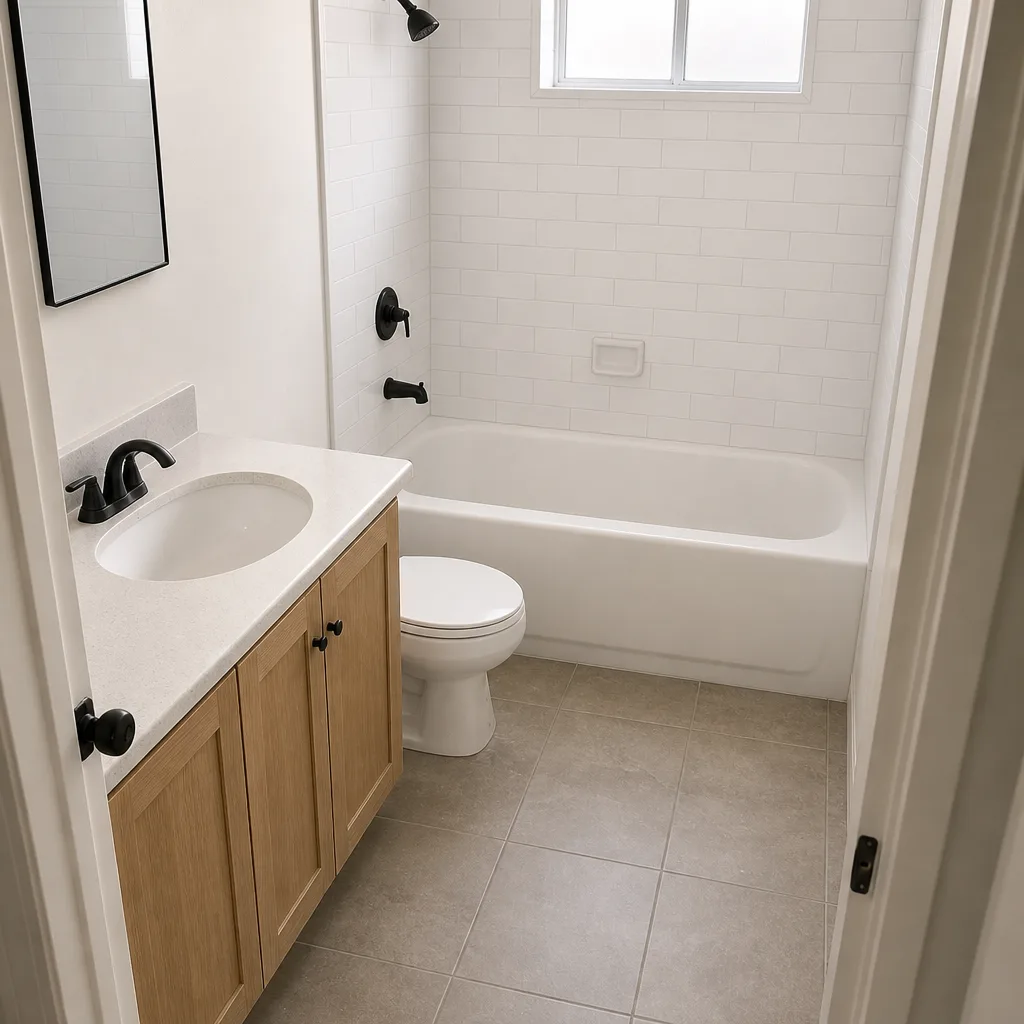 After
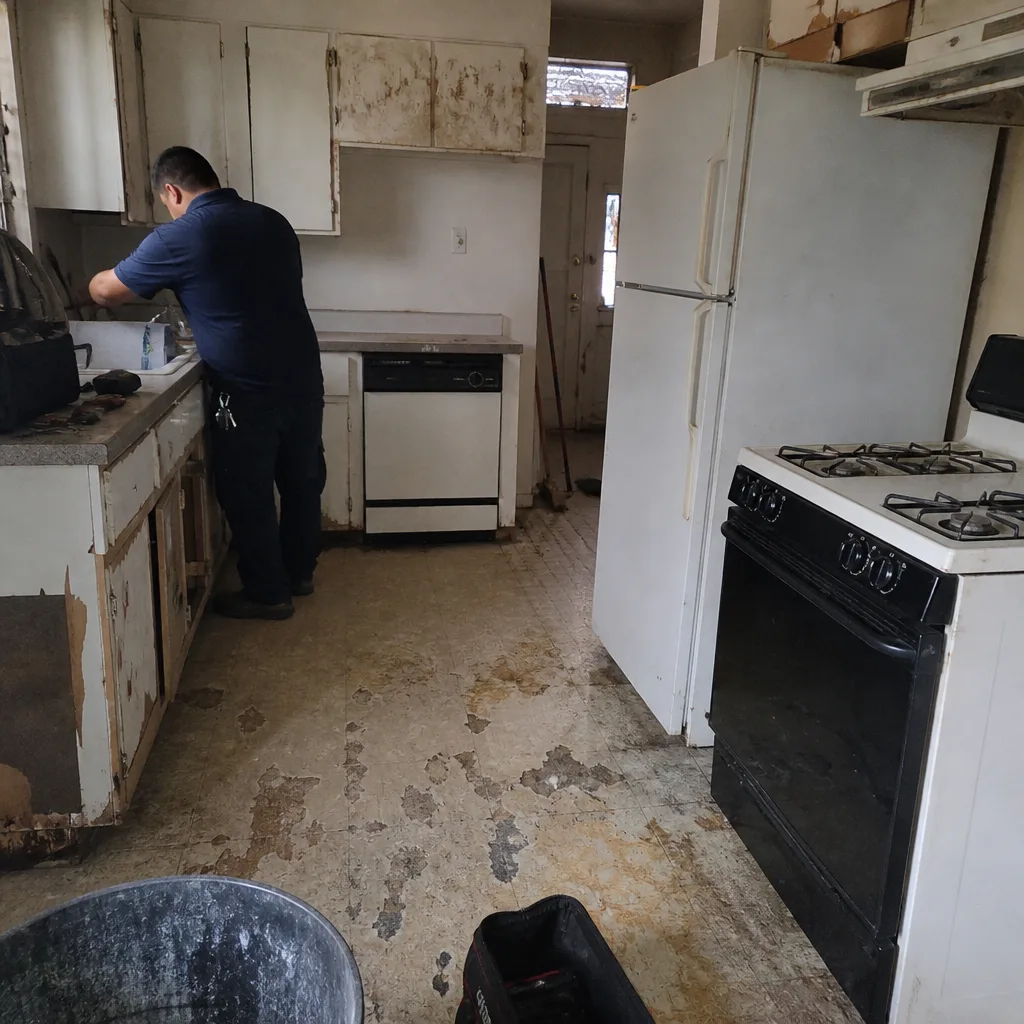 Before
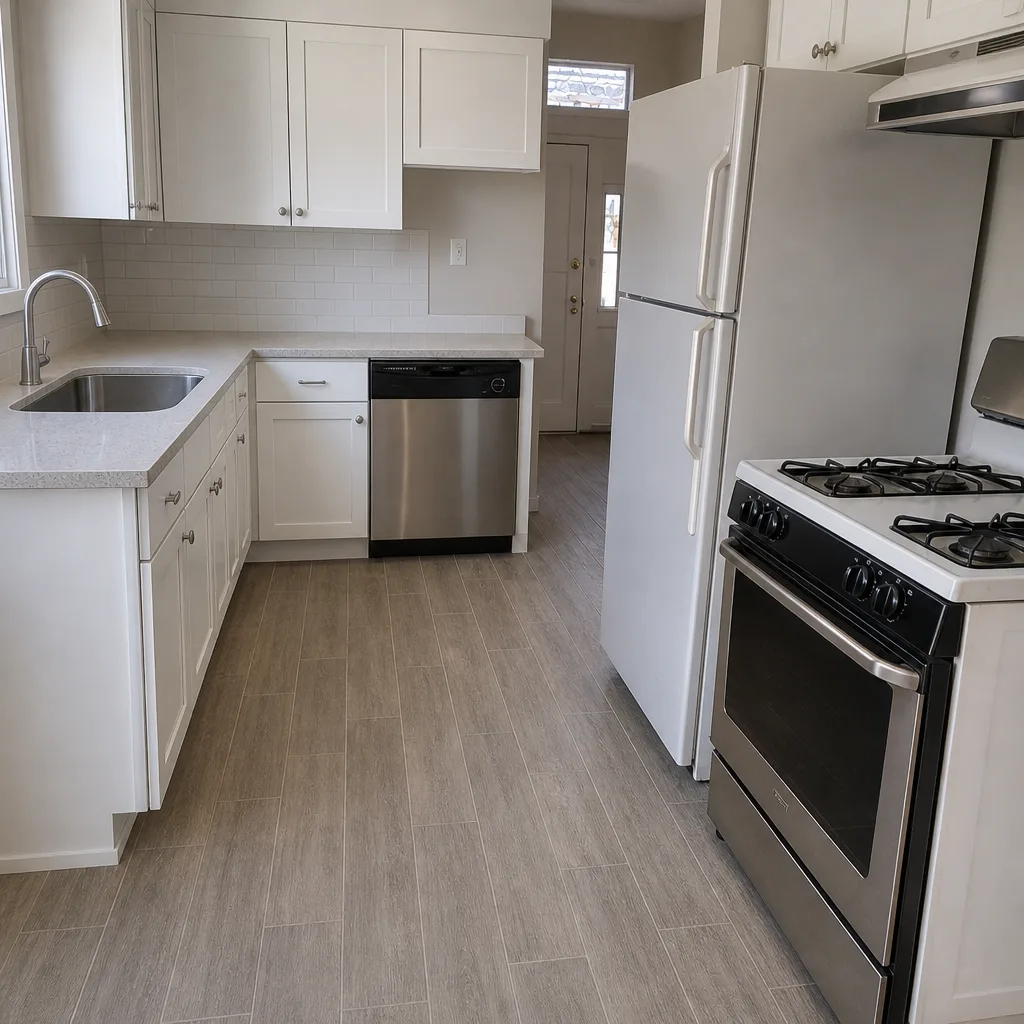 After
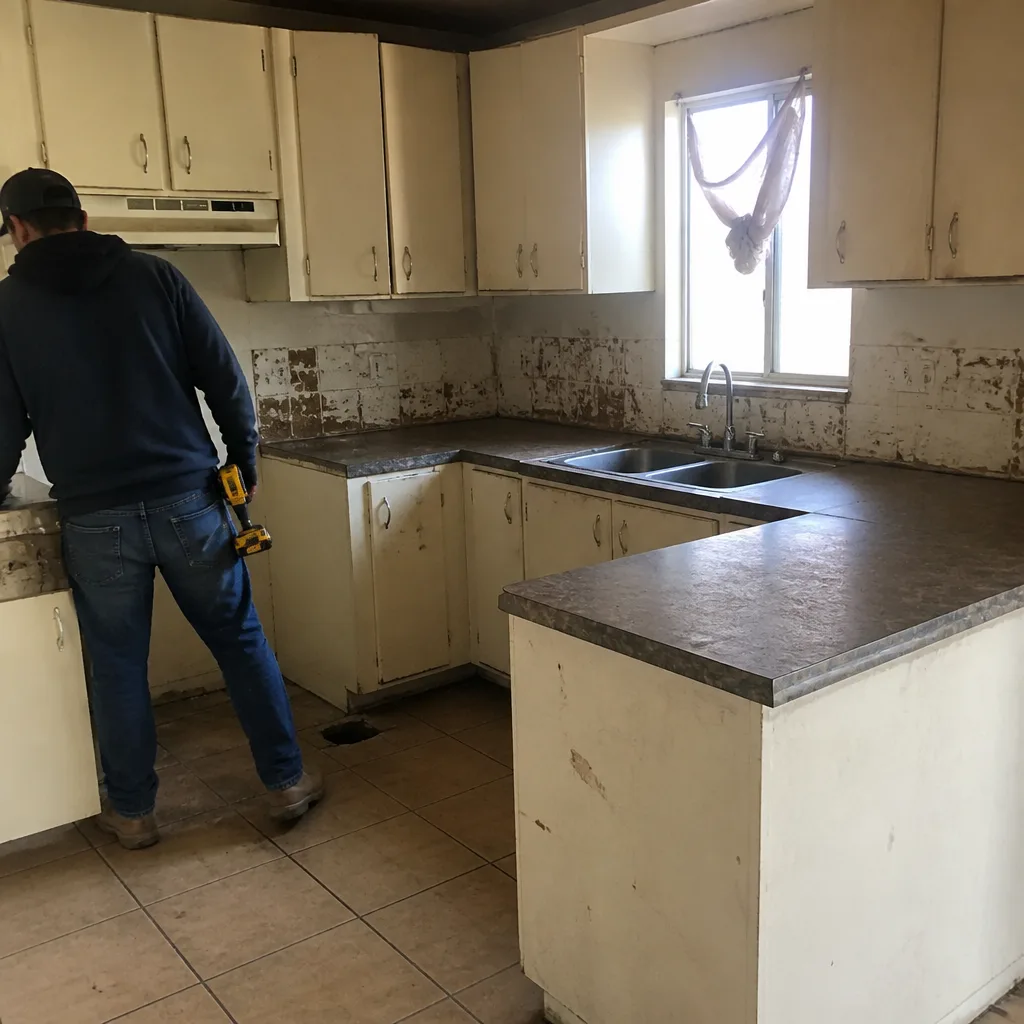 Before
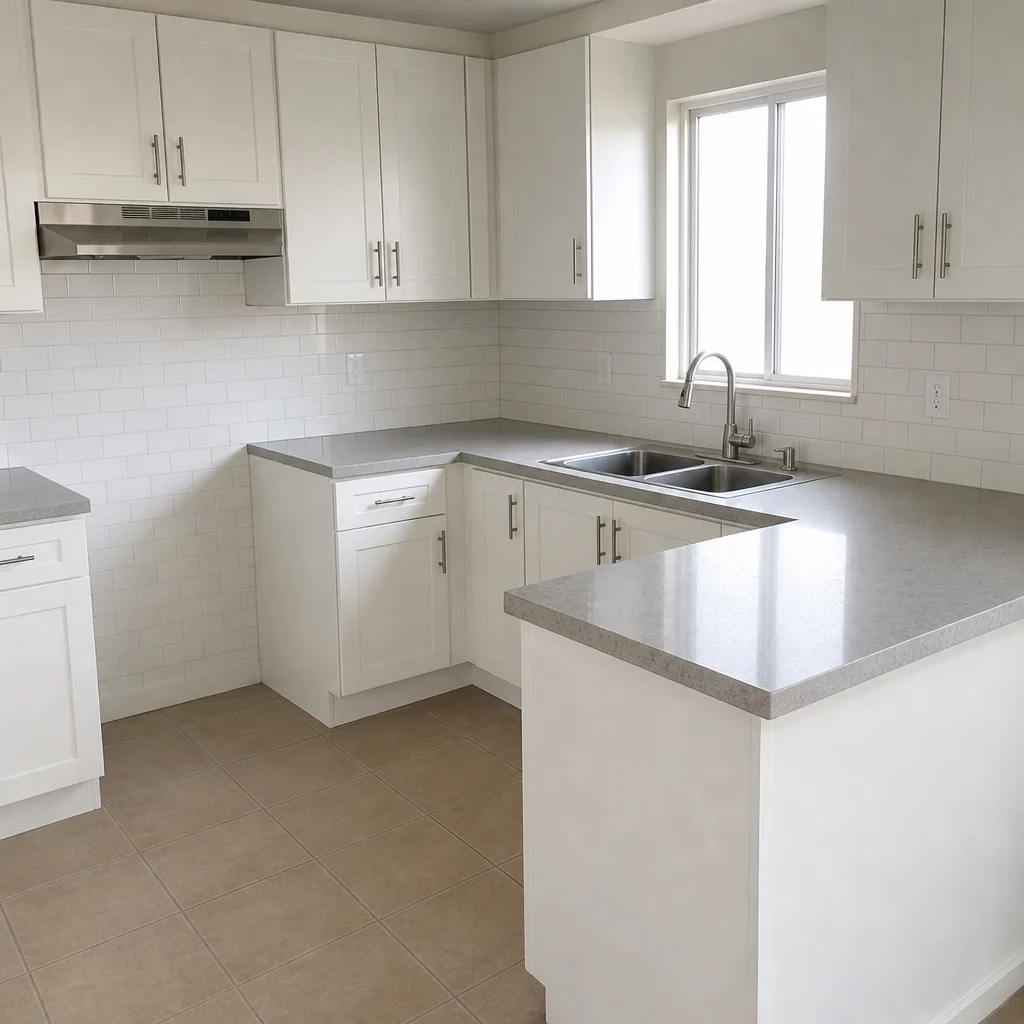 After
Frequently Asked Questions

Every 12 to 18 months for floor grout, and every 12 months for the countertop-to-backsplash caulk joint. The low humidity and high mineral content in local water breaks down sealant faster than in most other climates, and the national recommendation of every 3 to 5 years is too long a gap here. Call (844) 834-2810 for an assessment if you’re not sure when yours was last sealed.
A dry-film silicone spray, applied to the slide track only. Do not use WD-40 or grease. WD-40 strips the factory lubricant out of the mechanism, and grease collects kitchen dust and turns into a grinding paste. Apply every 12 months to slides and every 18 to 24 months to hinges.
Replace braided stainless supply lines every 5 years regardless of appearance, or immediately if you see bulging, fraying, or rust bleeding through the braid. Check twice a year for white crusty buildup at the fittings. That’s calcification from mineral-heavy water, and it means the joint is seeping. Call (844) 834-2810 if you’d like a professional inspection before you replace anything.
Every 4 to 6 weeks for mesh filters with daily cooking, and every 2 to 3 months for baffle filters with light cooking. Hold the filter up to a light: if you can’t see through more than half the surface, it’s saturated. Recirculating hoods need the charcoal filter replaced every 3 to 6 months, not cleaned.
Press TEST monthly; the outlet should click off and cut power downstream. Press RESET to restore power. If it won’t trip or won’t reset, the device has failed and needs replacement, typically around the 10-year mark. Test the GFCI breaker at the panel once a year. Call an electrician for any panel work.
It covers failure of the work we completed. If a caulk joint we installed lets go within the guarantee period, or a slide we mounted fails, we return and correct it at no charge. It does not cover neglect: a filter never cleaned, a slide never lubricated, or a supply line past its replacement interval. Call (844) 834-2810 with questions about what your specific project is covered for.
The Bottom Line
A remodeled kitchen is a system of components on different clocks, and the maintenance schedule is what keeps a $30,000 investment holding its condition for a decade instead of eight years. Re-seal floor grout every 18 months, re-caulk the backsplash annually, lubricate slides with dry-film silicone every 12 months, replace supply lines on a five-year cycle, clean hood filters by the light test, and test GFCIs monthly. None of it is expensive. Skipping it is what gets expensive. The goal at closeout is simple: a clean site, a documented schedule, and a signed guarantee in your hand so you know exactly what’s covered. When you’re ready to start a kitchen project, see our bathroom remodeling in Sunrise Manor page if you’re planning a full interior refresh, or read about our approach as a general contractor in Sunrise Manor. You can also return to the Bradford Remodeling Sunrise Manor home page to review everything we do.
Ready to plan your remodel with a written price before any work starts? Call (844) 834-2810 for a free estimate. A live person answers, 24 hours a day.
Written by the team at Bradford Remodeling Sunrise Manor.