Last updated November 17, 2026








Free written scope consultation - allowances, timeline, and change-order rules on paper before a single trade is scheduled
General Contractor Warning Signs Every Homeowner Should Know
The most dangerous general contractor isn’t the one with bad reviews. It’s the one with no reviews, a current license, and a contract that never says who pulls the permits. That single omission – who is legally responsible for the permit – has left Sunrise Manor homeowners holding remediation bills for work a subcontractor did without authorization. Gut feeling catches some bad actors. Paper catches the rest, and paper is what holds up when a job goes sideways. This guide walks through the procedural red flags that cost real money: allowance caps, subcontractor disclosure, payment schedules tied to milestones, arbitration clauses that quietly strip your lien rights, and the difference between a license number that exists and a license that actually covers your project.
Quick Answer
The biggest red flags when hiring a general contractor are procedural, not personal: a contract with no allowance caps or subcontractor disclosure, a payment schedule front-loading more than 30% before work starts, a GC who asks you to pull the permit as the homeowner, and a license you haven’t verified is active, bonded, and scoped to your work. Any one of these is a reason to pause. Two or more is a reason to walk.
Styles & brands we work with
- Kitchen remodeling
- Bathroom remodeling
- Home additions & ADU
- Roofing
- Windows & doors
- Driveway & pavers
- Fence
Table of Contents
- Contract red flags that signal future disputes
- License verification vs. license status
- The permit-pulling test
- Draw payment structure warning signs
- How to read a contractor’s insurance certificate
- The subcontractor paper trail
- What squared-away looks like at job close
- Common mistakes to avoid
Contract Red Flags That Signal Future Disputes
A contract is not paperwork you sign to get the job started. It’s the document that decides who pays when something goes wrong. In our experience, four clauses do most of the damage when they’re missing or written loosely.
Missing allowance caps. An allowance is a placeholder number for a material the homeowner hasn’t picked yet – tile, fixtures, cabinetry. A contract that lists a $3,000 tile allowance with no cap and no overage procedure isn’t a fixed price. It’s a starting price. A disciplined contract states the allowance, states who absorbs overages above it, and states how a change gets priced in writing before the material is ordered.
No subcontractor disclosure clause. Most general contractors use subs for electrical, plumbing, and drywall. That’s normal and often good. What isn’t normal is a contract that doesn’t name who those subs are or require the GC to disclose them before they set foot on site. If the contract is silent, you have no way to check that the electrician is licensed, and no recourse if work is performed by someone the GC never vetted.
Payment tied to calendar dates instead of verified milestones. A schedule that says “30% due week three” tells you nothing about whether the rough-in is done or inspected. A schedule tied to verified milestones – rough-in inspected, drywall hung, cabinets set – gives you something to check before you release money. Calendar draws reward a contractor for showing up; milestone draws reward a contractor for finishing.
Arbitration clauses that strip your lien rights. A mandatory arbitration clause is sometimes reasonable. A mandatory arbitration clause paired with a waiver of your right to file a mechanics lien is not. Read the dispute section closely. If it requires binding arbitration in a venue you can’t reach and waives your statutory lien remedies, you’re giving up the two levers most homeowners actually have.
When we write a contract at Bradford Remodeling Sunrise Manor, the price is fixed in writing before any work starts and the scope is line-itemed so nothing moves at the door. If a contractor won’t put their number in writing, that’s the first red flag and it’s the one you can check in five minutes.
License Verification vs. License Status
A license number on a business card tells you almost nothing. What matters is whether that license is active, whether the contractor is bonded, and whether the classification covers the specific work they’re proposing to do. Those are three separate checks, and homeowners routinely stop after the first.
- Confirm the license is active, not just issued. Pull the contractor’s record through the Nevada State Contractors Board and look at the status line. An expired or suspended license is a stop-work signal, no matter how good the number looks.
- Confirm the bond is current. Nevada requires residential contractors to carry a surety bond, and the bond amount is tied to the license classification. If the bond has lapsed, you’ve lost the fastest recovery route if the contractor walks off the job.
- Confirm the classification covers your scope. A license that covers residential remodeling may not cover the structural or specialty work your project requires. If the scope crosses into work the classification doesn’t reach, that work has to be pulled by a properly classified subcontractor – and the contract should say so.
- Match the name on the license to the name on the contract. This is the step people skip. If the license belongs to “Smith Construction LLC” and your contract is with “Smith Home Improvements,” you may be dealing with an unlicensed entity operating under a familiar name.
This matters in Sunrise Manor specifically because the housing stock runs old and mixed. A rough remodel in a mid-century block often hits unpermitted prior work, and a licensed, bonded GC is the one who can pull the corrective permits to legalize it. An unlicensed outfit can’t, and the exposure lands on the homeowner at resale.
The Permit-Pulling Test
If a general contractor suggests you pull the permit yourself as the homeowner to “save money,” treat it as a hard stop. This is the single most damaging piece of advice on this list, and it shows up more than you’d think.
Here’s why. When you pull the permit as the homeowner, you become the permit holder and the responsible party. The inspections run to your name, not the contractor’s. If the work fails inspection, the correction order is yours. If the contractor’s sub did unauthorized work, the code enforcement action is yours. If the contractor disappears, the open permit sits on your property record and can complicate a future sale. The “savings” is the contractor moving liability off their books and onto yours.
A permitted job in Sunrise Manor also runs through local inspection for framing, rough-in, and final. A contractor who won’t pull the permit is usually a contractor whose work won’t pass. The permit isn’t red tape – it’s the mechanism that forces the work to be checked by someone other than the person who did it.
What to say back. “I’m not pulling the permit. If you’re not willing to pull it and hold the inspections, we should stop here.” A by-the-book contractor will agree immediately. A contractor who argues, explains why the county is difficult, or offers to “handle it informally” is telling you exactly how the rest of the job will go.
Draw Payment Structure Warning Signs
Payment schedules are where good-faith homeowners lose the most money, because a front-loaded draw looks reasonable until the contractor runs out of funds and disappears mid-job. Two numbers matter more than any other.
- No more than 30% before work begins. A deposit above 30% with nothing built is a red flag. That deposit is supposed to cover material mobilization and scheduling, not fund the contractor’s other jobs.
- No final payment before punch list sign-off. If the contract requires full payment at substantial completion – before you’ve walked the punch list and signed off – you’ve given up the only leverage you’ll ever have. Hold a final draw, tied to a written punch list and a signed completion sign-off.
- Watch for draw dates that reward the calendar. “Due on the 1st of each month” pays for time, not progress. Draw triggers should be verifiable milestones.
- Watch for material deposits paid to the contractor directly with no lien waiver. A lien waiver signed at each draw confirms the subs and suppliers have been paid. Without it, a supplier can file a lien on your property for material the contractor never paid for.
In Sunrise Manor, where a lot of remodels run through the summer heat and materials sit on site longer, a draw schedule that pays for “materials delivered” without a delivery receipt and a conditional lien waiver is asking for trouble. The disciplined version is simple: money releases against something you can see, touch, or sign.
How to Read a Contractor’s Insurance Certificate
An insurance certificate is a one-page document that tells you whether the contractor can actually cover a loss. Almost nobody reads past the first few lines. Four things matter.
General liability insurance covers property damage and third-party injury caused by the contractor’s work – a damaged water line flooding your neighbor’s unit, a sub knocking over a load-bearing wall that fails later. Workers’ compensation insurance covers injuries to the contractor’s own employees. These are different policies and both are required. A contractor with liability but no workers’ comp is a contractor whose injured employee can come looking at you for medical costs.
“Additional insured” status is the phrase to look for. When you’re listed as an additional insured on the contractor’s general liability policy, you get direct access to their coverage if a claim arises from their work. Ask in writing to be added before work begins. Many GCs will do it at no cost; a contractor who refuses has a reason.
Minimum coverage numbers in Nevada. Nevada requires residential contractors to maintain general liability coverage as a condition of licensure, and the required amount is tied to the license classification. Workers’ comp is required for any contractor with employees. Ask for the certificate to be sent directly from the contractor’s insurance agent to you, not forwarded from the contractor’s own email. That one step closes the loop on forged certificates, which are more common than they should be.
The general contractor in Sunrise Manor you hire should hand over the certificate without being asked twice, and every sub on the job should be covered under the same requirements.
The Subcontractor Paper Trail
Most of the work on your job will not be done by the general contractor. It’ll be done by an electrician, a plumber, a tile setter, a drywall crew. The GC’s job is to coordinate, sequence, inspect, and take responsibility. The paper trail is how you verify that responsibility is real.
Ask for three things before any sub sets foot on site. First, a written list of every subcontractor proposed for the job, with the scope each will cover. Second, each sub’s license number, matched to the trade. Third, each sub’s certificate of insurance, with the GC listed as additional insured and, ideally, you as well.
Why this matters in Sunrise Manor: the housing stock includes a lot of older block construction and additions added in stages. When a plumber opens a wall and finds galvanized pipe that needs to be replaced, or an electrician finds a panel that needs to be brought up to code, the work order expands quickly. If the sub doing that work was never disclosed, never licensed, and never insured, the expansion is a liability you didn’t agree to and can’t control. If the sub was disclosed and papered, the expansion is a written change order with a fixed price. The difference isn’t the surprise – it’s who’s on the hook for it.
Bradford Remodeling Sunrise Manor uses background-checked, uniformed technicians on every job, and the roster of name-brand materials – KraftMaid and Wellborn cabinetry, Cambria and Caesarstone surfaces, Kohler and Moen fixtures, GAF and James Hardie exterior products, Therma-Tru doors – means every specification is traceable to a manufacturer spec and a manufacturer warranty that sits behind our own.
What Squared-Away Looks Like at Job Close
Job close is where the paper trail either confirms the job or reveals the gaps. A properly closed project leaves you with four things in hand.
- A clean site. No leftover material, no debris in the yard, no dumpster sitting in the driveway for six weeks.
- A documented scope. A written record of what was installed, by whom, with model numbers where they exist.
- A signed punch list. Every item on the walk-through either completed or written into a dated return schedule.
- A written guarantee. A signed document stating exactly what’s covered, for how long, and what triggers a return visit.
The 365-Day Done Right Promise is our version of that fourth item. Every completed project carries a full-year written guarantee. If the work fails inside that window, we come back and correct it at no charge. That’s not a slogan – it’s a term in the contract, and you should insist on the same thing from any contractor you hire in Sunrise Manor. If a GC can’t put the guarantee in writing, they haven’t thought through what they’ll actually do when something fails at month nine.
Common Mistakes to Avoid
- Checking that a license exists instead of checking its status. A suspended license looks identical to an active one on a business card. Pull the record.
- Signing a contract with no allowance caps. A tile allowance with no overage procedure is a fixed price that isn’t fixed. Any material that can be substituted needs a cap.
- Pulling the permit yourself to “save the GC time.” You just moved the liability from their name to yours. Never do this.
- Paying more than 30% before work begins. The deposit covers mobilization, not the contractor’s payroll on other jobs.
- Accepting a forwarded insurance certificate. Ask the agent to send it directly to you. Forged certificates are a real problem.
- Letting the final payment release before punch list sign-off. Hold the last draw against the written punch list and the signed completion.
- Letting subs show up without disclosure. In Sunrise Manor, an undisclosed sub on a rough-in is a call to the contractors board waiting to happen – and the call is usually yours to make.
When to Call a Professional
Some warning signs are catchable before you sign, and some show up after work is half-finished – permit open, subs on site, draws paid, and the scope drifting. If you’re mid-project and the paper trail is already broken, talk to a licensed general contractor before you release the next draw. In Sunrise Manor, the corrective path usually involves pulling the proper permits and getting an inspection on the work that’s been done, and that has to happen with a properly classified contractor on the record. Bradford Remodeling Sunrise Manor offers free estimates in Sunrise Manor – call (844) 834-2810 and we’ll walk you through what’s actually written in your contract and what should be. If the answer is “call the contractors board,” we’ll tell you that too.
See the difference
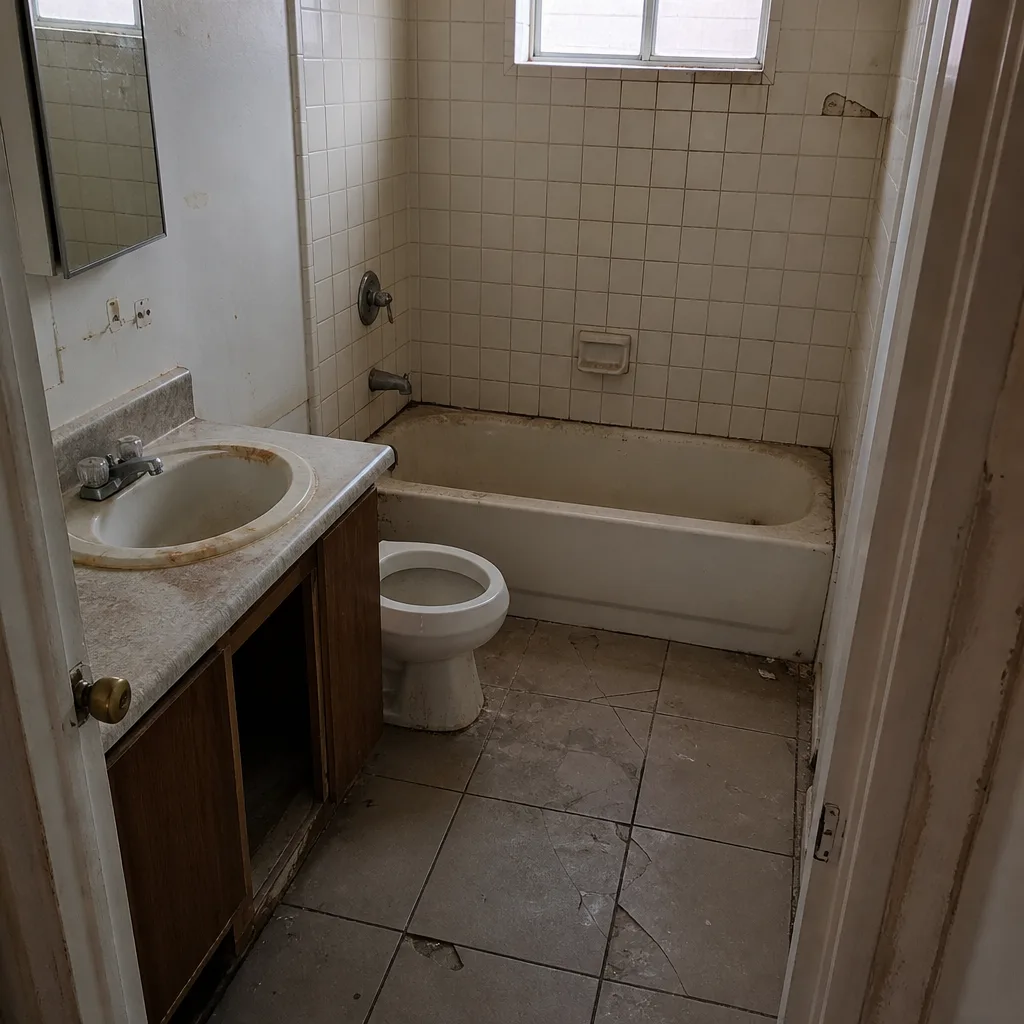 Before
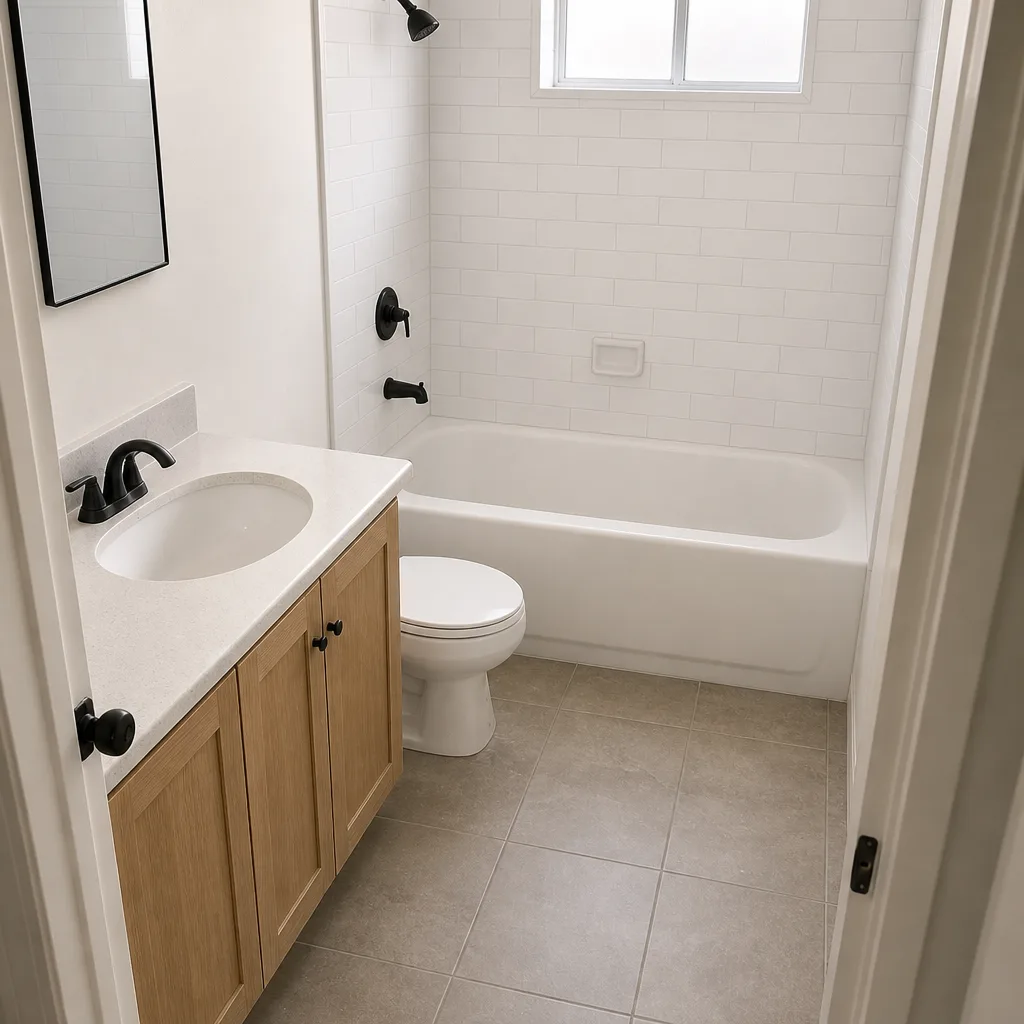 After
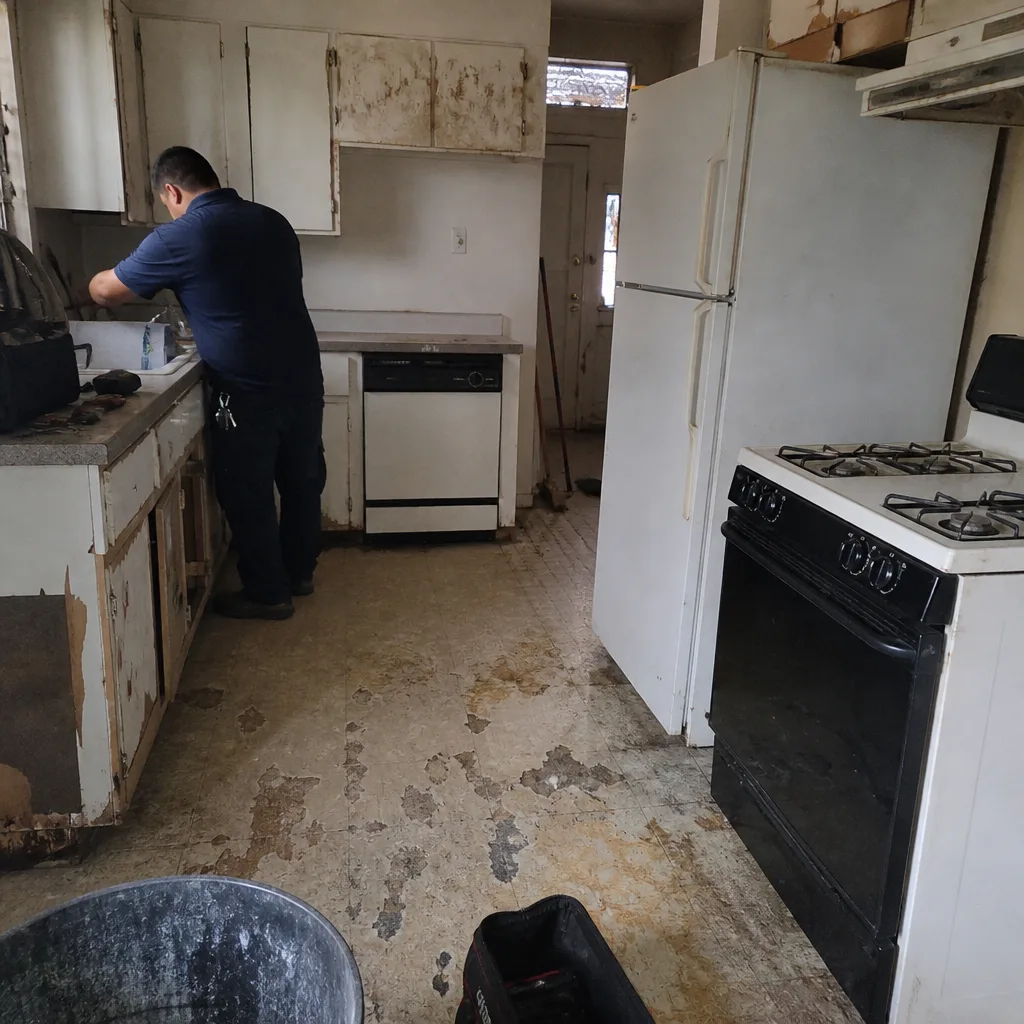 Before
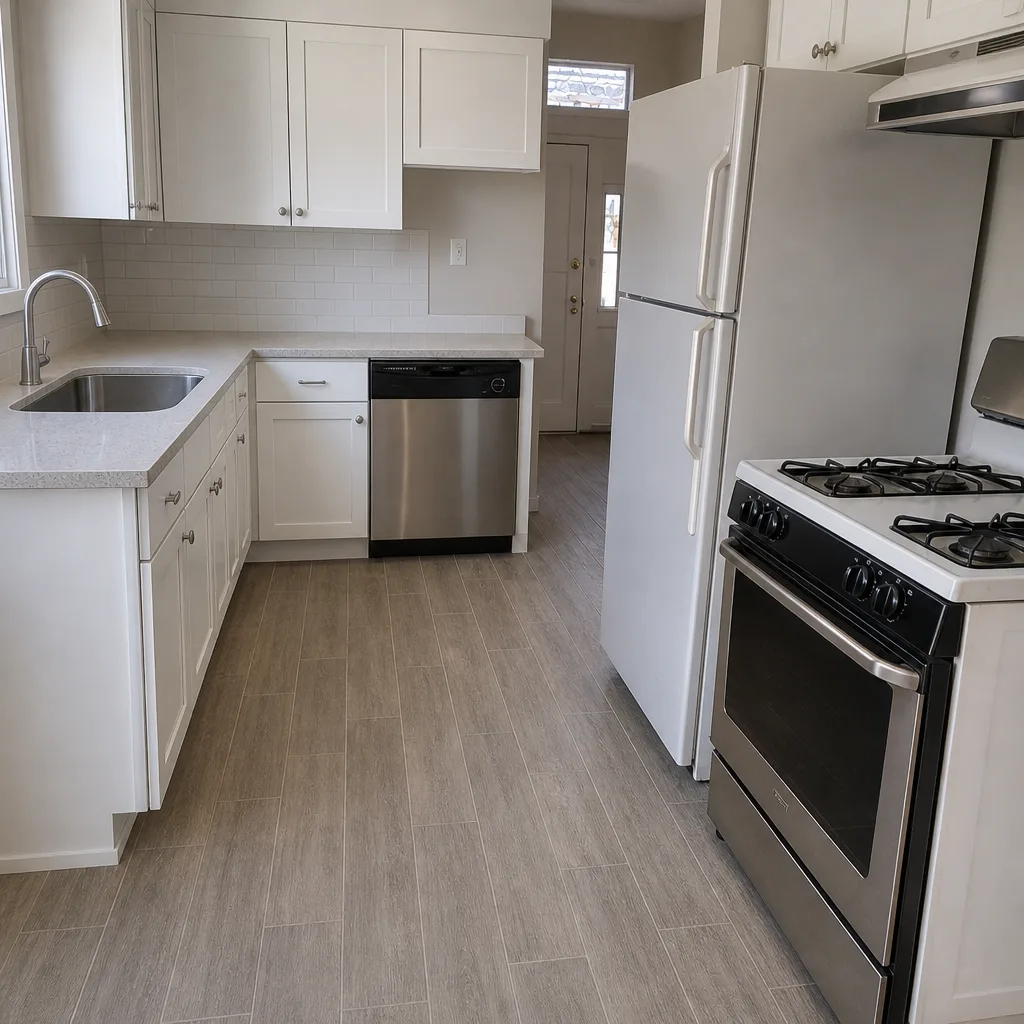 After
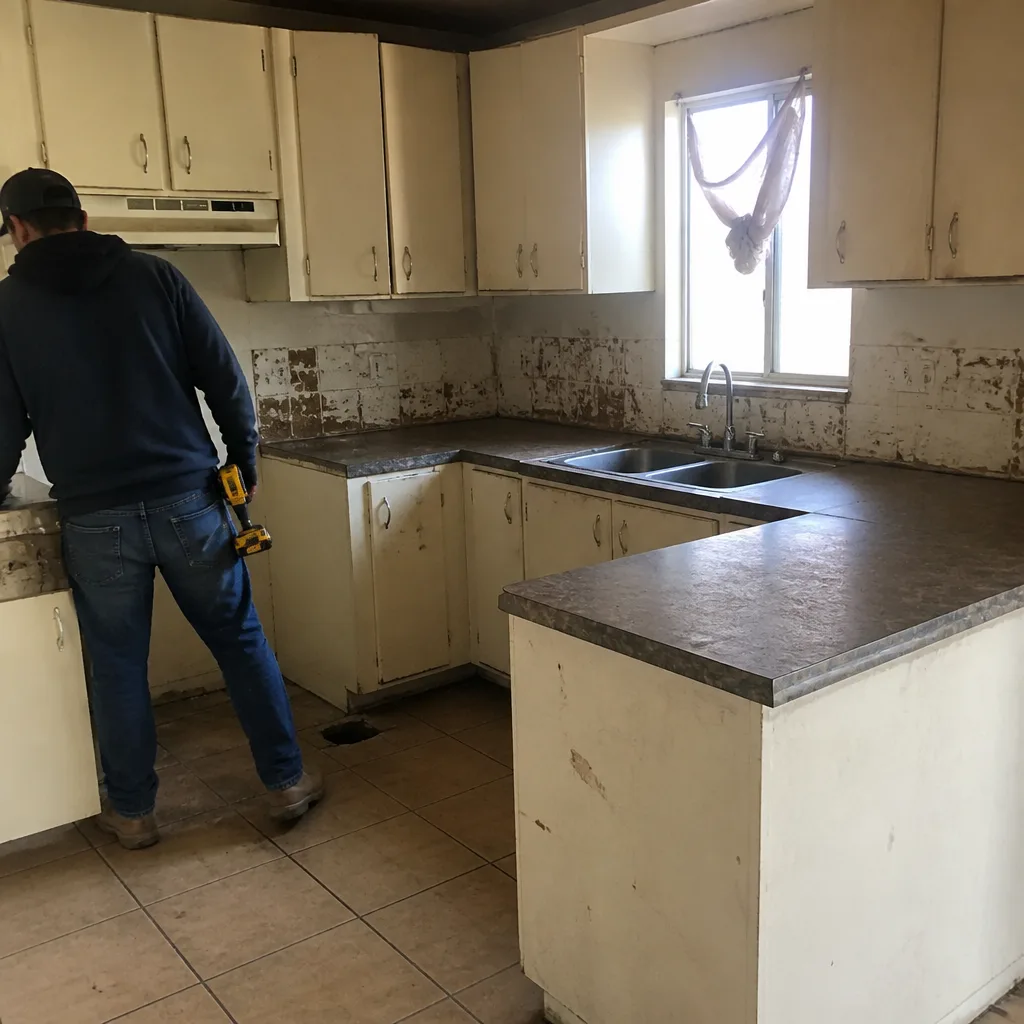 Before
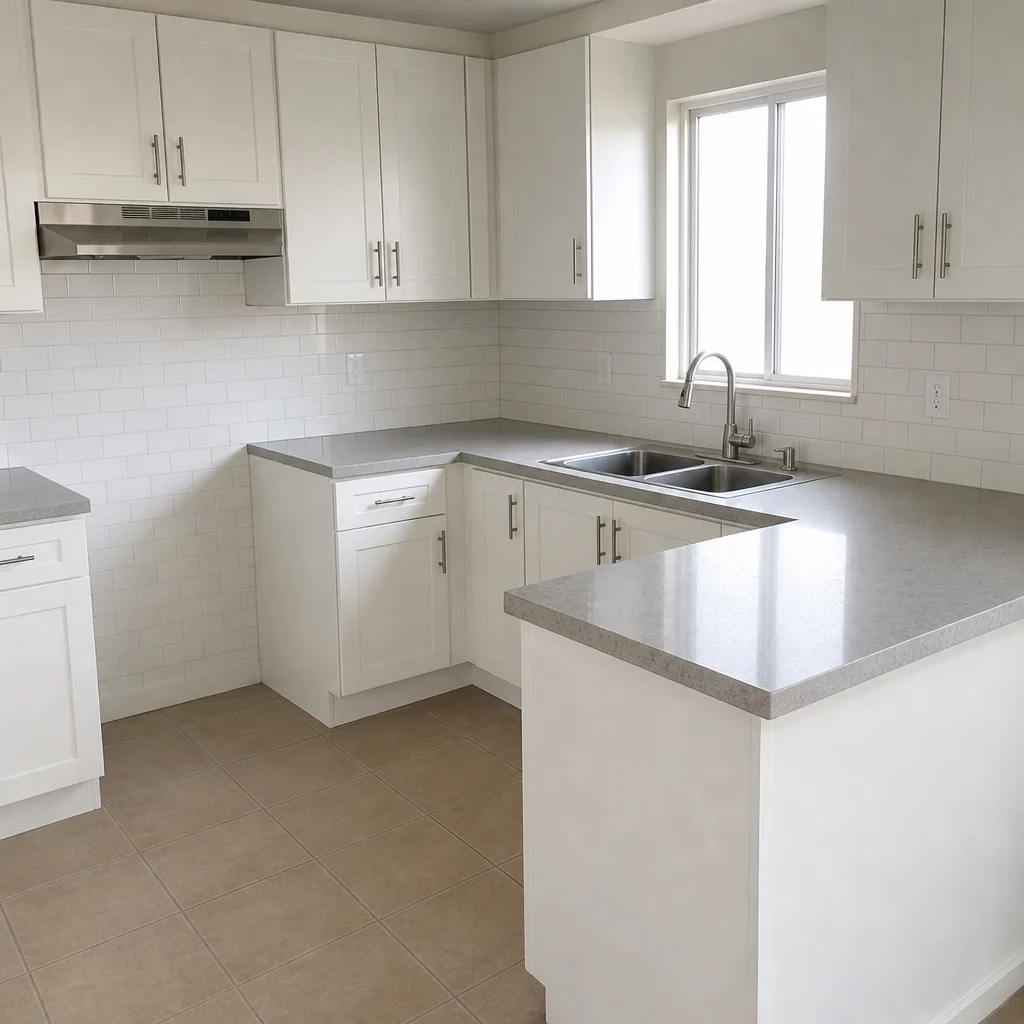 After
Frequently Asked Questions
The biggest red flags are procedural: a contract with no allowance caps, no subcontractor disclosure, a payment schedule front-loading more than 30%, a request that you pull the permit yourself, and an insurance certificate you can’t verify as current. These matter more than a contractor’s personality, because they determine who pays when a job goes wrong. Call (844) 834-2810 to have a written estimate walked through with us for free.
Pull the license record through the Nevada State Contractors Board, confirm the status is active, confirm the bond is current, and confirm the classification covers the residential remodeling work you’re hiring for. Then match the license name to the name on your contract. If those four checks don’t line up, don’t sign. We’ll provide the license record and the certificate of insurance on request – call (844) 834-2810.
Yes. When you pull the permit, you become the responsible permit holder, which means failed inspections, corrective orders, and open permits all land on your record instead of the contractor’s. The savings are the contractor moving liability to you. Every permitted job we run in Sunrise Manor is pulled by us, inspected by us, and closed by us with the final inspection passed.
Twenty to thirty percent is the range; anything above 30% before work begins is a red flag. The deposit should cover mobilization and material ordering, not fund the contractor’s other jobs. The final draw should release only after written punch list sign-off. Call (844) 834-2810 for a written estimate that shows the draw schedule in advance.
Being listed as additional insured means you have direct access to the contractor’s general liability coverage if a claim arises from their work on your property. Ask to be added in writing before work begins. It’s separate from workers’ comp, which covers the contractor’s employees for injuries – both are required in Nevada for a properly operated contractor.
Ask for a written list of every subcontractor, their license numbers, and their certificates of insurance before any sub starts work. If the contractor won’t provide them, treat it as a hard stop – you can’t verify coverage for a sub you can’t identify. If a job is already underway in Sunrise Manor with undisclosed subs, call (844) 834-2810 and we’ll help you figure out the corrective path.
The Bottom Line
The general contractor red flags that cost homeowners the most money aren’t the ones you spot in a first conversation. They’re the ones buried in a contract that doesn’t cap allowances, a payment schedule that front-loads, an insurance certificate nobody read, and a permit that ended up in the homeowner’s name instead of the contractor’s. Verify the license, demand the permit, hold the final draw against a signed punch list, and get the written guarantee in hand before job close. If your current contractor can’t put prices, scope, and the guarantee in writing before the first tool comes out, that’s the only red flag you need. The Bradford Remodeling Sunrise Manor home page has the full picture of how we operate, and you can see how The Garrison Standard runs through a kitchen remodeling in Sunrise Manor or a bathroom remodeling in Sunrise Manor project end to end.
Get a Written Estimate You Can Compare
If you’ve read this far, you already know what a disciplined contract should look like. Bradford Remodeling Sunrise Manor writes the price line by line, before any work starts, holds it fixed through the job, and backs every completed project with the 365-Day Done Right Promise – if the work doesn’t hold inside the year, we return and correct it at no charge. Background-checked, uniformed technicians on every job, live-person phone coverage 24/7, and a documented roster of premium materials from KraftMaid, Wellborn, Cambria, Kohler, GAF, James Hardie, Therma-Tru, and Belgard means every specification is traceable. Part of the Garrison Partners family and held to The Garrison Standard. Call (844) 834-2810 for a free estimate – a real person answers, and the number you get is the number that stays on the page.
Written by the team at Bradford Remodeling Sunrise Manor.